
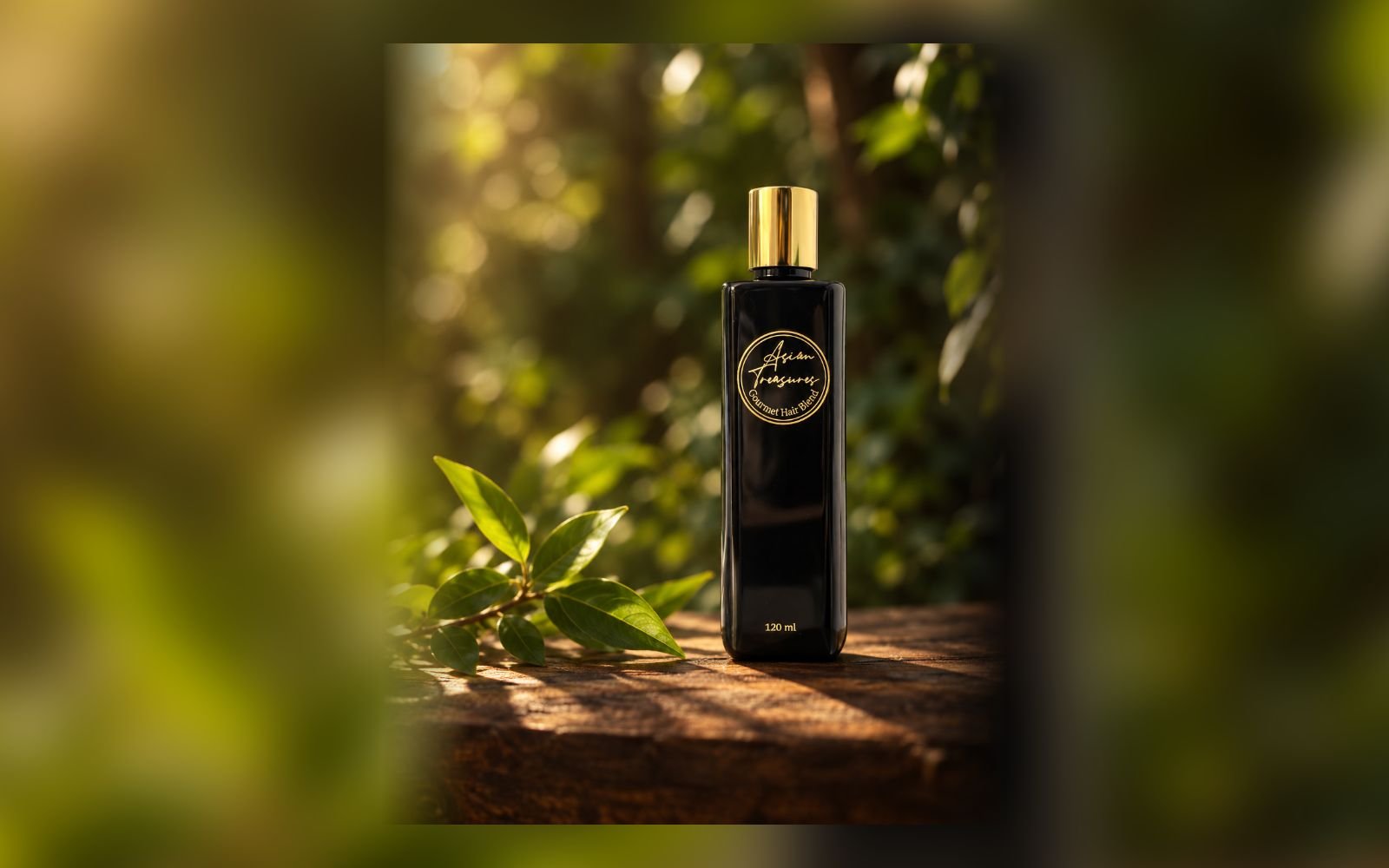
Choose botanical hair oil by its complete ingredient list, intended application and your scalp’s tolerance—not the longest list of herbs on the label. Plant origin describes where an ingredient comes from; it does not prove that a finished formula treats hair loss. Here is how to read a hair-oil label without turning a traditional ritual into an unsupported treatment claim.
Key takeaways
- Check the whole formula, not only the featured botanical.
- Carrier oils, fragrance and extracts all matter.
- Evidence for an ingredient does not automatically validate every blend.
- Do not apply concentrated essential oils as if they were finished hair oils.
Start with the finished product
A bottle described as amla, rosemary or a botanical blend can contain several ingredients. The front label does not tell you the concentration, carrier or suitability for your skin. Read the full list and use directions together.
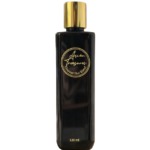
Asian Treasures offers Hair Revival Oil for a botanical scalp-care ritual. Review its current label rather than assuming that ingredients discussed in a buying guide are included in the formula. Traditional positioning is a distinction, not a substitute for ingredient verification.
Four label checks
1. Identify the application goal
Does the product describe scalp application, length conditioning or a finishing step? These goals are different. A formula that adds shine does not establish that it acts on follicles or stops unexplained shedding.
2. Read every ingredient
Check for known allergens and fragrance sensitivities. A blend with many botanicals creates more ingredients to consider, not an automatic increase in effectiveness. Keep a photograph of the label if you need to discuss a reaction with a clinician.
3. Follow the precautions
Use the manufacturer’s directions for application, contact time and any tolerance check. A small-area test cannot guarantee that you will never react. Avoid putting a new product onto inflamed or broken skin.
4. Separate evidence from storytelling
Ask whether a claim concerns one ingredient, a laboratory observation or the exact finished formula. Those are not equivalent. A study about conditioning hair fibres is not proof of new growth, and a tradition of use is not a clinical trial.
What common label terms tell you
| Term | Useful meaning | Does not prove |
|---|---|---|
| Botanical | Plant-derived ingredients are part of the positioning | Universal safety or regrowth |
| Scalp care | The product is intended for a scalp routine | Treatment of scalp disease |
| Shine | A cosmetic appearance goal | More hair follicles |
| Traditional blend | A tradition-led formulation story | A measured treatment outcome |
Avoid the homemade-mix trap
Do not add ingredients to a finished bottle because they appear in a popular recipe. Mixing changes the formula you are evaluating and makes the cause of irritation harder to identify. It also means the original directions no longer describe precisely what you are applying.
Introduce one new product at a time. If you dislike the residue or notice burning, redness or itching, stop rather than interpreting discomfort as proof that the product is working.
FAQ
Does natural mean hypoallergenic?
No. Plant ingredients and fragrance can still cause unwanted skin reactions.
Are more herbs always better?
No. The right formula is one that matches your purpose and suits your skin, not one with the largest ingredient count.
Is an essential oil the same as hair oil?
No. Concentrated essential oils are different from formulated hair-care products and should not be treated as ready-to-use scalp oils.
Can a traditional blend treat medical hair loss?
Traditional use alone does not establish treatment effectiveness. Seek assessment for unexplained shedding or thinning.
One last thing
The back label usually answers more useful questions than the botanical name on the front. Buy for a clear purpose and compatible formula.
Related guides
Care foundation: American Academy of Dermatology healthy-hair guidance, consulted October 2026.
Tellus elementum sagittis vitae et leo duis ut diam. Tincidunt tortor aliquam nulla facilisi cras. Lacus sed viverra tellus in hac habitasse platea. Netus et malesuada fames ac turpis egestas maecenas.