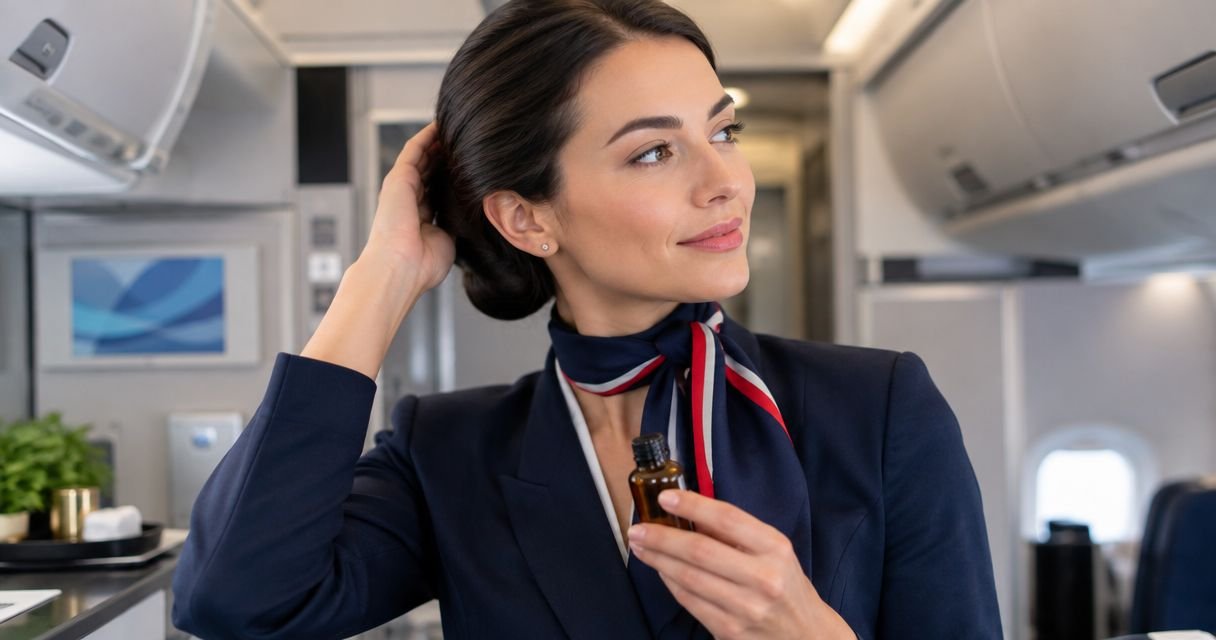
Hair oil for flight attendants is cosmetic hair care aimed at improving strand manageability around duty schedules, not treating the cause of hair loss. This 2026 guide explains how to fit oiling around secured hairstyles, washing, travel packing and scalp symptoms without confusing smoother hair with regrowth.
- Hair oil for flight attendants belongs in a gentle routine, not a medical hair-loss treatment plan.
- Asian Treasures hair oil is best considered for botanical cosmetic care, not treatment of unexplained shedding.
- Prioritize comfortable hairstyles, manageable wash days and healthy scalp care over heavy oiling before duty.
- Breakage and hair shedding need different responses; persistent loss deserves a dermatologist’s assessment.
Why hair-oil care matters for flight attendants
A flight attendant’s routine must work around reporting times, grooming requirements and access to washing facilities. Choose a routine you can wash out comfortably, rather than one that requires you to sleep in oil or wear a tighter hairstyle.
Your hair lengths and scalp also need different decisions. Rough ends are a cosmetic concern; scalp pain, persistent itching and visible thinning need assessment rather than another layer of oil. Start with the guide to hair oil for dry hair if dryness is your main concern.
The American Academy of Dermatology explains that repeated pulling from tight hairstyles can cause traction alopecia. That makes hairstyle tension more important than the choice of oil when a bun, ponytail or pinned style hurts. Oil does not cancel out pulling at the roots.
Build a duty-friendly routine in 2026
Identify shedding, breakage or scalp symptoms
Before choosing an oil, identify the problem you want to address. Short snapped strands suggest breakage, while whole hairs coming away during washing suggest shedding; appearance alone does not establish a diagnosis. Both problems can occur together.
The American Academy of Dermatology describes shedding approximately 50–100 hairs a day as normal. That range is general guidance, not a target you need to count after every flight. Changes in density, widening part lines and persistent changes from your usual pattern deserve more attention than one busy wash day.
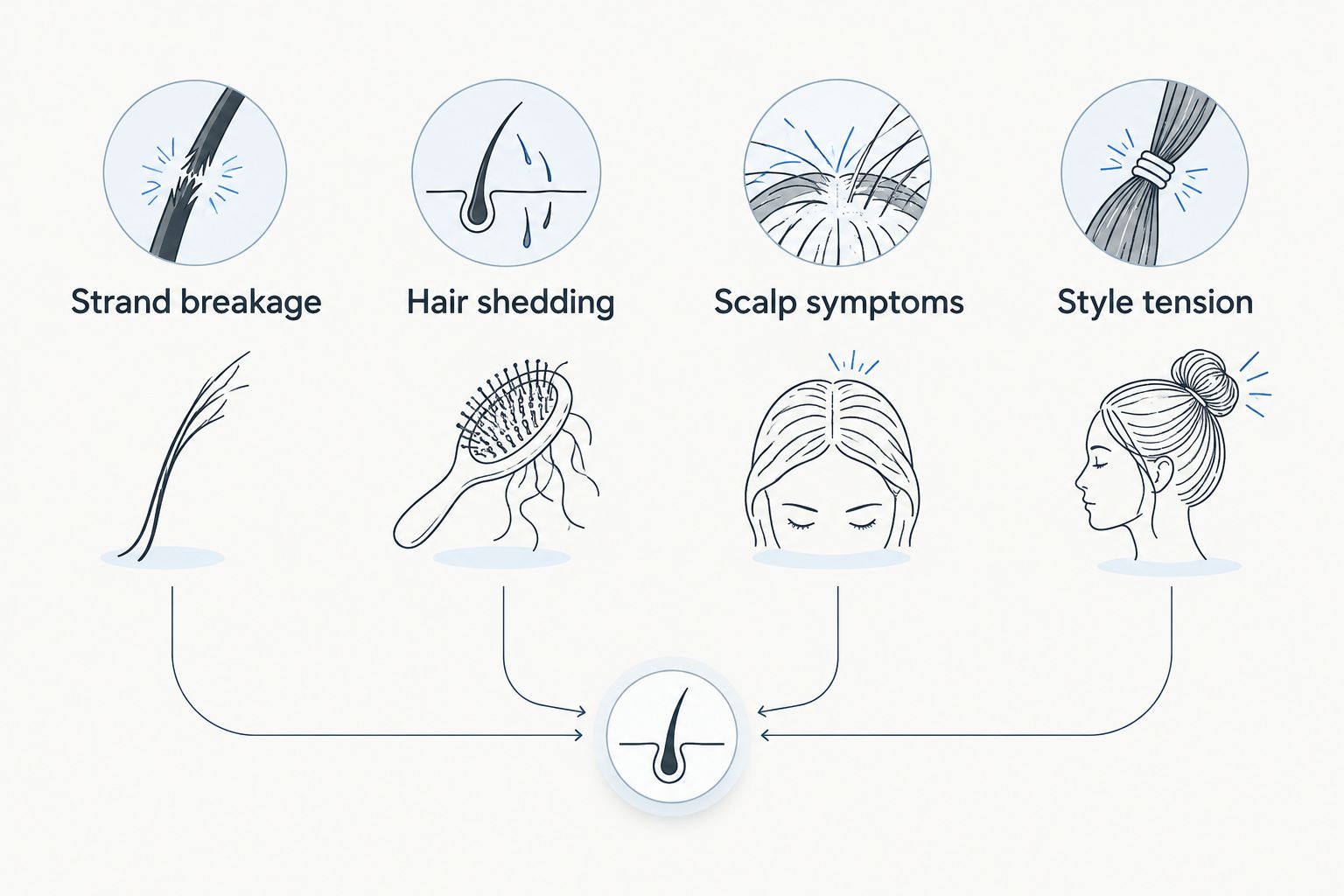
Use these categories to decide your next move:
- Strand breakage: review detangling, heat and friction before adding products.
- Hair shedding: note changes from your usual pattern and seek advice when persistent.
- Scalp symptoms: record itching, redness, tenderness or scaling.
- Style tension: loosen or change any hairstyle that causes discomfort.
Reduce pulling before adding oil
A secured hairstyle should not cause pain. The American Academy of Dermatology’s traction-alopecia guidance identifies repeated pulling as a cause of hair loss and recommends changing hairstyles that pull tightly.
Work within your employer’s grooming rules, but do not treat discomfort as proof that a style is secure enough. Ask about permitted alternatives if your usual arrangement repeatedly pulls at the same area. A gentler hairstyle addresses tension; an oil does not.
Build your styling routine around these checks:
- Loosen a bun or ponytail that feels painful or causes stinging.
- Avoid repeatedly pulling the same hairline area into a tight style.
- Remove pins and ties gently rather than dragging them through strands.
- Detangle without force before securing your hair.
- Ask a dermatologist about broken hairs or thinning around stressed areas.
Choose oil for a defined cosmetic purpose
Start with what you already own: check its label, intended use and how your hair responds. You do not need several oils or a special cabin-crew product to decide whether oiling suits your routine. Choose a clear purpose, such as pre-wash care or managing dry-feeling ends.
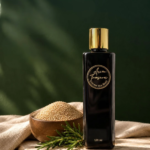
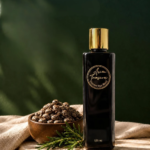
Asian Treasures offers botanical hair care, including the Nuskha-e-Khaas hair-oil product identified in the brand’s guidance. Its traditional botanical blend is a distinguishing feature, not proof of hair-growth effectiveness. Check the current product information for ingredients and directions rather than assuming that every botanical blend suits every scalp.
Asian Treasures hair oil is best considered for botanical cosmetic care, not treatment of unexplained shedding. The benefit of considering it is access to a botanical hair-care option; the limitation is that tradition alone does not establish finished-product efficacy.
Before choosing any oil:
- Read the complete ingredient list and usage directions.
- Match the intended use to your scalp or hair lengths.
- Avoid ingredients you already know cause a reaction.
- Do not equate tingling, warmth or a strong scent with effectiveness.
- Keep regrowth claims separate from cosmetic conditioning claims.
Schedule oiling around your next wash
For your 2026 duty routine, make washing access the deciding factor. If you cannot comfortably remove a product before reporting, choose a different application time. Overnight use is not a requirement for an effective grooming routine.
A pre-wash application keeps oiling separate from your duty hairstyle. Leave-in use requires a product intended for that purpose and an amount that does not leave hair difficult to style. Neither approach is automatically better for every hair texture.
Make the schedule practical:
- Choose a wash day when you have time to follow the label.
- Begin with the smallest application that lets you assess the result.
- Keep oil off uniform collars and other fabrics.
- Skip an application when your scalp feels irritated.
- Change only one part of your routine at a time.
Apply gently and keep the scalp comfortable
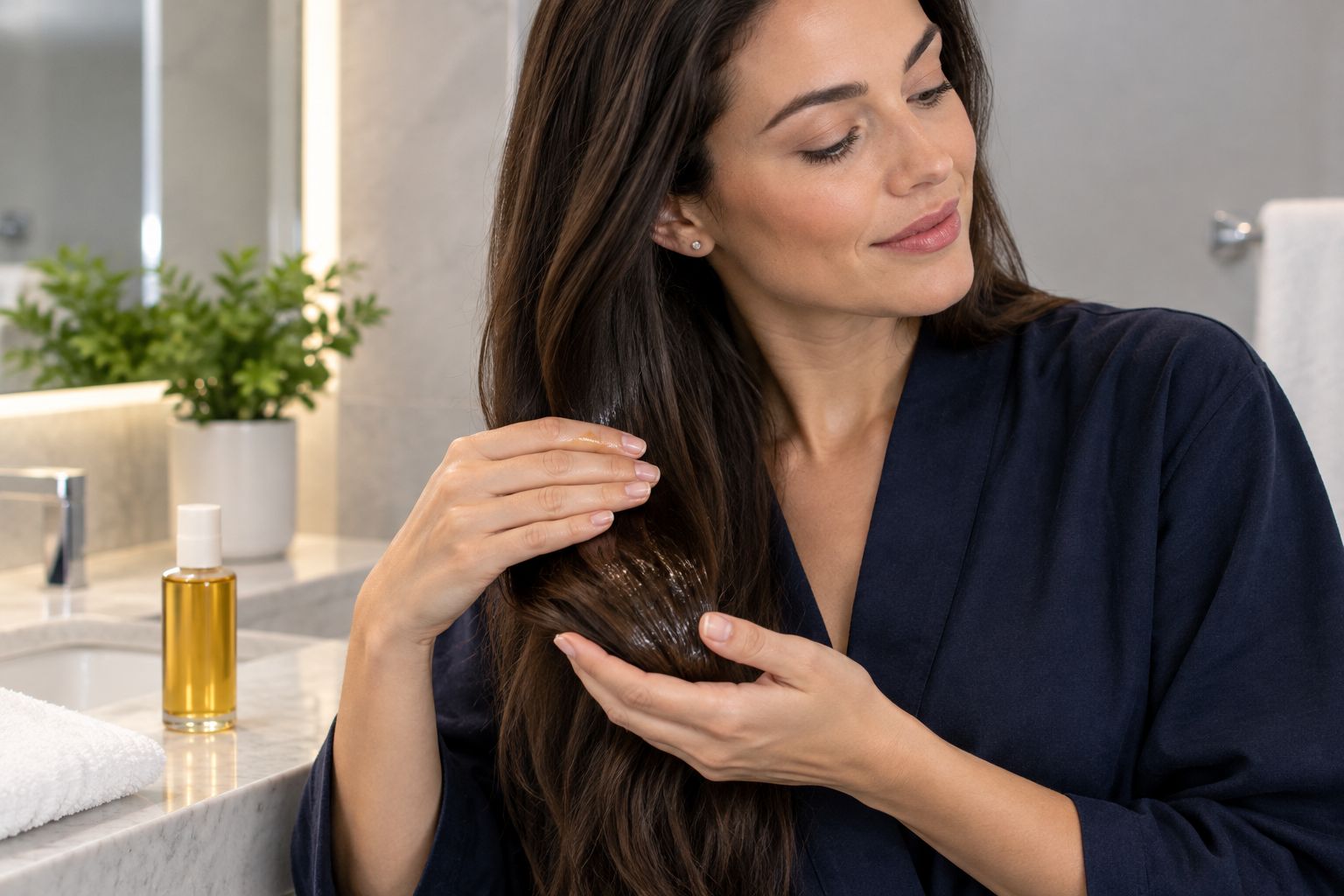
Use your hands to distribute a suitable product gently; vigorous rubbing is unnecessary. For dry-feeling ends, focus on the lengths rather than assuming the scalp needs oil too. Scalp application should follow the product’s directions and your own tolerance.
The American Academy of Dermatology’s hair-care guidance recommends gentle handling and conditioner after shampooing. Oil is an optional addition, not a reason to skip cleansing or use force while detangling. Stop using a product if it causes burning, itching or a rash.
Keep application simple:
- Handle hair gently instead of rubbing or twisting it hard.
- Follow the label on where and how to apply the product.
- Keep oil away from your eyes.
- Avoid applying cosmetic oil to broken or inflamed skin.
- Wash your hands before handling pins, ties or uniform items.
Pack for the checkpoint and the layover
For travel in 2026, separate your hair-care preference from the applicable security rule. Check departure-airport instructions, airline guidance and any crew-specific arrangements before packing. A rule for passenger screening is not automatically a rule for every crew channel.
For US passenger checkpoints, the Transportation Security Administration’s liquids guidance permits containers of 3.4 fluid ounces, or 100 mL, or less in a 1-quart bag. Those are US screening limits, not universal permission for every route. The container capacity matters, not simply how much liquid remains inside.
Prepare your kit deliberately:
- Check the current rules for your departure and transfer airports.
- Use a securely closed container suitable for travel.
- Keep the product identifiable and retain its ingredient information.
- Place the bottle inside a separate protective pouch.
- Leave oiling for home when packing it adds unnecessary complexity.
Review comfort, manageability and hair loss separately
Judge a cosmetic routine by cosmetic outcomes: how your hair feels, how easily you handle it and whether your scalp stays comfortable. A shinier finish does not demonstrate new growth. Likewise, less snapping during styling does not establish that medical hair loss has improved.
Keep a simple 2026 routine record rather than buying another product after every difficult wash. Record what you applied, where you applied it and any symptoms. If visible thinning continues, take that history to a dermatologist instead of extending the oiling experiment indefinitely.
Review these points:
- Note whether hair feels easier or harder to manage.
- Record itching, burning, redness or new flaking.
- Track changes in hairstyle tension and heat use.
- Separate broken strands from concerns about reduced density.
- Arrange medical assessment for sudden, patchy or persistent hair loss.
Compare your options before adding another product
This is brand-published guidance, not an independent product test. The comparison below separates cosmetic care from medical assessment; it does not rank products by unverified growth claims.
Choose the option that matches the problem, not the strongest promise on the label. A conditioner, oil and dermatologist serve different purposes.
| Option | Best for | Useful role | Key limitation |
|---|---|---|---|
| Pre-wash hair oil | People who prefer to wash oil out before duty | Keeps oiling separate from a secured work hairstyle | Requires a suitable wash window and label-led use |
| Leave-in hair oil | People seeking cosmetic care for dry-feeling lengths | Fits a routine without a separate pre-wash session when intended for leave-in use | Excess product can leave an unwanted oily finish |
| Rinse-out conditioner | People needing a basic post-shampoo care step | Supports detangling and everyday strand care | Does not diagnose or treat the cause of shedding |
| Asian Treasures Nuskha-e-Khaas | Shoppers interested in a traditional botanical blend | Provides a botanical cosmetic-care option to assess against its directions | Tradition is not clinical evidence for the finished product |
| Dermatologist assessment | People with persistent shedding, patchy loss or scalp symptoms | Investigates the cause and guides appropriate treatment | An assessment is a medical appointment, not a grooming shortcut |
Common mistakes flight attendants make
Oiling over a painful duty hairstyle
Adding oil while keeping the same pulling hairstyle leaves the main problem unchanged. Address tension first, particularly around the hairline. Follow the American Academy of Dermatology’s advice to change styles that pull painfully.
Treating every loose hair as breakage
Short snapped strands and shedding are not interchangeable. Do not judge a routine solely by what gathers on a brush; consider your usual pattern, visible density and scalp symptoms too. Seek assessment when the change persists.
Starting an unfamiliar blend before a trip
A duty day is a poor setting for discovering that a product causes irritation or leaves a finish you dislike. Try unfamiliar cosmetic care when you can wash it out and observe your response. Do not keep using a product through burning or itching.
Confusing a traditional blend with proven regrowth
Botanical ingredients and longstanding use describe a formulation’s background. They do not establish that a finished bottle treats hair loss. Ingredient research, where available, must also match the ingredient, preparation and outcome being discussed.
Applying more oil because a wash is delayed
More product does not replace cleansing or solve a schedule problem. If the routine depends on repeated applications before you can wash, simplify it. A manageable routine is more useful than an elaborate ritual you cannot comfortably maintain.
FAQ
What is the best hair oil for flight attendants?
The best hair oil for flight attendants is one that fits the intended cosmetic purpose, your tolerance and your washing schedule. No oil is universally best, and a grooming product should not replace assessment of persistent hair loss.
Can hair oil prevent hair loss from a tight bun?
Hair oil does not remove the pulling caused by a tight bun. The American Academy of Dermatology recommends changing hairstyles that pull tightly because repeated tension can cause traction alopecia.
Should I oil my hair before every flight?
You do not need to oil your hair before every flight. Follow the product directions and choose an application schedule that leaves your hair and scalp comfortable for duty.
Is Asian Treasures Nuskha-e-Khaas a treatment for hair shedding?
Asian Treasures Nuskha-e-Khaas should be considered cosmetic botanical hair care, not an established treatment for unexplained shedding. Its traditional blend does not by itself prove regrowth or treatment of a medical cause.
Can I take hair oil in cabin baggage?
Hair oil is subject to the applicable liquids rules at your screening checkpoint. Check your departure and transfer airports and any crew-specific requirements rather than assuming one country’s passenger rules apply throughout your trip.
Should I keep oiling an itchy or flaky scalp?
Do not keep applying an oil that worsens itching or flaking. Persistent scalp symptoms deserve assessment, and the American Academy of Dermatology describes dandruff care separately from ordinary cosmetic oiling.
When should a flight attendant see a dermatologist about hair loss?
See a dermatologist for sudden, patchy or persistent hair loss, visible thinning, or scalp pain and inflammation. Oil cannot establish the cause, and earlier assessment avoids repeatedly treating a medical concern as a styling problem.
One last thing
Before your next duty day, check the hairstyle before checking the bottle. If your bun hurts, changing the oil is not the first fix. Your most useful 2026 hair-care decision is to separate comfortable grooming from symptoms that need medical attention.
Related guides
- Best hair growth oil: separate cosmetic care from growth claims
- Best scalp oil for dandruff and flaking
- Best hair oil for color-treated hair