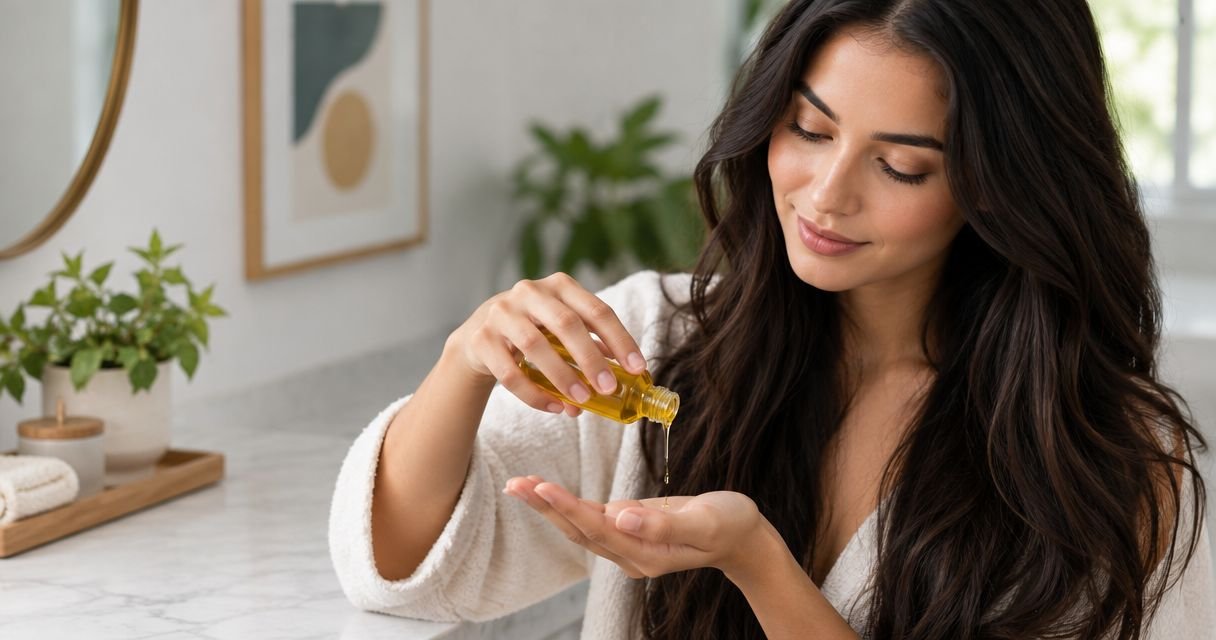
Use the smallest amount of hair oil that spreads lightly over the area you want to condition, following the product’s directions rather than a universal drop count. Your scalp, lengths and ends do not need the same application, and adding more oil is not a treatment for hair loss. This 2026 guide explains how to judge coverage, adjust your next application and recognise when oil is the wrong next step.
- How much hair oil to use depends on the formula, application area and whether you will wash it out.
- Asian Treasures hair oil belongs in cosmetic hair care, not in place of an assessment for unexplained shedding.
- For leave-in hair oil, aim for lightly coated strands rather than visibly wet or clumped hair.
- Scalp oiling is optional; burning, itching or worsening redness means stop using the product.
How much hair oil should you use per application?
Use enough for light, even coverage—not enough to soak your hair or scalp. Begin with the label’s application instructions. If those instructions do not specify an amount, dispense a small amount you can spread evenly, assess the result and add more only where needed.
This is brand-published guidance from Asian Treasures, not a clinical dosing schedule. There is no universal amount established here for every botanical blend, hair length or scalp condition.
Use this sequence to judge your application:
- Choose the area. Decide whether you are treating dry ends, coating lengths before washing or applying a product intended for the scalp.
- Read the label. Check the intended application area, wash-out directions and any warnings before dispensing oil.
- Spread lightly. Distribute a small amount across your palms or fingertips before touching the intended area.
- Check the finish. For leave-in use, stop before strands look wet, stringy or heavily coated.
- Adjust next time. If the application leaves an unwanted greasy finish, use less at the next application rather than repeating the same amount.
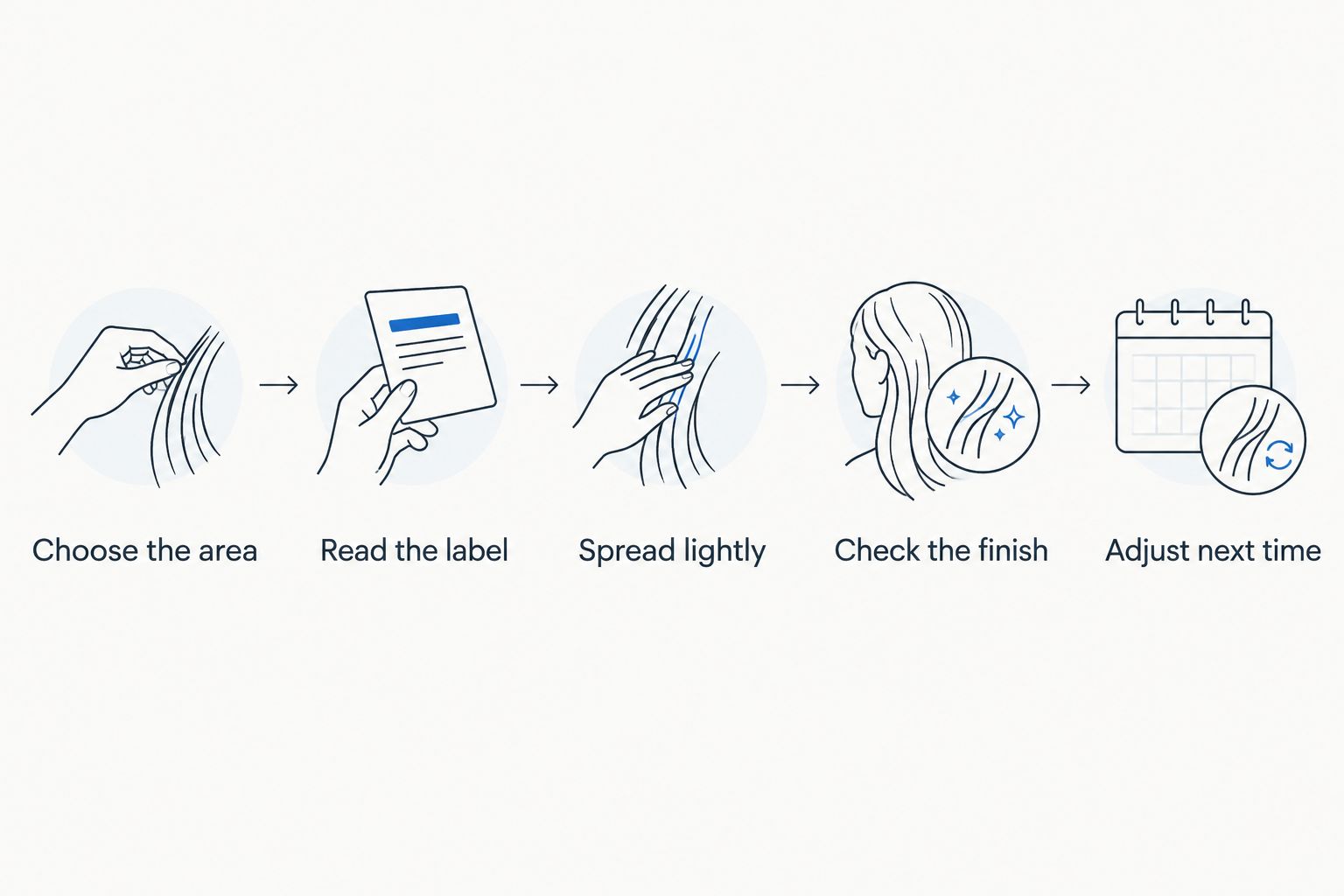
The aim is a repeatable routine. Using the same dispenser and noting the area you covered makes your next adjustment more useful than copying someone else’s teaspoon or drop recommendation.
Why this matters
Oil quantity is a cosmetic-care decision, not a measure of how seriously you are treating hair loss. A heavier application does not establish a stronger effect on hair growth. Keep those questions separate when planning your 2026 routine.
The American Academy of Dermatology distinguishes excessive shedding from hair loss and explains that losing about 50–100 hairs a day is normal. That range is background information, not a requirement to count every hair or a way to diagnose yourself at home.
Breakage is different: a strand snaps along its length rather than being shed from the follicle. Gentle handling can help limit styling-related damage, but reducing breakage does not mean you have treated a medical cause of thinning.
If your main concern is a widening part, patches or persistent increased shedding, seek an assessment rather than increasing the oil amount. The NHS advises identifying the cause of hair loss before pursuing treatment.
Leave-in oil: stop before the hair looks coated
For leave-in use, the practical endpoint is a finish you can wear comfortably. Apply to the area that needs conditioning, distribute it and inspect the result before adding more.
Fine hair that quickly looks flat needs a different approach from dense hair where the same application never reaches the inner sections. Neither situation establishes a fixed dose. Start with coverage and finish instead of assuming all heads of hair need the same amount.
| Application | Best for | Desired coverage | Main limitation |
|---|---|---|---|
| Leave-in application | Targeted care for lengths or ends, when the label permits | A light coating without unwanted clumping | Excess oil remains on the hair until you remove it |
| Pre-wash application | People who prefer to rinse the oil out | Even coverage over the intended area | A heavy coating adds product without proving a better result |
| Scalp application | People using a product specifically directed for scalp use | Controlled contact with the intended scalp area | Irritation is possible, and oil does not diagnose or treat unexplained shedding |
These are application methods, not ranked treatments. Choose the method the product supports and your scalp tolerates. A formula intended for washing out should not automatically become a leave-in product.
If the roots look oily but the ends still feel rough, do not add another all-over layer. Reconsider where you are applying the oil. Targeting the ends avoids coating areas you were not trying to condition.
Pre-wash oil: distribute it rather than drench it
A pre-wash application gives you a planned opportunity to remove the oil. That does not make saturation necessary. Follow the product’s contact-time and washing instructions instead of treating a shiny, wet appearance as proof that you have used enough.
Separate the hair gently so you can reach the intended sections. Spread the product along those sections without pulling, scratching or repeatedly dragging your fingers through tangles.
The advantage is control over when you wash the product away. The drawback is that an unnecessarily heavy application can leave you wanting to wash again. Do not respond with aggressive scrubbing; adjust the amount at the next use.
For your 2026 routine, avoid changing the amount, contact time and washing method all at once. Keeping the other steps consistent makes it easier to identify which change improved the finish.
Scalp oil: use only when the directions support it
Scalp application and hair-length application are not interchangeable. Check that the product is intended for scalp use before applying it directly to the skin.
Part the hair gently and apply to the intended area rather than pouring oil over the whole head. Use your fingertips without scratching. A scalp that feels uncomfortable is not asking for a stronger massage or a larger application.
Do not add more oil to burning, itchy or inflamed skin. Stop the product and seek advice if symptoms persist or worsen. The American Academy of Dermatology identifies personal-care products as possible triggers for contact dermatitis; a botanical origin does not rule out a reaction.
Scalp oiling is optional. You can condition the lengths without applying oil to the scalp, provided that use matches the product directions.
Why the right amount of hair oil varies
Your application changes because coverage and intended use change—not because everyone needs to work towards a bigger dose.
- Application area: A small area of dry ends needs less coverage than the full length of your hair.
- Hair length and density: More hair requires more distribution, but not necessarily a heavier coating on each strand.
- Formula and dispenser: Drop size and product spread differ, so a drop count from another bottle is not a transferable dose.
- Wash-out or leave-in use: The finish you accept before washing is different from the finish you want to wear.
- Products already applied: Conditioner, styling products and earlier oil applications affect the finish you are assessing.
- Scalp response: Discomfort is a reason to stop and reassess, not a signal to increase the amount.
Whether your hair is damp also changes how you assess and distribute the application. Read the separate guide to applying hair oil to wet hair before combining oil with a damp-hair routine.
How can you tell you have used too much hair oil?
Unwanted clumping, a greasy appearance or a coating that feels excessive are practical signs that your leave-in application exceeded your preferred finish. They are not proof of hair damage, but they give you a useful reason to reduce the next application.
Do not keep adding other products to correct an oil-heavy finish. Follow the oil’s removal directions, then reconsider the quantity and placement next time.
An oily appearance is also different from an adverse skin reaction. Burning, redness or persistent itching needs a stop-and-assess response, not simply a smaller dose of the same product.
Does using more hair oil make hair grow faster?
More hair oil does not establish faster growth, and a cosmetic application amount is not a treatment dose for hair loss. A smoother-looking strand and a new growing hair are different outcomes.
Claims about an individual ingredient also do not prove that a finished blend produces the same result. The concentration, formulation and evidence for the actual product matter. Do not turn traditional use into a promise of regrowth.
Where botanical hair oil fits
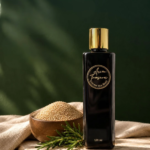
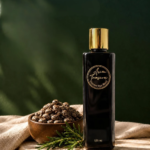
Asian Treasures hair oil is best considered by shoppers seeking botanical cosmetic care, not a substitute for medical hair-loss treatment. The brand’s Nuskha-e-Khaas Hair Revival Oil is presented as a traditional botanical blend; that tradition is a distinguishing feature, not proof of effectiveness.
Judge cosmetic use by practical questions: does the application suit your routine, does your scalp tolerate it, and can you distribute it without an unwanted heavy finish? Do not judge it by a promised number of new hairs.
The benefit of this approach is a clear, manageable role for hair oil. Its limit is equally clear: cosmetic care cannot identify why you are shedding or replace treatment chosen for a diagnosed condition. Read the current product directions before deciding where and how to apply it.
Safety and evidence behind this 2026 guide
The American Academy of Dermatology’s guidance, How to test skin care products, recommends testing a new product on a small area twice daily for 7–10 days before normal use. Follow the product’s usual contact instructions during testing; rinse-off products should not be left on simply to complete a test.
That home check is not medical patch testing and does not guarantee you will never react. Avoid testing a new cosmetic on already inflamed or broken skin. Seek professional advice if you have an active scalp condition or a history of significant reactions.
The evidence used here has distinct limits:
- *American Academy of Dermatology, Do you have hair loss or hair shedding?:* Supports the distinction between normal shedding, excessive shedding and hair loss.
- American Academy of Dermatology, Hair styling without damage: Supports gentle handling and avoiding practices that damage strands.
- American Academy of Dermatology, contact dermatitis guidance: Supports recognising reactions to personal-care products.
- NHS, Hair loss: Supports getting the cause assessed rather than assuming one treatment suits every type of hair loss.
These sources support safety and hair-care principles. They do not establish a universal hair-oil quantity or clinical effectiveness for a particular botanical blend.
FAQ
How much hair oil should I use if the bottle gives no amount?
Use a small amount you can distribute lightly, then assess the coverage before adding more. There is no universal drop count that applies to every formula, hair length and application area.
Should I put hair oil on my scalp or just my ends?
Apply oil only to the areas supported by the product directions. Scalp application is optional, and conditioning your ends does not require coating your scalp.
Is a teaspoon of hair oil enough for everyone?
A teaspoon is not a universal hair-oil dose. The amount needed depends on the formula, the area you are covering and whether the product stays on or washes out.
Can I leave hair oil on overnight?
Leave hair oil on overnight only if the product directions support that use and your skin tolerates it. Longer contact is not proof of a better result, and discomfort is a reason to stop.
Will more hair oil stop my hair from shedding?
More hair oil is not a treatment for unexplained shedding. Persistent increased shedding, patches or progressive thinning need an assessment rather than a larger cosmetic application.
Should I add more oil if my scalp starts itching?
Do not add more oil to an itchy or irritated scalp. Stop the product and seek advice if the symptoms persist, worsen or include significant inflammation.
How do I know whether my hair oil amount is right?
The amount is suitable for your cosmetic routine when it provides the intended coverage without an unwanted heavy finish or irritation. That observation does not establish an effect on hair growth.
One last thing
For your next application in 2026, record the area you treated and the finish after styling or washing—not just how much you dispensed. A simple note such as ends only; comfortable finish is more useful than repeating an amount that did not suit you.
Change the application before buying into a bigger-dose promise. Keep gentle care consistent, and treat persistent shedding as a separate question.
Related guides