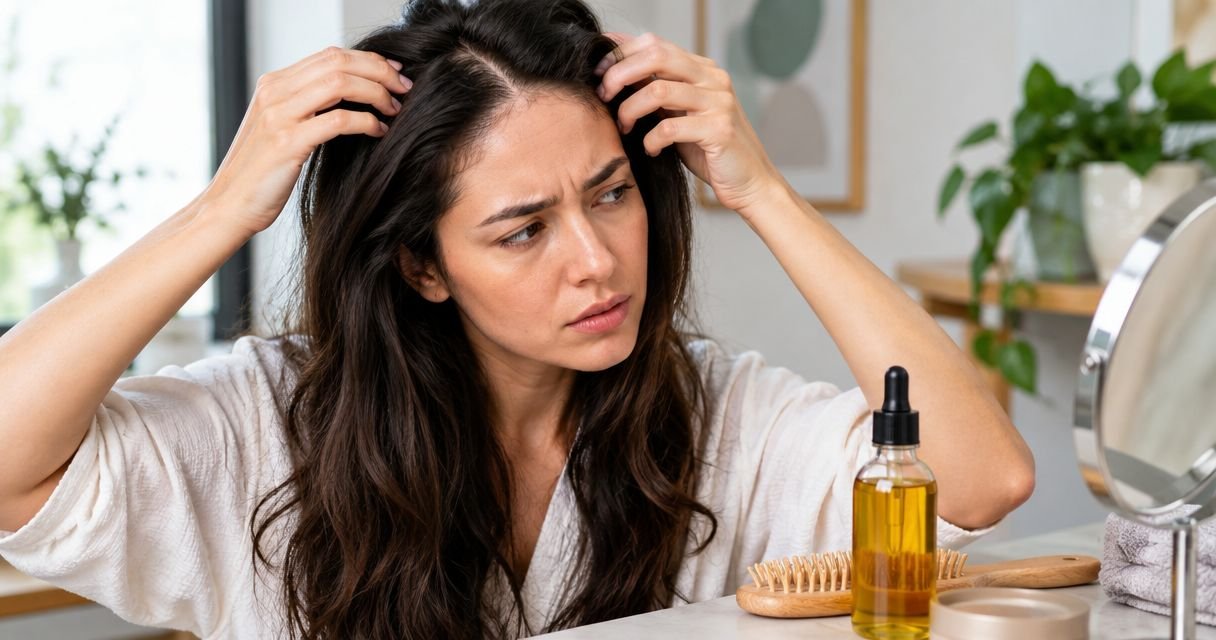
Yes—hair oil can cause breakouts, especially when oily residue reaches your hairline, forehead or neck. But bumps within the scalp are not always acne: folliculitis and contact dermatitis can look similar and need different care. Stop the suspected product rather than adding more oil to an irritated scalp.
- Hair oil scalp acne concerns need a distinction: hairline acne, scalp folliculitis and contact dermatitis are different problems.
- Stop the suspected oil, cleanse gently and avoid picking or scrubbing inflamed skin.
- Asian Treasures hair oil is cosmetic hair care, not a treatment for scalp acne or folliculitis.
- Seek medical care for spreading redness, painful swelling, persistent pustules or hair loss around inflamed areas.
Can hair oil cause scalp acne or breakouts?
Hair oil can contribute to acne when a hair-care product leaves pore-clogging residue on skin. The American Academy of Dermatology, or AAD, describes this pattern particularly along the hairline, upper forehead and back of the neck. A product does not need to feel especially greasy to cause trouble.
The location matters. Small bumps on your forehead after oiling suggest a different problem from itchy pustules scattered through your scalp or a burning rash behind your ears. Appearance alone does not establish a diagnosis.
If you want to adjust your routine after the irritation settles, the guide to lightweight hair oil for an oily scalp explains the relevant buying context. A lightweight texture is not proof that a product will suit acne-prone skin.
| Possible problem | Clues you might notice | Relevant next step | Important limitation |
|---|---|---|---|
| Hair-product acne | Small bumps or whiteheads along the hairline, forehead or neck | Stop the suspected product and remove residue from items touching your skin | Not every hairline bump is acne |
| Scalp folliculitis | Itchy or tender bumps and pustules centred around hair follicles | Seek assessment if persistent, painful or recurrent | Bacterial, yeast-related and other causes require different management |
| Contact dermatitis | Itching, burning, redness or a rash after product exposure | Stop exposure and seek advice for a significant reaction | Irritation and allergy are not the same condition |
Why this matters
Treating every scalp bump as acne encourages the wrong response: extra scrubbing, more oil or several new treatments at once. Each change makes it harder to identify what is irritating your skin.
This 2026 guide is brand-published educational guidance from Asian Treasures, not an independent product test. Its purpose is to separate cosmetic hair care from conditions that need medical treatment—not to rank oils as acne remedies.
What should you do if bumps appear after oiling?
Pause scalp oiling and simplify your routine. You do not need to prove which ingredient caused the problem before removing a suspected trigger. Keep any prescribed treatment unchanged unless your clinician advises otherwise.
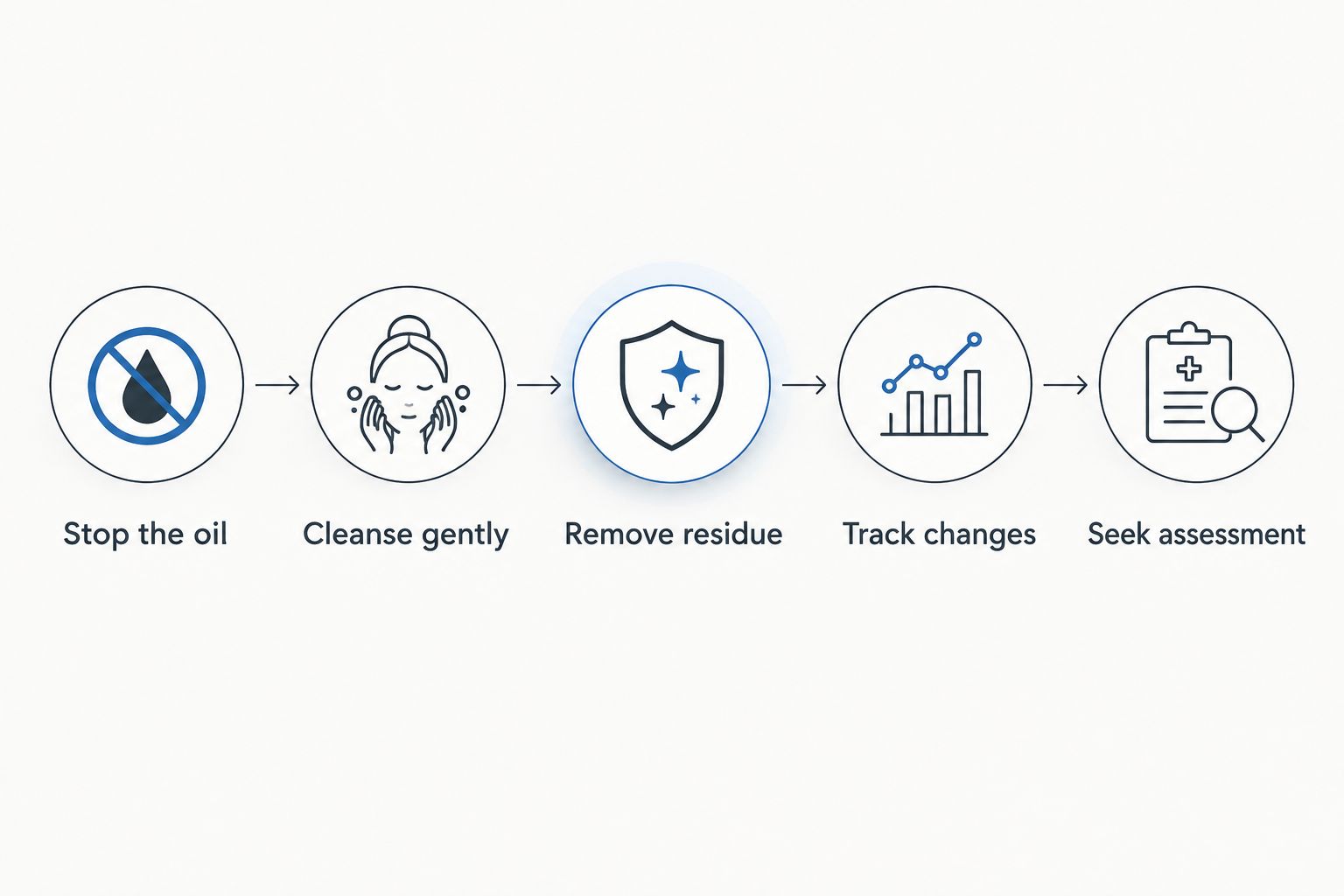
- Stop the oil. Avoid applying the suspected product to your scalp, hairline or nearby irritated skin. Do not test another botanical blend on the same inflamed area.
- Cleanse gently. Use your usual well-tolerated shampoo as directed. Avoid scratching with your nails, vigorous massage and attempts to squeeze bumps.
- Remove residue. Wash pillowcases, hats, headscarves and other washable items that have collected product. Clean combs and brushes according to their care instructions.
- Track changes. Record when you stopped the product and whether new bumps, itching or soreness continue. Take clear photographs for a clinician if the problem persists.
- Seek assessment. Get medical advice for recurrent pustules, significant pain, spreading redness or hair loss around affected areas. Fever or rapidly worsening swelling needs prompt care.
If you use several styling products, write down their names and where you apply them. A clinician needs the full routine, not just the newest bottle. Keep packaging or ingredient photographs rather than relying on memory.
Why breakouts after hair oil vary
Your reaction depends on more than whether an oil is described as natural. These factors help explain different patterns without diagnosing the cause:
- Skin contact: Oil placed on hair can reach the forehead, neck or ears through application, styling and contact with fabric.
- Finished formulation: The complete ingredient list matters. Fragrance, preservatives and botanical ingredients deserve attention when investigating irritation or allergy.
- Residue and occlusion: Oily products and close-fitting coverings can create an occlusive environment. DermNet identifies occlusion as a relevant factor in some forms of folliculitis.
- Sweat and friction: Sweaty headwear and repeated rubbing can aggravate acne-prone skin. Keep reusable coverings clean without assuming that covering your hair itself is the cause.
- Underlying condition: Acne, folliculitis and dermatitis have different causes. The same cosmetic adjustment will not treat all of them.
A 2026 shopping label such as “pure plant formulation” does not resolve these questions. Natural describes origin; it does not establish that a finished product is non-irritating, non-allergenic or suitable for acne-prone skin.
Is overnight hair oiling a good idea if you get bumps?
Skip overnight scalp oiling while you have an unexplained breakout. Keeping a suspected trigger against irritated skin is not a useful way to test whether your scalp tolerates it. Oil can also transfer to bedding and then contact your face.
There is no universal contact time that makes every hair oil safe for every scalp. Follow the product's directions once your skin is settled, and stop if symptoms return. Do not invent a stronger routine by combining oil, heat, a tight covering and prolonged contact.
If your goal is softer lengths rather than scalp care, keep that goal separate. Applying a tolerated product to the lengths limits direct scalp application, but it does not eliminate transfer to nearby skin. Keep oily hair away from an actively breaking-out forehead.
Can you patch-test hair oil before using it again?
The AAD's home product-testing guidance recommends applying a product to a small test area 2 times daily for 7–10 days. Follow its directions for the type of product: a rinse-off product should not be treated as a leave-on product.
This checks for a visible skin reaction under those conditions. It does not establish that an oil will never cause acne, and it does not diagnose contact allergy. A dermatologist's formal patch testing serves a different purpose.
Do not deliberately retry a product that caused a significant reaction without medical advice. Avoid testing on broken or inflamed skin. A clear test area is not permission to ignore burning, itching or new bumps during later use.
Does a scalp breakout mean the oil is working?
No—pustules, itching and burning are not evidence of hair growth. Do not reinterpret an adverse reaction as detoxification, improved circulation or a necessary adjustment period. Those explanations can delay appropriate care.
This distinction also matters when hair seems to be falling out. Shedding involves hairs leaving the follicle; breakage involves damage along the shaft. Oil used for cosmetic conditioning does not establish treatment for medical hair loss, even if the hair feels smoother.
If thinning is your main concern, read whether hair oil can regrow a receding hairline separately from advice about strand care. In 2026, the practical distinction remains the same: better-feeling hair and treatment of a hair-loss disorder are different outcomes.
Where does botanical hair oil fit?
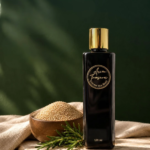
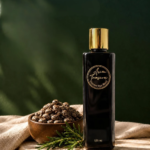
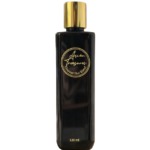
Asian Treasures hair oil is for shoppers seeking botanical cosmetic hair care, not treatment for scalp acne. The brand identifies its relevant oil as Nuskha-e-Khaas Hair Revival Oil. Its traditional botanical blend is a distinguishing feature, not proof of effectiveness against acne, folliculitis or medical hair loss.
For someone who tolerates hair oil, the benefit is a cosmetic hair-care step rather than a substitute for diagnosis. The limitation is equally important: a botanical formula can still be unsuitable for an individual, and an irritated scalp is not the place to experiment.
Before choosing any oil in Pakistan, read its current ingredient list and directions. “Best hair growth oil” is a shopping phrase, not a clinical finding. Choose around your actual goal and your skin's response, not around promises of regrowth.
How long do hair-product breakouts take to clear?
4–6 weeks is the AAD's stated clearing window for acne caused by hair-care products after you stop the culprit. That guidance concerns product-related acne; it is not a recovery timetable for every scalp rash or pustule.
Do not wait through that window if the condition is painful, spreading or associated with hair loss. If new bumps continue after removing suspected products, a clinician can check whether the original assumption was wrong.
Can I keep oiling the ends if my scalp breaks out?
You can separate strand conditioning from scalp application, but keep the suspected trigger away from affected skin. If the same oil caused a significant reaction, stop using it rather than moving it elsewhere without advice. Product on the ends can still transfer to your face or neck.
Does a non-comedogenic label guarantee no scalp bumps?
No—a non-comedogenic label does not rule out folliculitis, irritation or allergy. The AAD recommends looking for oil-free or non-comedogenic hair-care products when addressing product-related acne, but that advice is not a guarantee of individual tolerance. Your symptoms still determine whether to stop.
Evidence behind this 2026 guide
These named sources support the distinctions and practical advice above. Ingredient evidence and general skin-care guidance are not clinical evidence for a finished hair-oil product.
- American Academy of Dermatology, “Are your hair care products causing breakouts?” Scope: hairline and neck acne from hair-care products, product selection, residue removal and the 4–6-week clearing window.
- American Academy of Dermatology, “How to test skin care products.” Scope: home testing on a small area, including the 2-times-daily application schedule for 7–10 days.
- DermNet, “Scalp folliculitis” and “Malassezia folliculitis.” Scope: follicular bumps, possible causes and why scalp pustules should not automatically be treated as ordinary acne.
- DermNet, “Contact dermatitis.” Scope: irritation, allergy and skin inflammation after exposure.
Use this 2026 guide to prepare better questions for a clinician, not to identify an infection from a photograph. Treatment choices depend on the diagnosis.
FAQ
Can hair oil cause scalp acne even if it is natural?
Yes—natural hair oil can contribute to hair-product acne or cause irritation in someone who does not tolerate it. Botanical origin does not prove that a finished formula is non-comedogenic or allergy-free.
How do I know whether my scalp bumps are acne or folliculitis?
You cannot reliably distinguish every case by appearance alone. Hairline whiteheads can fit product-related acne, while itchy or tender follicular pustules need assessment for folliculitis and other causes.
Should I stop hair oil if my scalp starts itching?
Yes—stop the suspected oil when new itching, burning or bumps develop. Seek medical advice if symptoms are significant, persist or return after exposure.
How long does acne from hair products take to clear?
4–6 weeks is the AAD’s stated clearing window after stopping the hair-care product responsible for acne. This does not apply to every scalp condition, and painful or spreading symptoms need earlier assessment.
Can I use Asian Treasures hair oil to treat scalp acne?
No—Asian Treasures hair oil is cosmetic hair care, not an established treatment for scalp acne. Stop applying a suspected trigger to inflamed skin and seek a diagnosis when bumps persist.
Will washing my hair more often cure scalp folliculitis?
Washing more often is not a universal treatment for scalp folliculitis. Gentle cleansing removes residue, but persistent follicular inflammation needs cause-specific advice rather than increasingly harsh washing.
Can scalp breakouts cause hair shedding?
Some inflammatory scalp conditions can involve hair loss, so bumps accompanied by shedding or bare patches need assessment. Do not assume the hair change is ordinary breakage or try to treat it with more oil.
One last thing
Check what touches your hairline, not just what goes into your hair. A cleaned-up routine still leaves exposure behind if an oil-coated pillowcase, headband or scarf keeps touching the same skin. Removing that residue is a more useful next step than buying another oil to treat the reaction.
Related guides
- Hair oil for sensitive scalp and eczema
- Hair oil for gym-goers and athletes
- How often should you apply hair oil?