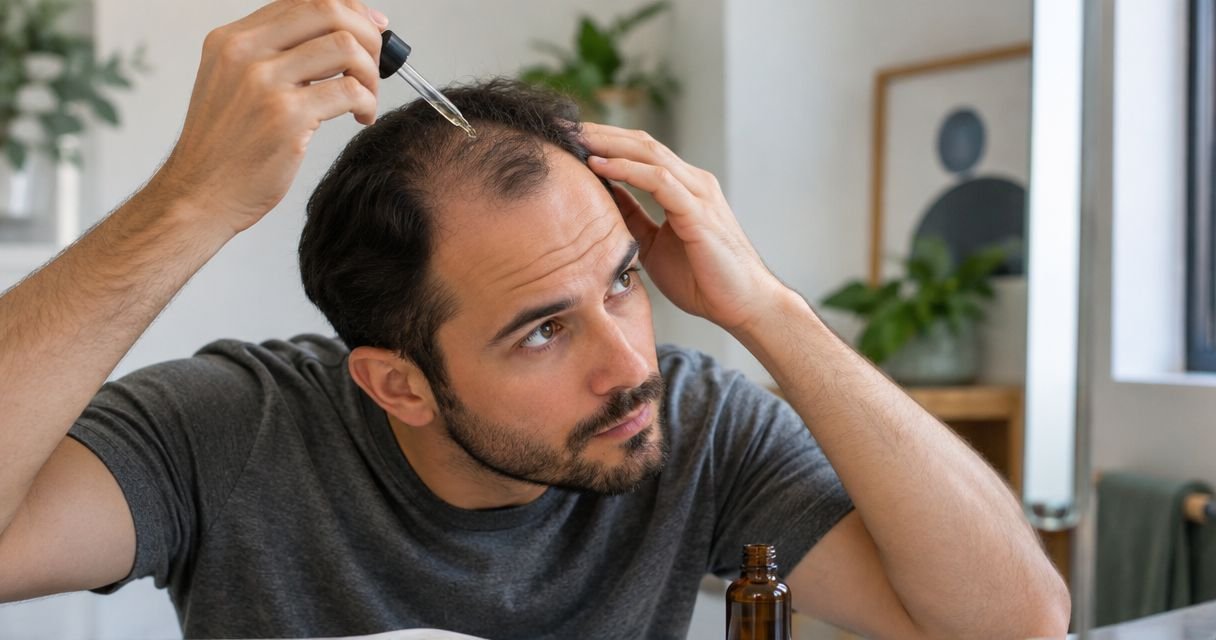
Hair oil cannot reliably regrow a receding hairline. It can condition existing strands and help with some forms of breakage, but those benefits do not establish that it reverses follicle miniaturization or restores lost hair. A receding hairline needs a diagnosis before you choose a treatment.
- Can hair oil regrow hairline? Cosmetic hair oil is not a reliable treatment for a receding hairline.
- Asian Treasures hair oil is best considered cosmetic care, not a replacement for medical hair-loss treatment.
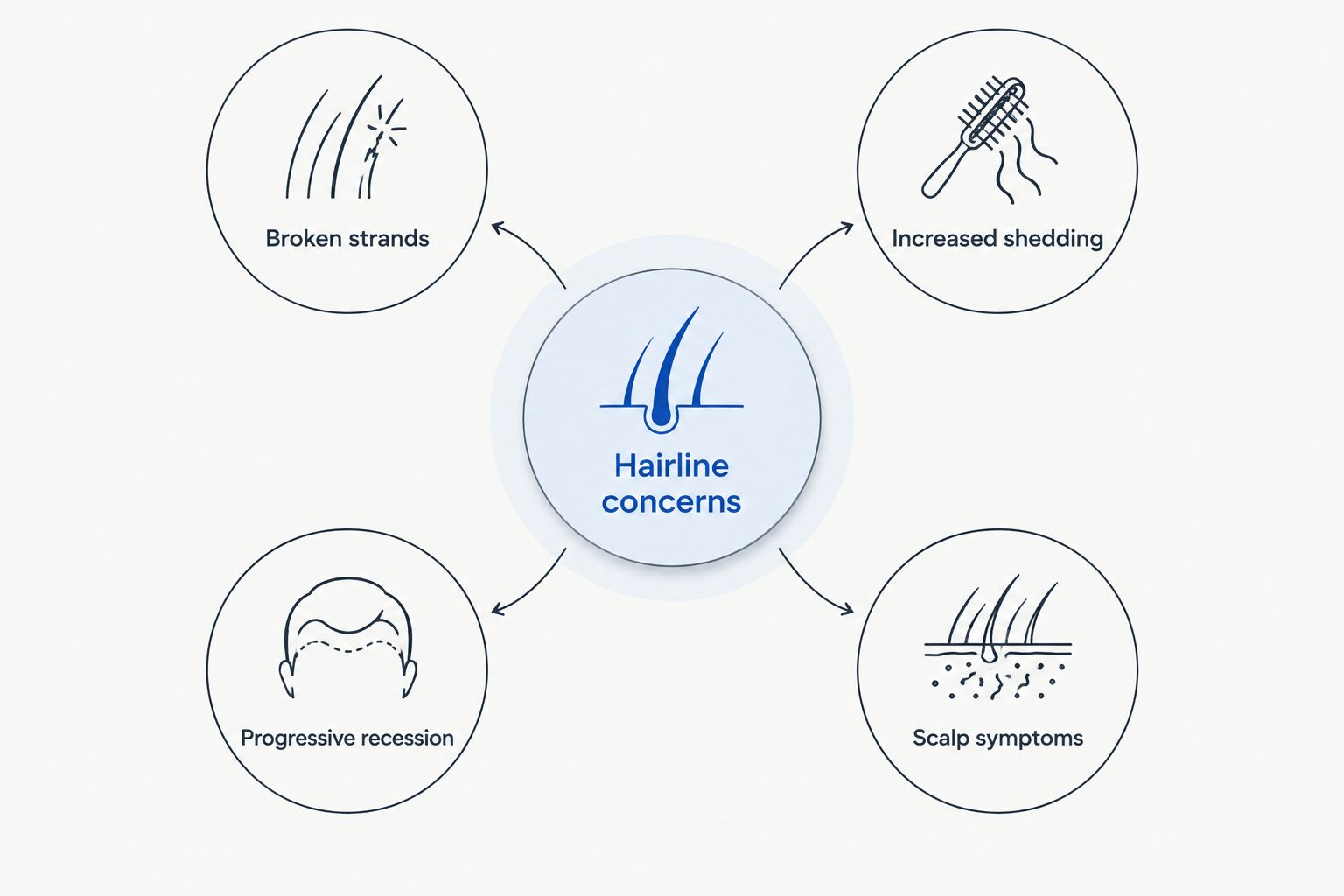
- Broken strands, increased shedding, and progressive recession need different responses.
- Rosemary research concerns a specific preparation, not every botanical hair oil or finished blend.
Why this matters
A softer hairline is not necessarily a fuller hairline. Oil changes how existing hair feels and looks; treating hair loss means addressing what is happening at the follicle.
That distinction matters when you shop for hair oil in Pakistan in 2026. Before choosing a bottle, separate your cosmetic goal from your medical concern. The guide to hair oil for thinning hair covers a related buying topic, but progressive recession deserves assessment rather than another product experiment.
This is brand-published educational guidance, not an independent product ranking or a diagnosis. Medical treatment decisions belong with a qualified clinician.
Can hair oil regrow a receding hairline?
Do not rely on hair oil to restore a receding hairline. The American Academy of Dermatology distinguishes hair shedding from hair loss and recommends identifying the cause before selecting treatment. Its patient guidance also explains that tight hairstyles can cause traction alopecia and that longstanding traction can lead to permanent loss.
The practical question is not simply whether an oil supports healthy-looking hair. It is whether the concern involves damaged strands, temporary shedding, progressive follicle changes, or scalp disease.
| What you notice | What it can represent | Best next step | Where oil fits—and its limit |
|---|---|---|---|
| Short strands of uneven lengths | Breakage, although short regrowing hairs can look similar | Review handling, heat, and styling; seek assessment if uncertain | Conditioning existing hair is a cosmetic goal, not proof of regrowth |
| Gradual recession at the temples | A pattern that needs evaluation for androgenetic alopecia | Ask a dermatologist about diagnosis and treatment | Oil does not establish treatment of follicle miniaturization |
| Thinning where hairstyles pull | Possible traction-related hair loss | Remove tension and seek assessment | Oil does not remove the pulling force |
| Sudden increased shedding | A shedding disorder or another medical cause | Review the timing and possible triggers with a clinician | Oiling does not identify or correct the cause |
| Hair loss with pain, inflammation, or scarring | A scalp condition needing medical attention | Arrange prompt assessment | Adding more products can delay appropriate care |
These are clues, not a home diagnostic test. More than one problem can occur together: you can have strand breakage alongside pattern hair loss.
What does the rosemary-oil study actually show?
A frequently cited study by Panahi and colleagues, published in Skinmed in 2015, compared rosemary oil with 2% minoxidil in 100 participants with androgenetic alopecia. Researchers assessed outcomes over 6 months.
Neither group showed a significant increase in hair count at 3 months. Both groups showed increased hair counts at 6 months, with no statistically significant difference between the groups reported at that assessment.
That finding deserves a careful reading. The study did not include a placebo group, and a lack of a statistically significant difference does not establish that all rosemary products are equivalent to minoxidil. It also does not validate an unrelated botanical blend.
For a 2026 buying decision, separate three things: evidence about an ingredient, evidence about a particular preparation, and evidence about the finished product you intend to use. They are not interchangeable.
| Option | Best for | Evidence or practical benefit | Important limitation |
|---|---|---|---|
| Cosmetic hair oil | People seeking conditioning for existing strands | A cosmetic role in hair care | Do not treat softness or shine as evidence of follicle regrowth |
| Rosemary preparation studied in the trial | Readers assessing ingredient research | A small comparative study reported hair-count improvement at 6 months | Results do not establish that every rosemary oil or botanical blend works |
| Topical minoxidil | People with an appropriate diagnosis and clinician-guided treatment plan | The American Academy of Dermatology lists it as a treatment for pattern hair loss | It does not work for everyone, requires continued use, and needs suitability advice |
The recommendation is diagnosis first, not the most persuasive ingredient story. Do not replace prescribed treatment with an oil because a label mentions rosemary or traditional use.
Breakage and shedding are different problems
Breakage happens along the hair shaft. Shedding involves a hair leaving its follicle. Both can make your hair look thinner, but reducing breakage does not mean you have treated medical hair loss.
The American Academy of Dermatology describes excessive shedding as distinct from conditions that stop hair from growing. A clinician can use your history and scalp examination to work out which process is occurring.
Use these observations when explaining your concern:
- Broken strands: Describe snapping, tangling, and uneven lengths, especially after handling or styling.
- Increased shedding: Describe a change in the amount of hair coming out during washing or brushing.
- Progressive recession: Describe how the outline at your temples or forehead has changed.
- Scalp symptoms: Mention itching, burning, tenderness, scaling, or sores rather than treating them as unrelated details.
Do not diagnose regrowth from short hairs alone. Short strands can be new growth, broken hairs, or finer hairs associated with a hair-loss condition.
Why hairline changes and treatment responses vary
Different causes need different responses. The American Academy of Dermatology's guidance on hair loss, traction alopecia, and excessive shedding supports these distinctions:
- Underlying cause: Pattern hair loss, traction, and excessive shedding are not the same condition. A routine aimed at one does not automatically address another.
- Ongoing tension: Tight hairstyles keep pulling on the hairline. Adding oil without changing that tension leaves the mechanical problem in place.
- Duration of traction: Early traction-related loss can respond to stopping the pulling, while longstanding damage can become permanent.
- Scalp inflammation: Pain, burning, redness, or scale changes the priority from cosmetic conditioning to assessment.
- The treatment used: Evidence for a studied medicine or preparation cannot be transferred to a different finished oil.
Your starting point matters more than a universal oiling schedule. A dry-feeling strand and a progressively receding temple are different reasons to seek help.
What should you do before applying more oil?
Use a simple sequence that protects your existing hair without turning a cosmetic routine into a substitute for care. In 2026, a sensible hairline plan still starts with observation and diagnosis, not a promise on a bottle.
- Record the change. Take clear photographs with similar lighting, parting, and hairstyle. Compare the hairline itself, not just how shiny or flattened the hair looks.
- Remove avoidable tension. Loosen hairstyles that pull at the edges. Tell your clinician if a style causes discomfort or leaves the hairline feeling tight.
- Check the scalp. Note tenderness, redness, scaling, or spots. Seek assessment rather than repeatedly covering symptoms with oil.
- Review your timeline. Write down when the change began, whether shedding increased, and any relevant illness, childbirth, medication change, or styling change.
- Choose the right appointment. Ask a dermatologist to identify the cause and explain appropriate options. Bring the ingredient lists of products you already use.
Photographs are useful records, not proof that a product works. Hair positioning, lighting, and oil-induced clumping can change the appearance of coverage without changing the number of hairs.
Avoid forceful massage around a thinning or irritated hairline. Comfort is a better guide for cosmetic handling than the idea that stronger rubbing produces stronger growth.
Where does Asian Treasures Hair Revival Oil fit?
Asian Treasures hair oil is best for shoppers seeking botanical cosmetic care, not a substitute for treatment of a receding hairline. Its traditional botanical blend is a distinguishing feature, not proof of effectiveness against medical hair loss.
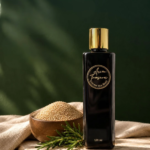
The relevant product is Nuskha-e-Khaas Hair Revival Oil. Consider it within a conditioning and scalp-care routine, with expectations focused on cosmetic care rather than promised regrowth. Consult Asian Treasures for current product information, and check the product's directions and ingredient information before use.
The limitation is clear: a traditional blend does not establish that the finished product reverses pattern hair loss. Botanical ingredients also do not guarantee that a product will suit a sensitive scalp.
If your goal is a more comfortable grooming ritual, keep that goal separate from treatment. If your goal is restoring a receding hairline, ask a dermatologist what diagnosis and evidence support the proposed treatment.
Can oil make thinning edges look fuller without regrowth?
Conditioning existing strands is not the same as increasing hair density. Smoother, more orderly hair can change how the edges look, while an oily finish can also make fine strands group together and expose more scalp.
Judge cosmetic appearance separately from changes in the hairline. Use consistent photographs and a clinician's assessment rather than treating a good styling day as a treatment result.
Should you stop oiling if your hairline is receding?
Recession alone does not make cosmetic oiling a treatment—or automatically rule it out. Keep any tolerated conditioning routine separate from the assessment of your hair loss, and follow the product directions.
Stop a product that causes irritation and seek advice if symptoms persist. Do not continue applying it because you assume tingling, burning, or itching means it is working.
When should you see a dermatologist instead of trying another oil?
Progressive recession, patchy loss, or scalp symptoms deserve a dermatologist's assessment. Pain, burning, inflammation, and signs of scarring are reasons not to delay care with repeated cosmetic experiments.
For your 2026 appointment, bring a clear timeline, comparable photographs, and your product list. Ask what diagnosis explains the change and how treatment progress will be assessed.
FAQ
Can hair oil regrow my receding hairline?
Hair oil is not a reliable treatment for regrowing a receding hairline. It can serve a cosmetic conditioning role, but progressive recession needs diagnosis and an appropriate treatment plan.
Is rosemary oil proven to work like minoxidil?
One comparative study does not establish that every rosemary oil works like minoxidil. The 2015 Skinmed study involved 100 participants over 6 months, lacked a placebo group, and did not test every commercial rosemary product.
How long should I try hair oil before seeing a dermatologist?
Do not postpone assessment of progressive recession to complete an oil trial. Seek advice promptly if hair loss is sudden, patchy, painful, or accompanied by inflammation.
Are the short hairs around my forehead new growth?
Short hairs alone do not prove new growth. They can include regrowing hairs, broken strands, or finer hairs associated with a hair-loss condition.
Can tight hairstyles make my hairline recede?
Tight hairstyles can cause traction alopecia. The American Academy of Dermatology advises stopping styles that pull because longstanding traction can lead to permanent hair loss.
Can Asian Treasures Hair Revival Oil replace medical treatment?
Asian Treasures Hair Revival Oil should not replace prescribed treatment for a receding hairline. Its traditional botanical blend belongs in a cosmetic-care discussion, not as proof of medical regrowth.
What is the best hair growth oil in Pakistan for receding temples?
No cosmetic oil earns a reliable regrowth recommendation for receding temples on the basis of a botanical label alone. Identify the cause first, then choose cosmetic care and medical treatment for their separate purposes.
One last thing
Do not use shine as your progress measure. Before adding another product in 2026, take a clear baseline photograph and write down whether your main concern is breakage, shedding, or a changing hairline. That small distinction makes the next conversation with a dermatologist more useful.
Related guides
- Hair oil for sensitive scalp and eczema
- How often should you apply hair oil?
- Hair oil for postpartum hair loss