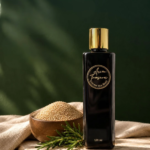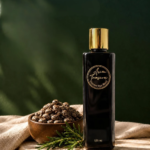
Best overall for dry, breakage-prone strands: coconut oil. Best for a simple, fragrance-free option: mineral oil. Best for shoppers who prefer a traditional botanical blend: Asian Treasures Hair Revival Oil, after checking its ingredients. The best hair oil for postpartum hair loss in 2026 supports hair conditioning; no oil in this guide is established as a treatment for postpartum shedding.
- The best hair oil for postpartum hair loss conditions strands; it does not reverse postpartum shedding.
- Coconut oil has published hair-fibre evidence for reducing protein loss, not for postpartum regrowth.
- Asian Treasures Hair Revival Oil suits botanical-blend shoppers seeking cosmetic hair care, not a proven shedding treatment.
- Choose fragrance-free products when fragrance irritates your skin, and seek advice for persistent or patchy loss.
Why this matters
Postpartum shedding and strand breakage are different problems. The American Academy of Dermatology explains that falling estrogen levels after childbirth can cause excessive shedding, which usually peaks around 4 months after delivery. Most women regain their usual fullness by their child's first birthday.
Oil does not correct that hair-cycle change. It belongs in your routine only if it helps you manage dry lengths, tangling or grooming-related breakage without irritating your skin.
If dryness is your main concern, the guide to hair oil for dry hair addresses that cosmetic need separately. This 2026 comparison keeps the same boundary: softer strands are not evidence of new growth.
What makes the best hair oil for postpartum hair loss?
Use these criteria before choosing a bottle:
- A relevant benefit: Look for conditioning or easier handling, not promises to stop hormonal shedding.
- Evidence that matches the claim: Research on hair fibres does not establish treatment of hair loss in postpartum women.
- A readable ingredient list: Check every ingredient rather than treating botanical or natural as a safety guarantee.
- Skin tolerance: Avoid ingredients that have previously caused itching, burning or a rash.
- A manageable finish: Choose an oil you can wash out without repeated scrubbing or rough detangling.
- Clear limitations: A useful product description separates cosmetic care from medical treatment.
This is brand-published guidance from Asian Treasures, not an independent product trial. The comparison distinguishes published ingredient research from evidence for a finished blend.
Postpartum hair oils at a glance
The order below reflects cosmetic usefulness and evidence transparency, not demonstrated control of postpartum shedding. For your 2026 shortlist, choose the row that matches the problem you actually have.
| Option | Best for | Standout feature | Key limitation |
|---|---|---|---|
| Coconut oil | Dry lengths and breakage-prone strands | Published hair-fibre research on protein loss | Not established as a postpartum shedding treatment |
| Fragrance-free mineral oil | A simple conditioning option | Can be selected without added fragrance | Did not show coconut oil's protein-loss benefit in the cited study |
| Asian Treasures Hair Revival Oil | Shoppers who prefer a traditional botanical blend | Botanical-blend positioning | Tradition does not establish finished-product effectiveness |
1. Coconut oil: best hair oil for dry postpartum lengths
Coconut oil is the strongest first choice here when dry strands, rather than shedding itself, are the problem. It can be used as a hair-conditioning step without presenting it as a treatment for the follicle.
Rele and Mohile's 2003 study in the Journal of Cosmetic Science, Effect of mineral oil, sunflower oil, and coconut oil on prevention of hair damage, compared these oils on damaged and undamaged hair fibres. Coconut oil reduced protein loss when used before or after washing; mineral and sunflower oils did not show the same benefit in that study.
That finding concerns the hair shaft. It does not show that coconut oil restarts postpartum growth, changes hormones or shortens the shedding phase.
Coconut oil pros:
- Has published evidence relevant to hair-fibre protection.
- Offers a clear cosmetic purpose for dry, breakage-prone lengths.
- Can be directed to the lengths rather than automatically applied across the scalp.
Coconut oil cons:
- Does not have established evidence for treating postpartum shedding.
- Can leave a heavy finish if you use more than your hair needs.
- Is unsuitable if it causes irritation or an allergic reaction.
Best for: You notice dry, tangled lengths and short broken pieces alongside postpartum shedding.
Start with a small amount on a limited section of hair and assess the finish after washing. There is no reason to coat your scalp merely because you are losing hair.
Verdict: Buy for conditioning dry lengths; skip it as a postpartum regrowth treatment.
2. Fragrance-free mineral oil: best for a simple conditioning choice
Fragrance-free mineral oil is an alternative when you want a straightforward oiling step without added scent. Read the complete label: a product containing mineral oil is not necessarily fragrance-free or a single-ingredient formula.
Its role here is surface conditioning, not follicle treatment. The Rele and Mohile comparison did not find the same protein-loss reduction seen with coconut oil, so the oils should not be presented as equivalent on that measure.
Fragrance-free mineral oil pros:
- Gives fragrance-sensitive shoppers an option to assess without added scent.
- Provides a cosmetic alternative if you dislike coconut oil's finish.
- Makes it possible to choose by a specific ingredient preference rather than growth claims.
Fragrance-free mineral oil cons:
- Has no established role in reversing postpartum shedding.
- Did not match coconut oil's protein-loss result in the cited hair-fibre study.
- Still requires an individual tolerance check; fragrance-free does not mean reaction-free.
Best for: You want a simple conditioning option and prefer to avoid added fragrance.
Choose by the label, not the front-of-pack wording alone. If your skin is already inflamed, getting advice about the inflammation matters more than switching between oils.
Verdict: Buy for simple cosmetic conditioning; skip if you expect it to stop shedding.
3. Asian Treasures Hair Revival Oil: best for botanical-blend preference
Asian Treasures Hair Revival Oil is a botanical hair-care option for shoppers who prefer a traditional blend. That preference can guide a cosmetic purchase, but it is not evidence that the finished oil treats postpartum hair loss.
For shoppers in Pakistan comparing hair oils in 2026, the useful questions are practical: what is in the formula, how does the label direct you to use it, and does your skin tolerate it? A traditional blend should face the same checks as a single-ingredient oil.
Asian Treasures Hair Revival Oil pros:
- Offers a traditional botanical-blend option rather than a single-oil approach.
- Fits a preference-led cosmetic hair-care routine.
- Gives botanical-oil shoppers an option to assess against their ingredient needs.
Asian Treasures Hair Revival Oil cons:
- Botanical ingredients do not establish that the finished formula reduces postpartum shedding.
- A blend requires checking the full ingredient list for personal sensitivities.
- The product name should not be interpreted as a promise of regrowth.
Best for: You prefer a botanical blend and understand the limits of cosmetic hair care.
If you are breastfeeding, ask your clinician or pharmacist about the complete formula before adding an unfamiliar scalp product. Do not infer nursing suitability from natural wording.
Verdict: Hold until you have checked the full label and suitability; consider it for cosmetic care, not shedding treatment.
Shedding or breakage: which problem are you seeing?
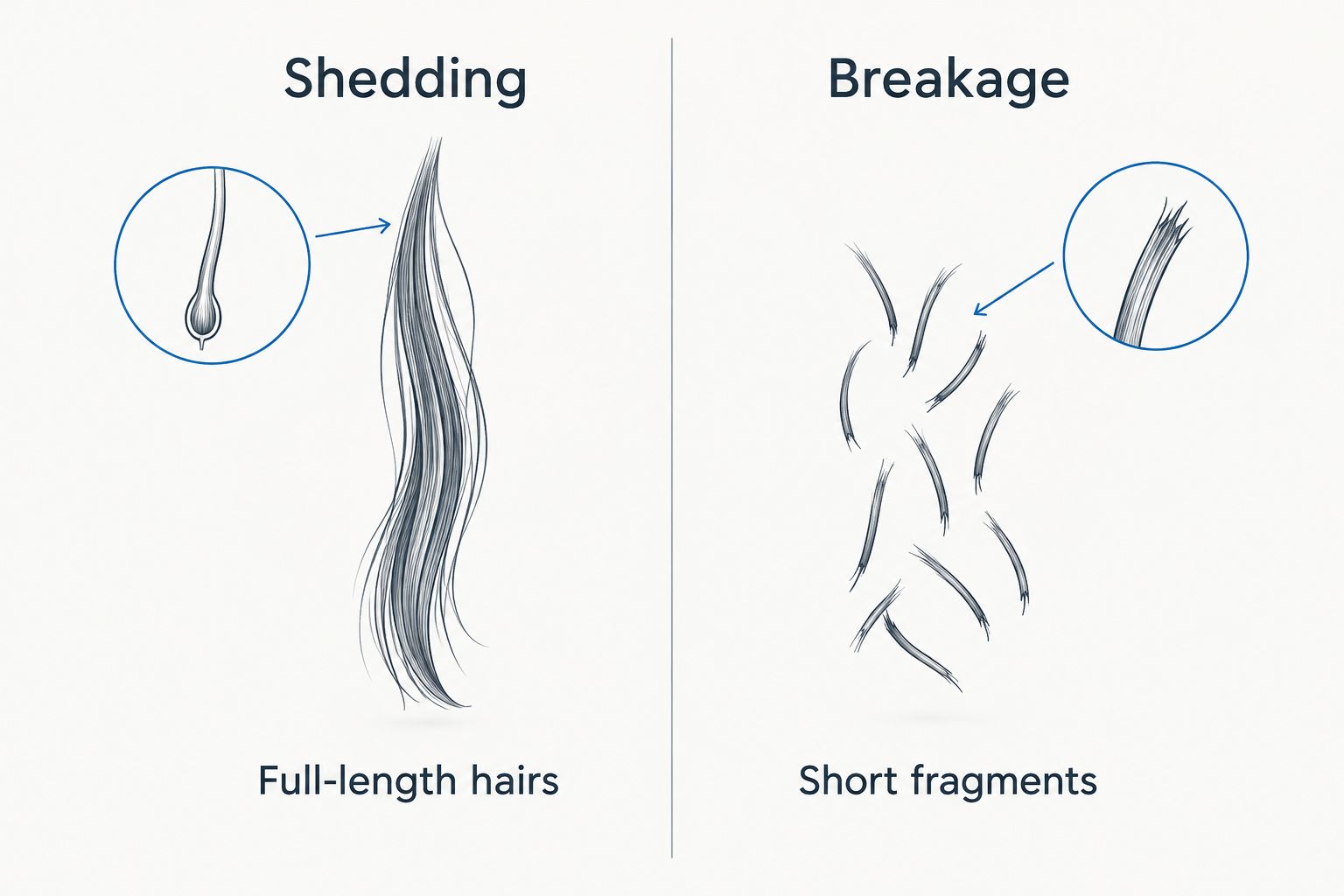
Shedding involves hair leaving the follicle. Breakage involves the strand snapping somewhere along its length. Both can appear in the same routine, but reducing breakage does not treat medical hair loss.
Use these observations to describe the problem to a dermatologist, not to diagnose yourself:
| Observation | What to notice | What it means for oil selection |
|---|---|---|
| Full-length hairs | Many fallen hairs appear close to your usual hair length | Do not assume a conditioning oil will stop the loss |
| Short fragments | Broken pieces vary in length | Conditioning and gentler handling address a different concern from shedding |
| Scalp symptoms | Pain, redness, persistent itch or distinct bare patches | Seek assessment rather than adding more products |
A widening part or reduced fullness cannot be explained reliably by inspecting a few hairs. If the pattern worries you, bring a description of when it began and any accompanying scalp symptoms to your appointment.
How to fit oil into a gentle postpartum routine
You do not need an elaborate oiling ritual. In 2026, the useful goal remains a routine that avoids irritation and unnecessary handling while addressing a real cosmetic need.
Check the label
Read the ingredients and directions before application. Do not combine several unfamiliar oils and essential oils at once; keeping changes separate makes a reaction easier to trace.
The American Academy of Dermatology's guidance on testing skin-care products recommends trying a new product on a small area before wider use. A home tolerance check does not guarantee that you will never develop an allergy.
Target the lengths
If dryness is the problem, focus on the dry lengths rather than assuming your scalp needs oil. Use enough to assess conditioning without making removal the most demanding part of your wash routine.
Do not add undiluted essential oils to a blend. More ingredients do not make a postpartum shedding treatment.
Handle gently
Spread the oil without vigorous rubbing, pulling or scratching. The American Academy of Dermatology recommends gentle hair care and avoiding tight hairstyles that pull on the hair.
Oil should make handling easier, not create a reason for a forceful scalp massage. Stop if application hurts.
Wash without scrubbing
Follow the product directions and wash gently. If removing the oil requires repeated rough washing or detangling, reassess the amount or whether that oil belongs in your routine.
Stop using the product if you develop burning, a rash or worsening itch. Seek medical advice for persistent symptoms.
When oil is the wrong next step
Contact a dermatologist if you have distinct bald patches, scalp pain, significant inflammation or hair loss that does not fit the expected postpartum pattern. Do not wait for an oil to work when symptoms need assessment.
The American Academy of Dermatology advises evaluation if your hair has not regained normal fullness by your child's first birthday. A clinician can assess whether another cause is contributing; an oil comparison cannot make that diagnosis.
Avoid starting hair supplements simply because shedding has begun. Discuss supplementation with your clinician, particularly while breastfeeding, rather than assuming that more nutrients mean more growth.
How these options are ranked
This ranking prioritizes a relevant cosmetic benefit, evidence that matches the claim, ingredient transparency and practical use. Coconut oil leads because the cited research directly addresses hair-fibre protein loss, not because it has demonstrated postpartum regrowth.
Mineral oil occupies the simple, fragrance-free preference slot. The botanical blend occupies a traditional-formulation preference slot, without transferring ingredient research to the finished product.
Which postpartum hair oil should you choose?
Choose coconut oil first if dry, breakage-prone lengths are your main complaint. Choose fragrance-free mineral oil if you prefer that conditioning approach, and assess a botanical blend only after reviewing its ingredients and directions.
If your only concern is increased shedding, you do not need to buy an oil to address it. Gentle care, attention to scalp symptoms and timely medical advice are more relevant than rotating through products labelled for growth.
FAQ
What’s the best hair oil for postpartum hair loss in 2026?
Coconut oil is the first choice in this guide for dry, breakage-prone lengths, not for treating postpartum shedding. Published hair-fibre research supports reduced protein loss, which is different from evidence of regrowth.
Can hair oil stop postpartum shedding?
No oil in this guide is established as a treatment that stops postpartum shedding. Oil can serve a cosmetic conditioning role without changing the postpartum hair cycle.
When does postpartum hair shedding usually peak?
The American Academy of Dermatology says postpartum shedding usually peaks around 4 months after childbirth. Most women regain their usual fullness by their child’s first birthday.
Is coconut oil better than mineral oil after childbirth?
Coconut oil has stronger evidence for reducing hair-fibre protein loss in the study cited here. That comparison does not establish that either oil treats postpartum shedding.
Can I use a botanical hair oil while breastfeeding?
Breastfeeding suitability depends on the complete formula, so ask your clinician or pharmacist about the specific product. Natural or botanical wording does not establish safety.
Should I massage my scalp hard to encourage growth?
No; vigorous massage is not an established treatment for postpartum shedding. Apply products gently and avoid pulling, scratching or rubbing an irritated scalp.
When should I see a dermatologist about postpartum hair loss?
Seek assessment for patchy loss, scalp pain, significant inflammation or a concerning pattern. The American Academy of Dermatology also advises evaluation if normal fullness has not returned by your child’s first birthday.
One last thing
Before buying another bottle, write down the problem you want it to solve: dry lengths, difficult detangling, breakage or shedding. That distinction is the most useful buying filter in this 2026 guide: a product can improve how your hair feels without treating why it is falling out.
Related guides
- Best hair growth oil: compare cosmetic claims
- Best Ayurvedic hair oil for hair fall
- Best scalp oil for dandruff and flaking