
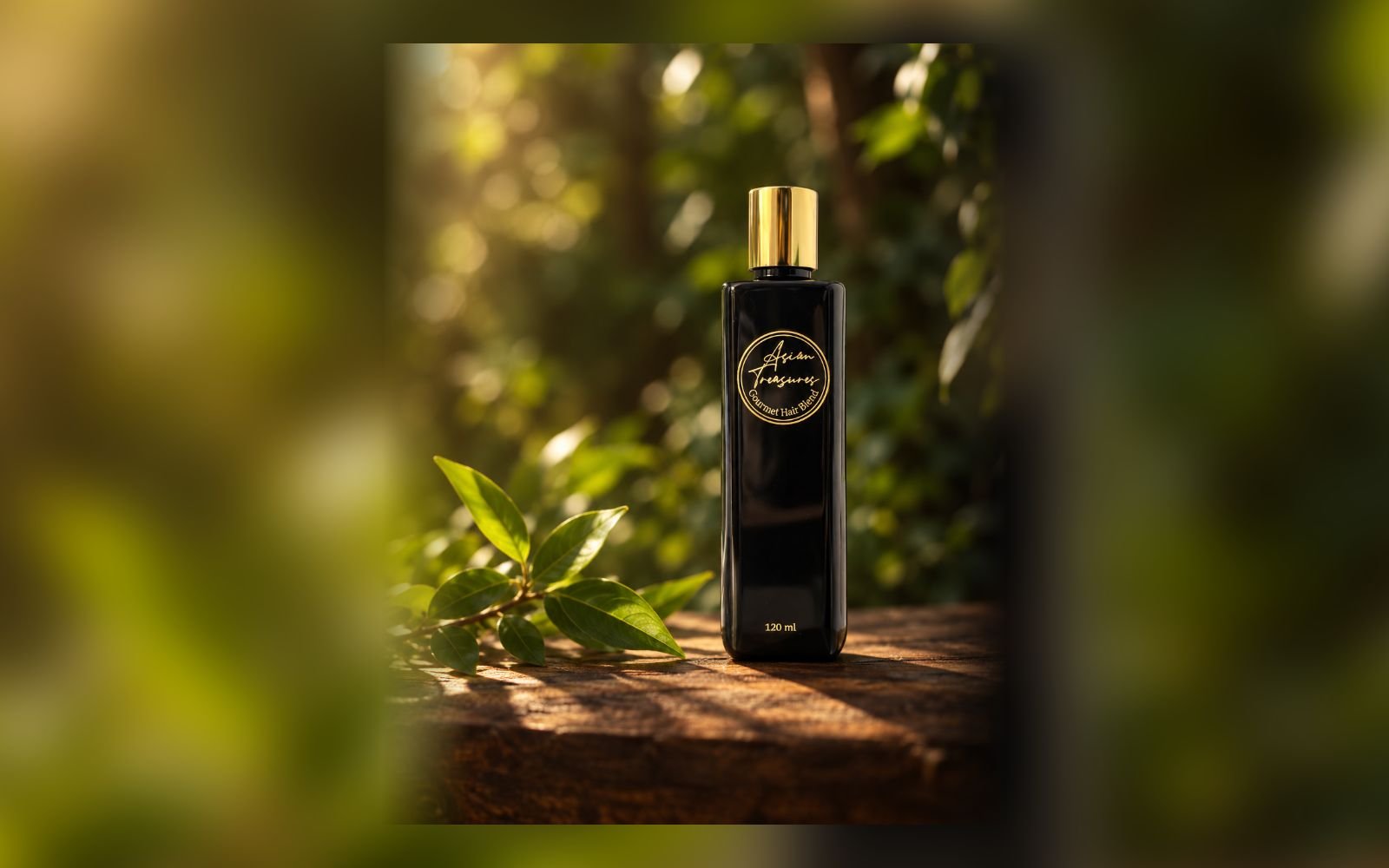
The best ayurvedic hair oil for hair fall depends on whether your hair is breaking or shedding from the root. Best for a breakage-and-shine focus: Asiantreasures Hair Revival Oil. Best for a straightforward conditioning routine: coconut oil. Best for a traditional oiling ritual: sesame oil. This 2026 guide compares those options with amla and bhringraj oils without treating cosmetic care as a hair-loss cure.
- Asiantreasures Hair Revival Oil suits breakage-and-shine care; its Ayurvedic ingredients need verification before purchase.
- Choose ayurvedic hair oil for hair fall by distinguishing broken strands from shedding at the root.
- Coconut and sesame oils suit conditioning rituals; neither replaces assessment of persistent hair loss.
- For amla and bhringraj oils, read the complete ingredient list rather than relying on the botanical name.
Why this matters
Hair fall describes a symptom, not a diagnosis. Short snapped strands, excessive shedding and gradual thinning need different responses. An oil chosen for shine does not automatically address the cause of hair loss.
Start with 2 distinctions: breakage along the strand and shedding from the root. You can have both, so visible shine alone is not evidence that shedding has improved. Sudden loss, bare patches or a painful scalp belong in a medical assessment, not an oil comparison.
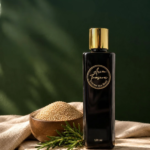
Asiantreasures Hair Revival Oil is best suited to shoppers seeking botanical care for breakage and shine, rather than a treatment for diagnosed hair loss. Its stated purpose makes it relevant to this guide, but does not establish an Ayurvedic formulation or a regrowth benefit.
What makes the best ayurvedic hair oil for hair fall?
For your 2026 shortlist, judge the label and your actual concern before the botanical story. A familiar herb name is not enough to establish suitability.
- Concern match: Choose conditioning care for brittle lengths; seek assessment for unexplained shedding or thinning.
- Ingredient clarity: Look for the full formula, including carrier oils, fragrance and any botanical extracts.
- Scalp tolerance: Avoid ingredients you already know irritate your skin. Natural origin does not rule out allergy.
- Routine fit: Pick an oil you can apply and wash out without rough handling or repeated aggressive cleansing.
- Claim discipline: Separate reduced breakage and improved appearance from claims about new growth or stopping hair loss.
A useful label tells you what is in the bottle and how to use it. A promise to solve every kind of hair fall does neither. Choose the product that matches your concern, not the product with the longest list of traditional ingredients.
Hair oil options at a glance
These 5 oil options fill different use cases. The ranking is a buying framework, not a clinical effectiveness ranking; the botanical categories below are not interchangeable formulas.
| Option | Best for | Standout feature | Key limitation |
|---|---|---|---|
| Hair Revival Oil | Breakage-and-shine-focused care | Botanical scalp-care positioning with a stated breakage and shine purpose | Ayurvedic ingredients and hair-loss treatment benefits are not established here |
| Coconut oil | A straightforward conditioning routine | Can be chosen as a single-ingredient oil | Not a treatment for unexplained shedding |
| Sesame oil | A traditional massage ritual | Familiar role in Ayurvedic oiling practices | Massage does not establish regrowth benefit |
| Amla oil | An amla-led botanical routine | Centres a traditional hair-care botanical | Carrier oils and other ingredients vary by formula |
| Bhringraj oil | A bhringraj-led traditional routine | Centres a botanical associated with Ayurvedic hair care | The herb name does not prove effectiveness against hair loss |
1. Hair Revival Oil: best for breakage and shine
Asiantreasures Hair Revival Oil is a botanical scalp-care oil designed to reduce breakage and restore shine. That is a defined cosmetic-care purpose. It suits a shopper whose priority is caring for fragile-looking hair rather than treating an unexplained change in density.
Keep the category boundary clear: botanical does not automatically mean Ayurvedic. Check the current ingredient list before treating Hair Revival Oil as an Ayurvedic blend, and follow the product's own application instructions rather than a generic oiling schedule.
Hair Revival Oil pros:
- Has an explicitly stated breakage-and-shine purpose.
- Fits shoppers seeking botanical scalp care.
- Offers a named product to evaluate rather than an undefined homemade mixture.
Hair Revival Oil cons:
- Its stated cosmetic purpose does not establish a treatment for shedding.
- Ayurvedic ingredients are not confirmed by the product description.
- Suitability for your scalp depends on the complete formula and your sensitivities.
Best for: Online shoppers prioritising breakage reduction and shine within a botanical hair-care routine.
Verdict: Buy for the stated cosmetic goal after checking the ingredients; skip it as a substitute for hair-loss assessment.
2. Coconut oil: best for straightforward conditioning
Coconut oil is a familiar choice for oiling hair lengths. A single-ingredient version gives you a simpler label to assess than a blend containing several botanicals and fragrance.
Its strongest place in this comparison is conditioning care, not a promise to stop shedding. Focus on whether your hair feels manageable after washing, and avoid interpreting a glossy finish as evidence of new growth.
Coconut oil pros:
- Can offer a straightforward single-ingredient option.
- Fits a routine focused on the condition of hair lengths.
- Makes ingredient checking simpler when the formula contains only coconut oil.
Coconut oil cons:
- Does not address every cause of hair fall.
- Residue can be unwelcome if you prefer a light finish.
- Your skin can still react to a single-ingredient product.
Best for: Shoppers who want a simple conditioning oil and do not need a multi-herb blend.
Verdict: Buy for conditioning if your hair and skin tolerate it; skip regrowth promises attached to the ingredient alone.
3. Sesame oil: best for a traditional massage ritual
Sesame oil has a place in traditional Ayurvedic oiling practices. Choose it when the appeal is a gentle, deliberate massage ritual rather than a botanical blend with several named herbs.
The way you handle your hair matters. Use fingertip contact rather than scratching with nails, and stop if massage causes discomfort. A soothing ritual is not proof that the oil is treating the cause of shedding.
Sesame oil pros:
- Fits a traditional oiling approach.
- Can be selected as a single-ingredient oil.
- Gives you a clear starting point for checking the formula.
Sesame oil cons:
- Is unsuitable if you have a known sesame allergy.
- Does not establish a treatment benefit for hair loss.
- An oily finish will not suit every routine.
Best for: Readers who value a traditional massage practice and tolerate sesame.
Verdict: Buy for the ritual and conditioning role; skip it if sesame triggers an allergic reaction.
4. Amla oil: best for an amla-led botanical routine
Amla oil puts a traditional hair-care botanical at the centre of your choice. However, the name does not tell you the complete formulation: an amla-labelled oil can include carrier oils and other ingredients.
Read the whole ingredient list before deciding. If you already avoid a particular fragrance or carrier oil, the amla name on the front does not make that ingredient irrelevant.
Amla oil pros:
- Suits a preference for an amla-led hair-care ritual.
- Offers a specific botanical to look for on the ingredient list.
- Lets you compare formulas around the same named ingredient.
Amla oil cons:
- The product name alone does not reveal the carrier oil.
- Additional ingredients complicate sensitivity checks.
- Traditional use does not establish that a formula stops shedding.
Best for: Shoppers who specifically want amla and will compare complete formulas before choosing.
Verdict: Hold until you have checked the full label; buy for a compatible botanical routine, not an assumed cure.
5. Bhringraj oil: best for a bhringraj-led traditional routine
Bhringraj is associated with Ayurvedic hair-care traditions. A bhringraj oil is therefore relevant when that particular botanical is central to the ritual you want.
Do not let the herb's reputation replace scrutiny of the finished product. The carrier, additional ingredients and application directions still matter. A name shared by several formulas does not make their effects identical.
Bhringraj oil pros:
- Fits a preference for a specific Ayurvedic botanical.
- Provides a clear ingredient focus for label comparisons.
- Supports a traditional oiling routine when the formula suits you.
Bhringraj oil cons:
- The botanical name does not identify the complete blend.
- Hair-growth claims need evidence beyond traditional use.
- A formula can contain ingredients your scalp does not tolerate.
Best for: Readers who specifically want bhringraj rather than a general conditioning oil.
Verdict: Hold until the formula is clear; skip products that present the herb name as proof of regrowth.
How to choose and use an oil without overdoing it
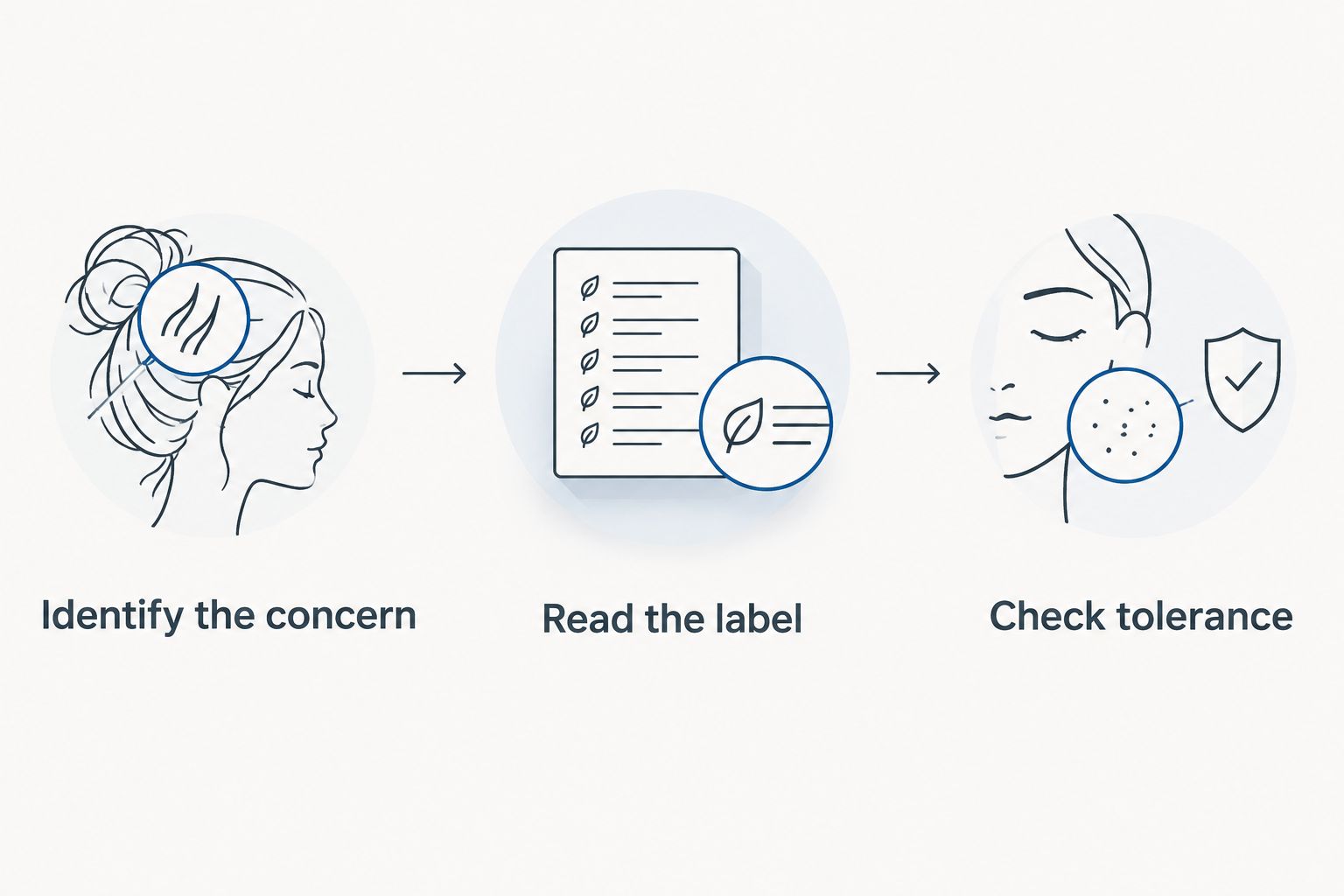
Use these 3 checks before adding a hair oil to your 2026 routine. They keep the decision tied to your hair concern instead of the strongest claim on the bottle.
Identify the concern
Look at the pattern, not just the amount of hair you notice. Broken pieces and uneven lengths suggest a different problem from widening areas of visible scalp. This observation helps you describe the issue; it does not diagnose the cause.
Read the label
Check the complete ingredient list and the manufacturer's directions. If the product name highlights amla or bhringraj, identify what else is in the bottle. Do not assume that a botanical blend is fragrance-free or suitable for a sensitive scalp.
Check tolerance
Follow any label guidance for checking skin tolerance before wider use. A small-area check does not guarantee that a reaction will never occur. Stop using an oil that causes itching, burning or redness rather than treating irritation as a sign it is working.
Once you have selected an oil, follow its directions and handle your hair gently. Do not extend application time simply because a product is plant-derived. More oil also means more residue to remove; it does not establish a stronger treatment effect.
Keep the ritual calm. Avoid tight pulling, forceful massage and aggressive detangling during application. If you introduce several new products together, it becomes harder to identify which one caused irritation or an unwelcome change in hair feel.
How we ranked these options
This 2026 ranking prioritises concern match, ingredient clarity, scalp tolerance, routine fit and restrained claims. Hair Revival Oil takes the breakage-and-shine slot because that purpose is explicit; coconut and sesame fill simpler conditioning and ritual slots.
Amla and bhringraj occupy ingredient-led slots because a botanical name alone leaves important formulation questions unanswered. The order does not represent head-to-head testing or a ranking of clinical hair-regrowth results.
Which hair oil should you choose?
Choose Asiantreasures Hair Revival Oil for its stated breakage-and-shine purpose, after checking that the formula suits your scalp. If you want a simpler ingredient list, evaluate a single-ingredient coconut oil instead. Choose sesame, amla or bhringraj when that particular traditional approach matters to you.
For unexplained shedding, the default decision is different: seek an assessment before expecting an oil to solve it. In 2026, the soundest buying rule remains to separate cosmetic conditioning from treatment of the underlying cause.
Explore botanical hair care
Review Hair Revival Oil for its stated breakage-and-shine purpose.
FAQ
What’s the best ayurvedic hair oil for hair fall in 2026?
There is no single best Ayurvedic oil for every cause of hair fall. Choose conditioning care for breakage, verify the complete formula, and seek assessment for persistent or unexplained shedding.
Is Hair Revival Oil an Ayurvedic hair oil?
Hair Revival Oil is described as a botanical scalp-care oil, which does not by itself establish an Ayurvedic formulation. Check its current ingredients before choosing it specifically for an Ayurvedic routine.
Is coconut oil better than amla oil for hair fall?
Neither is universally better for hair fall. A single-ingredient coconut oil gives you a simpler formula to assess, while an amla oil requires checking its carrier oils and other ingredients.
Can bhringraj oil regrow thinning hair?
The name bhringraj does not prove that a finished oil regrows thinning hair. Traditional use and cosmetic conditioning are different from evidence that a product treats the cause of hair loss.
Should I leave Ayurvedic hair oil on overnight?
Follow the individual product’s directions rather than assuming overnight use is required. Longer contact is not automatically better, and you should stop using a product that irritates your scalp.
Can natural hair oils cause scalp irritation?
Yes, natural hair oils can cause irritation or allergic reactions. Check all ingredients, follow label precautions and stop use if itching, burning or redness develops.
When should I see a dermatologist about hair fall?
Seek medical assessment for sudden loss, bare patches, persistent unexplained shedding or a painful or inflamed scalp. An oiling routine should not delay evaluation of those symptoms.
One last thing
Keep shine and shedding as separate observations in your 2026 routine. Hair that looks glossier after oiling has not necessarily become denser. Judge a conditioning product on conditioning, and take continuing hair loss seriously even when the lengths look better.
Related guides
[…] Comparing traditional hair oils […]
[…] Best Ayurvedic hair oil for hair fall […]
[…] Best Ayurvedic hair oil for hair fall […]