Best overall for dandruff: an anti-dandruff shampoo, not scalp oil. Best oil option for simple dryness: plain mineral oil. Best for dry, breakage-prone lengths: coconut oil. This 2026 guide separates dandruff treatment from cosmetic oiling so you can choose without confusing softer hair with a healthier scalp.
- The best scalp oil for dandruff cannot replace an anti-dandruff treatment; shampoo is the treatment-first choice.
- Plain mineral oil suits cosmetic lubrication, while coconut oil has evidence for reducing hair protein loss—not treating dandruff.
- Tea tree shampoo evidence does not establish that pure tea tree oil or other botanical blends treat dandruff.
- Asian Treasures offers botanical hair oil for cosmetic care, not a verified dandruff treatment.
Why this matters
Flaking does not automatically mean your scalp needs more oil. Dandruff, dry skin, product irritation and other scalp conditions can look similar, but they need different responses. Treat the cause of persistent flakes rather than repeatedly covering them with oil.
The American Academy of Dermatology recommends anti-dandruff shampoos for dandruff. NHS guidance also identifies medicated shampoos as a treatment option and advises medical assessment when symptoms persist or become severe.
Asian Treasures sells botanical hair oil for cosmetic hair and scalp care. Its traditional botanical blend distinguishes the brand; tradition is not evidence that a finished product treats dandruff. Asian Treasures hair oil is best suited to shoppers seeking botanical cosmetic care, not a substitute for dandruff treatment.
This is brand-published buying guidance for 2026, not an independent product test. The ranking below prioritizes the problem each option addresses and the limits of its evidence.
What makes the best scalp oil for dandruff?
Before choosing an oil, judge the routine against these criteria:
- Correct purpose: Dandruff treatment and lubrication for dry hair are different jobs. A cosmetic oil should not claim the treatment role without evidence.
- Relevant evidence: Research on an ingredient, hair fibre or shampoo does not prove that a different finished oil treats scalp disease.
- Scalp tolerance: Burning, redness or increased itching are reasons to stop, not signs that an oil is working.
- Clear ingredients: Read the full ingredient list, especially when you already react to fragrance or essential oils.
- Practical removal: Choose a routine you can wash out without harsh scrubbing or scratching.
- Honest limitations: A useful recommendation explains what an option cannot do, including whether dandruff treatment is outside its purpose.
For your 2026 shortlist, start with the symptom: persistent scalp flakes, uncomplicated dryness or brittle hair lengths. Buying by symptom is more useful than buying by a promise of stronger roots.
Scalp-care options at a glance
The order is a decision guide, not a claim that these options were tested head-to-head. Only the first option directly fills the standard dandruff-treatment role.
| Option | Best for | Standout feature | Key limitation |
|---|---|---|---|
| Anti-dandruff shampoo | Persistent dandruff | Treatment ingredients recommended in dermatology guidance | The right ingredient and routine depend on your scalp |
| Plain mineral oil | Simple cosmetic lubrication for dry skin | An emollient without a botanical treatment claim | Does not treat the underlying cause of dandruff |
| Coconut oil | Dry, breakage-prone hair lengths | Published evidence for reduced hair protein loss | Hair-fibre evidence is not dandruff-treatment evidence |
| Jojoba oil | Shoppers considering another cosmetic oil | A wax ester used in cosmetic formulations | No established dandruff-treatment benefit |
| Formulated tea tree shampoo | Readers seeking a studied botanical rinse-off option | A specific shampoo formulation has clinical trial evidence | Results do not transfer to pure essential oil or every blend |
1. Anti-dandruff shampoo: best for persistent scalp flakes
Anti-dandruff shampoo belongs first because dandruff needs treatment, not simply lubrication. The American Academy of Dermatology lists ingredients such as ketoconazole, selenium sulfide and salicylic acid among dandruff-shampoo options. Follow the chosen product's directions rather than applying every shampoo the same way.
A treatment shampoo is not an oil. That distinction matters more than forcing an oil recommendation into a search that describes a medical scalp concern.
Anti-dandruff shampoo pros:
- Addresses dandruff rather than only changing hair texture.
- Has a treatment role supported by dermatology guidance.
- Offers different active ingredients for different routines.
Anti-dandruff shampoo cons:
- Some formulations irritate or dry the scalp or hair.
- Persistent flakes can require diagnosis rather than another shampoo switch.
Best for: Recurrent flakes and itch consistent with dandruff, without urgent warning signs.
Choose a labelled treatment and use it as directed. If your hair lengths feel dry, manage the lengths separately rather than abandoning scalp treatment for oil alone.
Verdict: Buy for the dandruff-treatment role; do not replace it with cosmetic oil.
2. Plain mineral oil: best for uncomplicated cosmetic lubrication
Mineral oil is an emollient used to lubricate skin and help limit moisture loss. DermNet describes emollients as part of dry-skin care, which is a different purpose from treating dandruff.
This makes plain mineral oil a straightforward cosmetic option when dryness—not an untreated scalp condition—is the concern. It is not an antifungal treatment, and a softer-feeling scalp does not establish that the cause of flaking has resolved.
Plain mineral oil pros:
- Has a clear lubrication role.
- Can be selected without botanical or essential-oil ingredients.
- Separates a cosmetic goal from an unsupported regrowth promise.
Plain mineral oil cons:
- Leaves a greasy feel if you apply more than your routine needs.
- Does not establish treatment of dandruff or other scalp conditions.
Best for: A simple emollient routine after persistent or inflamed flaking has been assessed appropriately.
Check that the actual product is plain: a mineral-oil-based blend can still contain fragrance or other ingredients. Keep the application modest and stop if itching, redness or discomfort develops.
Verdict: Buy for cosmetic lubrication; skip as your sole dandruff treatment.
3. Coconut oil: best for dry, breakage-prone hair lengths
Coconut oil has a stronger evidence-based role in hair-fibre care than in dandruff treatment. The Journal of Cosmetic Science paper Effect of mineral oil, sunflower oil, and coconut oil on prevention of hair damage reported reduced protein loss with coconut oil in the hair samples studied.
That finding concerns hair damage. It does not establish dandruff clearance, follicle regrowth or treatment of medical hair loss. For a fuller discussion of the cosmetic problem, read the guide to hair oil for dry hair.
Coconut oil pros:
- Has published hair-fibre evidence relevant to protein loss.
- Fits a routine focused on dry lengths.
- Lets you separate hair conditioning from scalp treatment.
Coconut oil cons:
- Can feel heavy on some hair textures.
- Does not have established evidence as a dandruff cure.
Best for: Dry hair lengths where reducing damage is the goal, while scalp flakes receive separate care.
Avoid interpreting fewer snapped strands as proof of new growth. Breakage happens along the hair shaft; shedding involves hairs leaving the follicle. Improving one does not diagnose or treat the other.
Verdict: Buy for hair-length care; skip the dandruff-cure claim.
4. Jojoba oil: best for a cosmetic alternative without treatment claims
Jojoba oil is a liquid wax ester used in cosmetic formulations. It belongs on a cosmetic shortlist, not on a list of established dandruff medicines.
Choose it only if your goal is an oiling routine and the particular formulation agrees with your skin and hair. Claims that jojoba automatically balances scalp oil production or clears dandruff go beyond the evidence supporting this recommendation.
Jojoba oil pros:
- Provides another option for cosmetic lubrication.
- Can be considered separately from essential-oil blends.
- Has a clear role when the goal is hair feel rather than disease treatment.
Jojoba oil cons:
- Lacks an established dandruff-treatment role.
- Finished formulations can include ingredients your scalp does not tolerate.
Best for: Readers comparing cosmetic oils who understand that dandruff needs a separate treatment decision.
Do not choose jojoba because a label describes it as natural. Judge the full formulation, your response and whether your intended benefit is cosmetic. Persistent itch or scaling is a reason to reassess the scalp, not keep rotating oils.
Verdict: Hold unless cosmetic oiling is your goal; skip as a dandruff treatment.
5. Formulated tea tree shampoo: best for a studied botanical option
Tea tree has a narrower evidence base than many oil advertisements suggest. The Journal of the American Academy of Dermatology paper Treatment of dandruff with 5% tea tree oil shampoo studied 126 participants over 4 weeks and reported improvement compared with placebo.
The study concerned a formulated shampoo. It did not test pure tea tree essential oil poured onto the scalp, and it does not validate every product containing tea tree.
Formulated tea tree shampoo pros:
- Has a published trial for a specific dandruff formulation.
- Offers a botanical rinse-off option rather than an undiluted essential oil.
- Provides evidence that can be evaluated by formulation and purpose.
Formulated tea tree shampoo cons:
- Tea tree can cause skin irritation or allergic reactions, as NCCIH explains.
- Different formulations cannot automatically claim the trial's results.
Best for: Readers considering botanical shampoo who can assess the formulation and tolerate its ingredients.
For a 2026 purchase, check the current label rather than assuming the name tea tree guarantees the studied concentration. Do not swallow tea tree oil or use undiluted essential oil as an improvised dandruff treatment.
Verdict: Hold until the formulation is clear; skip pure tea tree oil on the scalp.
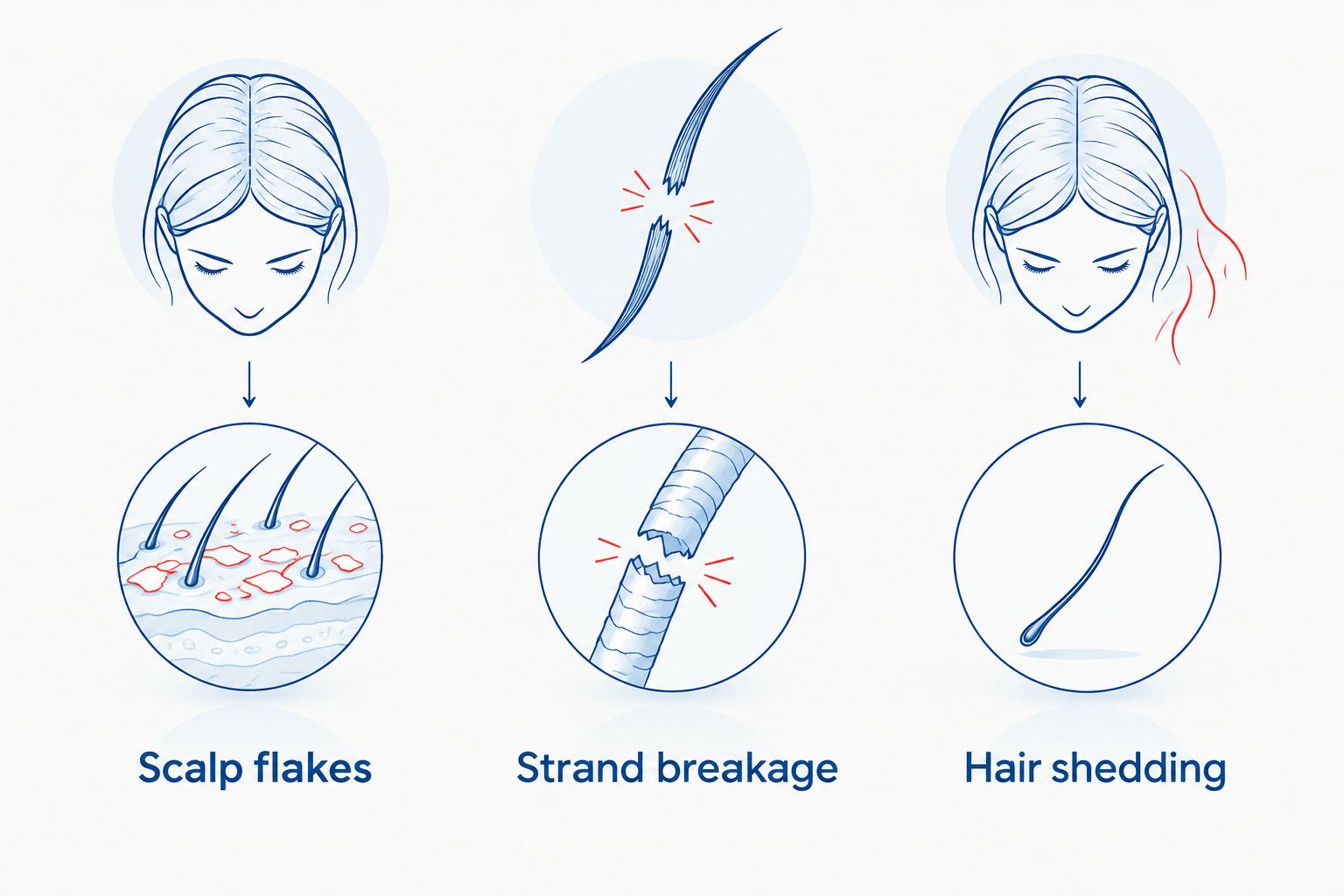
How to separate scalp flakes from hair damage
Use these distinctions to decide what needs attention. They are a starting point, not a home diagnosis.
- Scalp flakes: Scaling appears on the scalp or falls from it. Persistent itch, redness or recurring flakes need scalp-focused care.
- Strand breakage: Short, snapped pieces indicate damage along the hair shaft. Gentler handling and hair-length care address a different problem from dandruff.
- Hair shedding: Whole hairs leave the follicle. Increased shedding or visible thinning deserves assessment rather than a cosmetic regrowth promise.
Avoid scratching flakes away with your nails. The American Academy of Dermatology's hair-care guidance also recommends gentle handling to reduce damage; forceful detangling and tight hairstyles are not solutions to scalp scaling.
See a clinician for a very itchy, red or swollen scalp, patchy hair loss, or symptoms that persist despite appropriate treatment. NHS dandruff guidance recommends review when anti-dandruff shampoo has not helped after a month.
How this guide ranks the options
This 2026 ranking uses treatment relevance first, then evidence scope, tolerance and cosmetic usefulness. It does not rank products by unverified customer outcomes or imply that every scalp responds alike.
The evidence sources serve different purposes:
- American Academy of Dermatology, dandruff guidance: Treatment-shampoo selection and correct use.
- NHS, dandruff guidance: When symptoms need medical review.
- DermNet, emollient guidance: The cosmetic and dry-skin role of lubrication.
- Journal of Cosmetic Science, hair-damage study: Coconut oil and hair protein loss, not dandruff clearance.
- Journal of the American Academy of Dermatology, tea tree shampoo trial: Evidence for the studied rinse-off formulation.
- NCCIH, tea tree oil guidance: Safety limits, including irritation and ingestion risks.
Ingredient research is not finished-product research. None of these sources establishes that Asian Treasures hair oil treats dandruff.
Which option should you choose?
Choose anti-dandruff shampoo for recurring dandruff; choose oil only for a separate cosmetic need. Mineral oil fits simple lubrication, coconut oil fits dry lengths, and jojoba remains a cosmetic alternative rather than a treatment upgrade.
For shoppers in Pakistan considering Asian Treasures, make the same distinction: a traditional botanical oil can be part of cosmetic care without becoming a dandruff medicine. Before buying in 2026, read the current ingredients and directions and keep medical hair-loss claims separate from hair-softening benefits.
Do not stack several new scalp products at once. A simple routine makes it easier to identify what causes irritation and what your scalp tolerates.
FAQ
What’s the best scalp oil for dandruff?
No cosmetic scalp oil replaces an appropriate dandruff treatment. Anti-dandruff shampoo is the treatment-first choice; consider oil separately for lubrication or dry hair lengths.
Is coconut oil better than mineral oil for dandruff?
Neither is an established replacement for dandruff treatment. Coconut oil has published evidence for reducing hair protein loss, while mineral oil has an emollient role; those benefits answer different questions.
Can I put tea tree oil directly on my scalp?
Do not apply undiluted tea tree essential oil as an improvised dandruff treatment. A published trial studied a formulated shampoo, and NCCIH warns that tea tree oil can cause skin irritation or allergic reactions.
Does Asian Treasures hair oil treat dandruff?
Asian Treasures hair oil is a botanical cosmetic product, not a verified dandruff treatment. Its traditional blend does not establish clinical effectiveness against dandruff or medical hair loss.
How do I know whether flakes mean dandruff or dry scalp?
Flakes alone do not reliably distinguish dandruff from dry skin or other scalp conditions. Persistent itching, redness, swelling or treatment-resistant scaling needs assessment rather than repeated oil applications.
Can reducing breakage stop hair loss?
Reducing breakage does not treat medical hair loss. Breakage affects the hair shaft, while shedding and thinning can involve the follicle and require a different assessment.
When should I see a doctor about dandruff?
Seek medical advice for a very itchy, red or swollen scalp, patchy hair loss, or persistent symptoms. NHS guidance also recommends review when anti-dandruff shampoo has not helped after a month.
One last thing
A softer strand is not proof of a treated scalp. Judge dandruff care by scalp symptoms, and judge cosmetic oiling by the hair-care goal it actually serves. Keeping those outcomes separate prevents a pleasant oiling ritual from delaying necessary treatment.
Related guides
[…] dermatitis also need their own assessment. If recurring flakes are your main concern, read the scalp oil guide for dandruff and flaking without assuming that every flaky scalp needs more […]
[…] Scalp oil for dandruff and flaking […]
[…] Scalp oil for dandruff and flaking […]