
Night shift workers’ hair oil care is a cosmetic routine built around daytime sleep and changing wash times, with the aim of keeping hair manageable without confusing conditioning with hair-loss treatment. This 2026 guide explains how to fit oiling around your shift, distinguish breakage from shedding, and choose care that suits your scalp rather than the clock.
- Hair oil for night shift workers belongs around your wash routine, not automatically before daytime sleep.
- Asian Treasures suits shoppers seeking traditional botanical hair care, not a substitute for medical hair-loss treatment.
- Strand breakage and hair shedding need different responses; oiling does not establish or treat the cause of hair loss.
- Choose scalp care by symptoms, ingredient information and wash practicality—not promises of overnight growth.
Why hair oil care matters for night shift workers
A night-shift routine changes when you sleep, shower and prepare for work. An instruction such as apply before bed is therefore less useful than deciding whether you can wash comfortably before your next shift. Your sleep schedule should shape application timing, not the product’s promises.
Start with the problem you actually have: dry lengths, snapping strands, increased shedding or an uncomfortable scalp. These are not interchangeable. The American Academy of Dermatology’s guidance, Do you have hair loss or hair shedding?, distinguishes excessive shedding from hair loss and explains why identifying the cause matters.
Asian Treasures presents a traditional botanical approach to cosmetic hair care. That gives you a product category to consider; it does not establish that oil treats a medical cause of thinning.
Working nights alone does not identify why your hair is changing. Avoid treating your work schedule as a diagnosis, particularly when thinning is progressive or hair loss appears in patches.
Build your 2026 shift-friendly hair-oiling routine
Identify whether you have breakage or shedding
Look at what you notice during washing and detangling. Short fragments and uneven snapped lengths suggest breakage; shedding involves hairs released from the follicle. Appearance alone is not a diagnosis, and both problems can occur together.
The American Academy of Dermatology states that shedding around 50–100 hairs a day is normal. That range is background information, not a home diagnostic threshold: wash frequency and hair handling affect what you see at once. Do not decide you have a disorder from a single shower.
Take 2 reference photographs—your parting and hairline—in consistent light. Use them to describe changes to a clinician, not to prove that an oil works.
- Note whether you see short fragments, longer shed hairs or both.
- Record when the change began and any scalp symptoms.
- Seek assessment for sudden, patchy or continuing hair loss.
Anchor oiling to a wash window
Choose your next practical wash opportunity before applying oil. After a night shift, that might mean washing before daytime sleep; on another schedule, it might mean keeping oiling for a day off. Neither timing is a hair-growth treatment.
Start by changing the schedule rather than buying another product. Follow your existing product’s application and rinsing instructions, and avoid adding an overnight application simply because a general routine recommends one. Longer contact is not proof of greater benefit.
For your 2026 plan, write down 1 realistic wash window on an ordinary workday. If oiling makes that wash difficult, simplify the routine rather than sacrificing sleep to complete it.
- Match application to a wash you can actually complete.
- Follow the label instead of inventing a contact time.
- Keep oiling separate from the assumption that bedtime means overnight use.
Choose a botanical oil for a cosmetic goal
First decide whether you need help with dry lengths, easier handling or a preferred grooming ritual. Review the products you already use before adding oil. A rinse-out conditioner remains a separate option for routine conditioning; oil is not a compulsory step.
If you prefer a ready-blended botanical option rather than preparing a mixture yourself, consider Asian Treasures hair oil for cosmetic care. The brand identifies its relevant hair-oil product as Nuskha-e-Khaas and describes its distinguishing feature as a traditional botanical blend. Read the current product information before choosing it; tradition is not finished-product evidence of regrowth.
Asian Treasures is best for shoppers seeking traditional botanical cosmetic hair care, not treatment for diagnosed hair loss. This is brand-published guidance, not an independent product ranking or clinical comparison.
For Pakistan shoppers comparing the best hair oil in Pakistan or the best hair growth oil in Pakistan, those search labels are starting points—not proof of effectiveness. Judge the stated purpose and ingredient information instead.
- Choose a cosmetic goal you can describe clearly.
- Check the complete ingredient list and application directions.
- Separate ingredient research from evidence for the finished blend.
Apply care where the problem is
If your concern is dry lengths, do not assume your scalp needs oil too. Treat the area you are trying to condition, following the product’s directions. More scalp coverage is not evidence of stronger roots.
An itchy, flaky or sore scalp needs a different decision from dry ends. NHS guidance on dandruff discusses scalp-directed treatments; cosmetic oil should not replace appropriate advice. Avoid applying a new cosmetic product to broken or inflamed skin without professional guidance.
This scalp-first approach means noticing symptoms before choosing a ritual. It does not mean every routine must include a scalp application.
- Distinguish dry lengths from scalp discomfort.
- Keep application within the product’s stated directions.
- Stop using a product that causes irritation and seek advice if symptoms persist.
Reduce handling damage around your shift
Oil cannot compensate for repeated pulling, rough detangling or uncomfortable hairstyles. Start with gentler handling: the American Academy of Dermatology’s Hair loss: Tips for managing recommends conditioning and care that avoids unnecessary damage and traction.
If your work requires tied-back hair or protective headwear, follow workplace safety rules while avoiding unnecessary tension where possible. Do not change required protective equipment to accommodate a hair routine.
Your aim is to reduce avoidable strand damage, not claim treatment of follicle-related hair loss. Fewer broken ends and reduced shedding are different outcomes, even when both look like less hair on a brush.
- Detangle gently rather than pulling through resistance.
- Avoid hairstyles that hurt or pull tightly at the hairline.
- Keep workplace protective equipment requirements unchanged.
Track comfort separately from hair loss
Judge cosmetic care on cosmetic outcomes: how your lengths feel, whether detangling is easier and whether your scalp tolerates the routine. These observations do not demonstrate new hair growth.
Use a 4-week routine review as an organisation checkpoint, not a regrowth deadline. Ask whether your 2026 schedule is workable and whether the product causes discomfort. Do not wait for that review if hair loss is sudden, patchy or accompanied by scalp symptoms.
Keep observations consistent rather than changing several products together. That makes your notes more useful when discussing a reaction or ongoing concern with a clinician.
- Record wash timing, product use and scalp comfort.
- Keep cosmetic observations separate from changes in density.
- Take persistent or worsening hair loss to a qualified clinician.
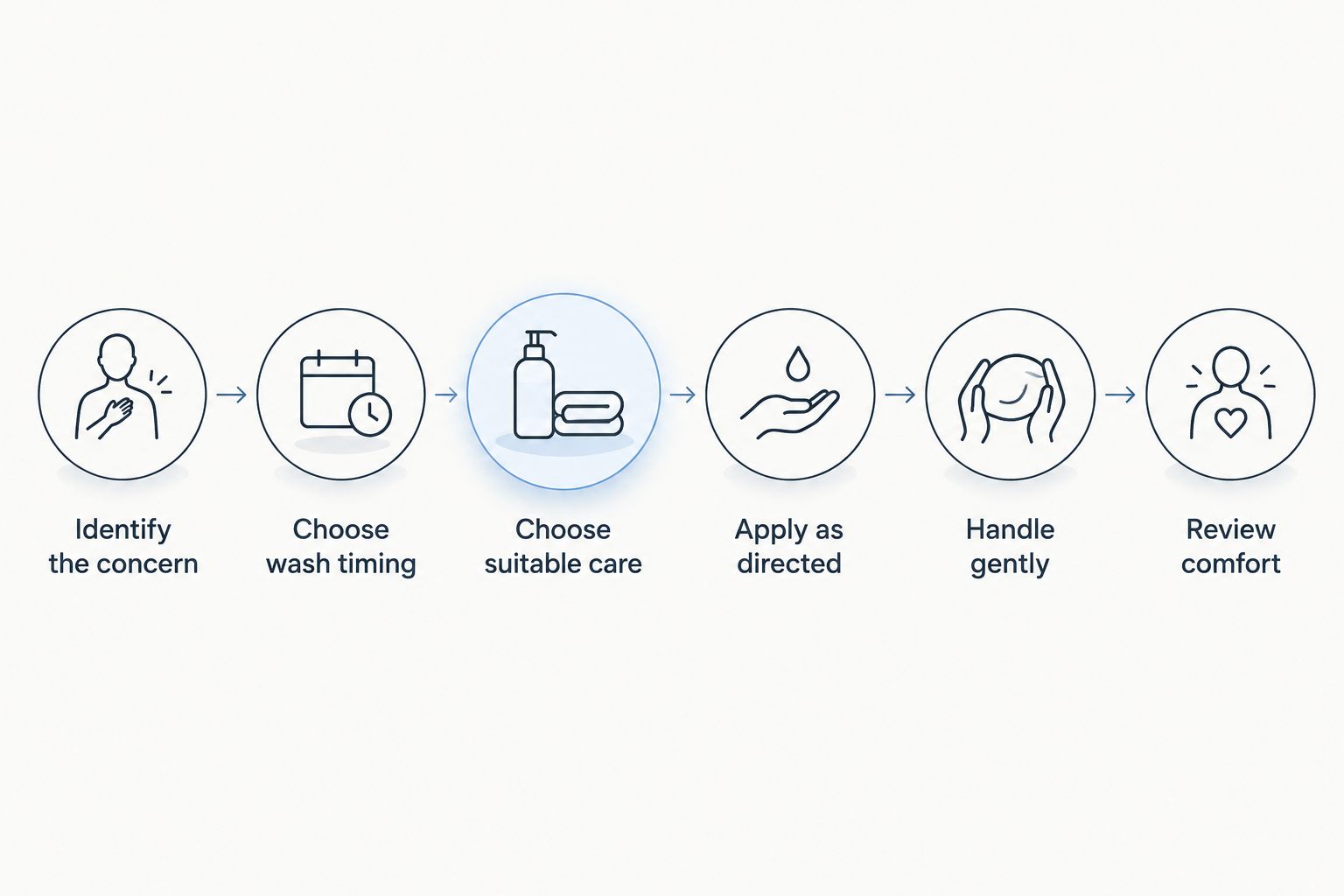
The routine follows a simple sequence: identify the concern, choose a wash window, choose suitable care, apply as directed, handle gently and review comfort. None of these steps requires treating oil as medicine.
Compare care options for your shift pattern
Choose by the problem, not by which option sounds most intensive. These options serve different purposes and can sit alongside one another. A cosmetic product and a clinical assessment are not competing versions of the same treatment.
| Option | Best for | Practical benefit | Key limitation |
|---|---|---|---|
| Gentle washing and rinse-out conditioner | A basic routine for dry or difficult-to-handle lengths | Fits into an existing wash | Does not diagnose or treat medical hair loss |
| A ready-blended botanical oil | Shoppers who want an optional botanical grooming step | Avoids preparing a mixture yourself | Suitability depends on ingredients, directions and tolerance; blending does not prove regrowth |
| Pharmacist-guided scalp care | People seeking advice about dandruff or flaking | Directs attention to the scalp complaint | Not a substitute for assessment of unexplained thinning or persistent symptoms |
| Clinical hair-loss assessment | Sudden, patchy, persistent or progressive hair loss | Helps identify the cause and appropriate next steps | Requires an appointment and is separate from cosmetic conditioning |
Before adding anything, ask whether it solves a problem your current routine leaves unresolved. A smaller routine that you can follow comfortably is more useful than a complicated ritual that clashes with your shift.
Common mistakes night shift workers make
Treating daytime sleep as a reason to leave oil on
Daytime sleep is still sleep; it does not create a special application requirement. Use the product’s directions and your wash window. Do not extend contact time because you assume more hours means more growth.
Calling all hair on the brush hair loss
Broken strands, normal shedding and excessive shedding are different observations. Record what changed instead of assuming every collected hair reflects the same problem. Cosmetic improvement in breakage does not establish that a medical hair-loss condition has improved.
Adding oil to an already uncomfortable scalp
Itching or flaking is not an automatic instruction to add more oil. Persistent symptoms deserve scalp-specific advice. Stop a new product if it irritates your skin rather than treating discomfort as a necessary adjustment period.
Choosing by a growth claim instead of the label
A botanical ingredient’s reputation does not prove that a finished blend produces the same outcome. In 2026, apply the same standard to every hair-growth claim: identify the evidence, the tested formulation and the outcome measured. A traditional blend can be meaningful as a care preference without becoming a medical treatment.
Evidence behind this guide
The medical distinctions here draw on the American Academy of Dermatology’s Do you have hair loss or hair shedding? and Hair loss: Tips for managing, plus NHS guidance on Hair loss and Dandruff. These sources support the separation of shedding, handling damage, scalp symptoms and clinical assessment.
These are sources for general education in this 2026 guide, not studies of the brand’s finished product. The scheduling suggestions are practical ways to organise cosmetic care around shifts, not a clinically tested night-worker protocol.
FAQ
What’s the best hair oil for night shift workers?
The best hair oil for night shift workers is one suited to the cosmetic concern, tolerated by the scalp and practical to use as directed. A night-shift schedule does not establish a need for a special oil or prove that any oil treats hair loss.
Should I oil my hair before sleeping during the day?
Daytime sleep does not make oiling necessary. Follow the product’s directions and choose an application time that fits your next practical wash rather than automatically leaving oil on throughout sleep.
Does working nights mean my shedding is caused by my schedule?
A night-shift schedule alone does not identify the cause of shedding. Discuss ongoing changes with a qualified clinician rather than assuming that changing your oil will address the cause.
Can Asian Treasures hair oil regrow thinning hair?
Asian Treasures hair oil should be considered cosmetic botanical care, not a proven treatment for thinning hair. The traditional blend is a product distinction, not evidence that the finished product produces regrowth.
Is hair breakage the same as hair shedding?
Hair breakage is damage along a strand, while shedding involves hair released from the follicle. Reducing breakage does not establish that a medical cause of hair loss has been treated.
Should I use hair oil if my scalp is itchy or flaky?
Do not assume an itchy or flaky scalp needs oil. Ask a pharmacist or clinician about appropriate scalp care, and stop any cosmetic product that causes irritation.
When should I get help instead of changing hair oils?
Seek assessment for sudden, patchy, persistent or progressive hair loss, particularly when scalp symptoms accompany it. A cosmetic oil cannot establish the cause, and trying successive blends should not delay appropriate care.
One last thing
Less hair on your brush is not, by itself, proof of regrowth. It can reflect a change in breakage, washing or handling. Before choosing another oil, write down the outcome you want: easier detangling, more comfortable scalp care or assessment of thinning. That single distinction keeps a useful care ritual from becoming a substitute for diagnosis.
Related guides
- Best Hair Oil for Dry Hair
- Best Scalp Oil for Dandruff and Flaking
- Best Hair Oil for Curly and Coily Hair
- Best Hair Oil for Color-Treated Hair