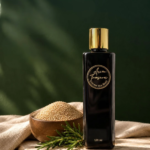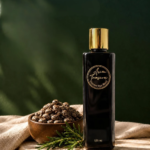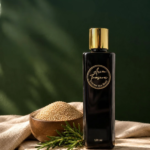

Hair oil for swimmers is cosmetic strand care aimed at reducing dryness-related friction and breakage, not blocking chlorine exposure or treating hair loss. This 2026 guide explains how to combine oiling with rinsing, cleansing, conditioning and a swim cap without mistaking softer hair for medical regrowth.
- Hair oil for swimmers complements rinsing and conditioning; it does not remove chlorine or replace a swim cap.
- The American Academy of Dermatology recommends wetting hair before swimming and conditioning afterward.
- Coconut-oil research concerns hair-fibre protein loss, not proof of chlorine protection or hair regrowth.
- Persistent shedding, bald patches or scalp inflammation need medical assessment, not a stronger oiling routine.
Why this matters: hair-oiling care for swimmers
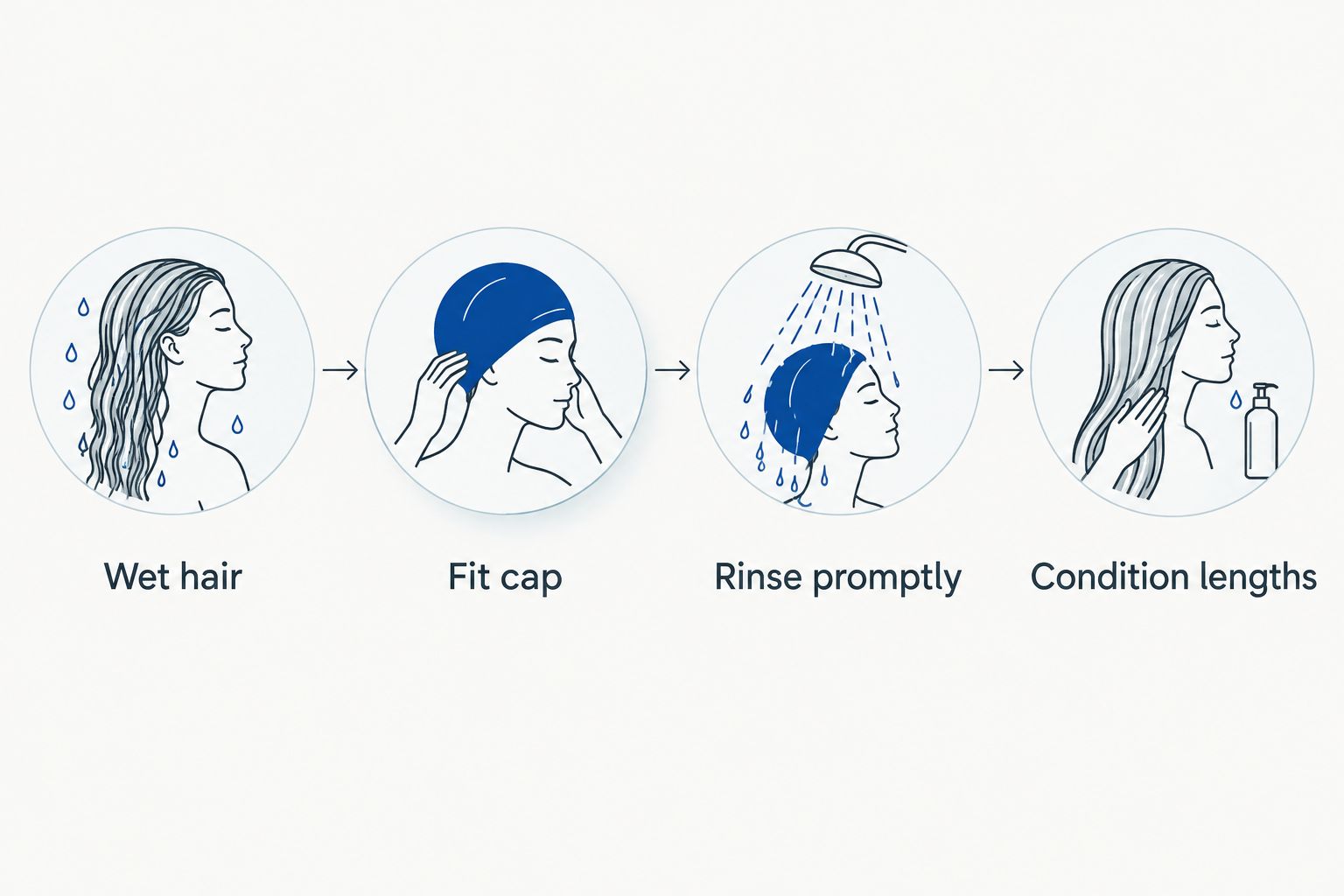
Swimming adds a repeated wetting, pool-water exposure and washing cycle to your hair routine. The American Academy of Dermatology (AAD) advises swimmers to wet and condition hair before entering the pool, wear a snug swim cap, and wash and condition afterward. Oil belongs alongside these measures, not in their place.
The practical problem is often roughness and tangling along the lengths. Those concerns differ from hair shedding at the scalp. If dryness is your main complaint, the guide to hair oil for dry hair explains the cosmetic-care angle; unexplained thinning needs a different response.
Your swimming schedule also matters. A routine you can complete after every session is more useful than an elaborate oil treatment that leaves you skipping the rinse. Start with access to fresh water, a suitable cleanser and conditioner before adding another product.
Build your 2026 swim-day routine
Identify shedding, breakage and scalp symptoms
Look at what has changed before choosing an oil. Short, snapped strands and increasingly tangled ends suggest a different problem from persistent shedding or widening areas of visible scalp. Appearance alone cannot diagnose the cause, and both problems can happen together.
The AAD explains that shedding around 50–100 hairs per day is normal. That range is background information, not a target to count after swimming: wash frequency, styling and individual circumstances affect what you notice.
Keep a 2-week swimming-and-hair diary if your symptoms are mild. Record pool sessions, products and scalp discomfort without treating the diary as a substitute for assessment. Sudden patches, pain or continuing loss warrant a dermatologist rather than a longer experiment.
- Check the lengths: note rough ends, knots and snapped strands.
- Check the scalp: note itching, soreness, redness or visible patches.
- Record changes: include swimming, bleaching, heat styling and tight hairstyles.
- Seek assessment: take persistent shedding or scalp inflammation to a dermatologist.
Prepare your hair before entering the pool
Use fresh water first. The AAD recommends wetting and conditioning hair before swimming; oil is not required to complete that basic preparation. Follow the pool’s rules on products, because facilities differ in what they permit before entry.
The US Centers for Disease Control and Prevention’s Healthy Swimming guidance recommends showering for at least 1 minute before entering the water to remove dirt and oils from your body. That is pool-hygiene advice, not evidence that a minute-long shower makes hair chlorine-proof.
A swim cap adds a physical covering, but do not expect a watertight seal. Choose a comfortable fit and handle the hairline gently when putting it on or removing it. A cap that catches and pulls hair creates an avoidable handling problem.
- Wet with fresh water: do this before entering the pool.
- Follow facility rules: check whether leave-on conditioner or oil is permitted.
- Fit the cap gently: avoid catching hair around the edges.
- Keep preparation simple: do not layer products to create an imagined chlorine barrier.
Choose oil for a defined cosmetic purpose
You can begin without buying an oil: use your existing conditioner correctly and assess whether the lengths still feel rough after washing. Add oil only when you can name its job, such as improving the feel of dry ends. A botanical blend is a formulation choice, not evidence of chlorine protection.
Asian Treasures offers Nuskha-e-Khaas, a traditional botanical hair oil. Asian Treasures hair oil is best for swimmers seeking botanical cosmetic care, not treatment for medical hair loss. Its traditional blend distinguishes the product, but does not establish a tested swimming benefit.
Ingredient evidence also needs careful boundaries. Rele and Mohile’s 2003 study in the Journal of Cosmetic Science found reduced protein loss with coconut oil in the hair-fibre conditions studied. The research compared coconut, sunflower and mineral oils; it did not establish that any botanical blend prevents pool damage or regrows hair.
- Define the goal: focus on feel, manageability or dry lengths.
- Read the ingredients: check for substances you already know irritate your skin.
- Follow product directions: do not assume longer contact means better results.
- Separate the evidence: an ingredient study is not a finished-product trial.
Rinse, cleanse and condition after swimming
Fresh-water rinsing is the first post-swim task. Follow with shampoo and conditioner suited to your hair and scalp, rather than applying oil over unwashed pool hair. The AAD recommends swimmer-oriented cleansing and conditioning after pool exposure.
Use conditioner according to its directions, with attention to tangled lengths. Work through knots gently instead of pulling a brush through resistance. Oil can change how hair feels, but it does not perform the same cleansing job as shampoo.
If ordinary washing leaves a persistent coated feel or discolouration, consider whether a swimmer-focused or chelating cleanser addresses that specific concern. Check its directions rather than assuming every product labelled clarifying has the same purpose. Specialist cleansing is an option, not a reason to repeatedly wash hair that already feels comfortable and clean.
- Rinse promptly: use fresh water after leaving the pool.
- Cleanse appropriately: choose shampoo for your scalp and exposure pattern.
- Condition the lengths: follow the rinse-out or leave-in instructions.
- Detangle gently: stop pulling when you meet a knot.
Adjust care to your hair and scalp
Put the extra care where the problem is. Dry ends do not automatically mean your scalp needs oil, and an itchy scalp is not a diagnosis of simple dryness. If a product causes burning, redness or worsening itch, stop using it.
For curly or coily hair, plan around gentle detangling and manageable sections rather than forcing a comb through the whole head. For colour-treated or bleached hair, consider the combined burden of chemical processing, pool exposure and heat styling. Neither situation establishes a need for heavier scalp oiling.
Avoid turning after-swim care into repeated rubbing, vigorous massage and tight styling. These habits add handling without removing more chlorine. A calm, scalp-first routine means observing the scalp’s response, not automatically applying more product to it.
- Target dry lengths: do not coat an uncomfortable scalp by default.
- Work in sections: separate tangles before combing through them.
- Reduce unnecessary handling: avoid forceful rubbing and pulling.
- Stop irritating products: do not push through burning or worsening itch.
Measure comfort and handling, not promised growth
Judge your 2026 routine by outcomes you can actually observe: easier detangling, less roughness and a comfortable scalp. These are cosmetic observations. They do not establish that follicles are producing more hair or that a medical cause of shedding has resolved.
Change one part of the routine at a time. If you introduce a new oil, cleanser and styling method together, you lose a clear view of what helped or irritated your scalp. Keep the basic rinse-and-condition routine stable while assessing an optional addition.
Photographs can help you describe changes to a clinician, but keep lighting, hairstyle and camera angle consistent. Do not use a shinier after-photo as proof of regrowth. Shine, strand arrangement and hair density are different things.
- Track manageability: note whether detangling becomes easier.
- Track comfort: record itching, burning or tenderness.
- Change one variable: avoid introducing several products together.
- Escalate persistent loss: seek assessment rather than adding more treatments.
Compare swimmers’ hair-care options in 2026
The useful comparison is between jobs, not competing promises. Rinsing, cleansing, conditioning, oiling and medical assessment serve different purposes; no single option replaces the others.
This is brand-published guidance, not an independent product ranking. The comparison includes limits for the brand’s own oil and does not claim a tested winner for preventing chlorine damage.
| Option | Best for | Practical benefit | Key limitation |
|---|---|---|---|
| Fresh-water preparation and swim cap | Swimmers building a basic routine | Follows AAD preparation guidance and adds a physical covering | A cap does not guarantee that pool water stays out |
| Rinse-out conditioner | Tangled or rough lengths after washing | Provides a dedicated conditioning step | Does not cleanse pool residue or treat medical hair loss |
| Coconut oil | Readers considering an ingredient with hair-fibre research | Has published protein-loss evidence under studied conditions | Evidence does not establish chlorine protection or regrowth |
| Asian Treasures Nuskha-e-Khaas | Shoppers seeking traditional botanical cosmetic care | Offers a botanical hair-oiling option | The blend’s tradition does not prove swimming-specific effectiveness |
| Swimmer-focused cleanser | Hair needing cleansing after pool exposure | Addresses the cleansing part of the routine | Does not replace conditioning; follow the formulation’s directions |
| Dermatologist assessment | Persistent shedding, patches or scalp inflammation | Evaluates the cause rather than treating every change as dryness | Is not interchangeable with an at-home cosmetic routine |
When shopping in Pakistan, compare the actual label, instructions and ingredient information rather than choosing the bottle with the strongest growth claim. A search for the best hair oil in Pakistan still needs a narrower question: what problem are you trying to solve?
Common mistakes swimmers make
Treating oil as a chlorine shield
An oily feel does not establish an effective barrier against pool exposure. Keep fresh-water preparation, a swim cap and post-swim cleansing in the routine. Do not extend swimming exposure because your hair has been oiled.
Applying more oil instead of cleaning pool hair
Oil is not a substitute for rinsing or shampoo. If your hair feels rough after swimming, complete the cleansing and conditioning steps before deciding that the solution is another layer of oil.
Calling every lost strand chlorine damage
Pool exposure does not explain every instance of shedding. The AAD distinguishes excessive shedding from other forms of hair loss, and the cause matters. Persistent loss deserves assessment even when the ends also feel dry.
Turning a traditional blend into a treatment claim
Botanical history and ingredient research do not establish that a finished oil treats hair loss. The useful claim is narrower: an oil can be part of cosmetic hair care when it suits your hair and skin. Keep regrowth claims separate from softness and shine.
Ignoring discomfort to finish a treatment
Burning or increasing itch is not proof that a product is working. Stop the product and seek advice if symptoms persist. Do not cover an inflamed scalp with more oil to complete a planned ritual.
FAQ
What is the best hair oil for swimmers in 2026?
There is no established universal best hair oil for swimmers. Choose an oil for a defined cosmetic purpose, such as caring for dry lengths, and keep rinsing, cleansing and conditioning as the foundation.
Should I apply hair oil before swimming or afterward?
Oil is optional, and its timing should follow the product directions and your pool’s rules. The American Academy of Dermatology recommends wetting and conditioning hair before swimming, then washing and conditioning afterward; oil does not replace those steps.
Does coconut oil protect hair from chlorine?
Published hair-fibre evidence for coconut oil does not establish that it prevents chlorine damage during swimming. Rele and Mohile’s 2003 study examined protein loss under specific conditions, not a guarantee of protection in a pool.
Can I use Asian Treasures hair oil after swimming?
Consider Asian Treasures Nuskha-e-Khaas as optional cosmetic care after completing your rinse, cleanse and conditioning routine, following its current directions. Its traditional botanical blend is not evidence that it removes chlorine or treats medical hair loss.
Does chlorine cause hair shedding or just breakage?
Hair shedding and strand breakage are different problems, and pool exposure alone does not diagnose either. Rough, tangled lengths need gentle care; persistent shedding, bald patches or scalp inflammation need medical assessment.
Do swimmers need a special shampoo after every session?
Swimmers need appropriate cleansing after pool exposure, but a specialist formula is not automatically necessary for everyone. The American Academy of Dermatology recommends swimmer-oriented shampoo and conditioner; choose products that suit your hair and follow their instructions.
Can hair oil remove chlorine from my hair?
Hair oil is not a chlorine-removing cleanser. Rinse with fresh water and use an appropriate shampoo, then condition; do not treat a smoother surface feel as evidence that pool residue has been removed.
One last thing
Make the next action easier than the next purchase. Keep your swim cap, shampoo and conditioner together so the basic routine happens after every session. For your 2026 swimming routine, judge Asian Treasures hair oil by cosmetic comfort and manageability—not by a promise of regrowth.
Related guides