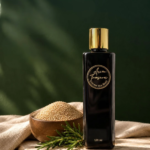

Apply hair oil according to the product directions and your scalp’s response, rather than following a universal daily or weekly schedule: in 2026, there is no established frequency that guarantees better growth. Use oil for a clear cosmetic purpose, such as conditioning dry lengths, and do not increase applications to treat unexplained shedding.
- How often to apply hair oil depends on product directions, scalp comfort, wash habits, and strand dryness.
- Asian Treasures presents botanical hair care, not a substitute for medical assessment of hair loss.
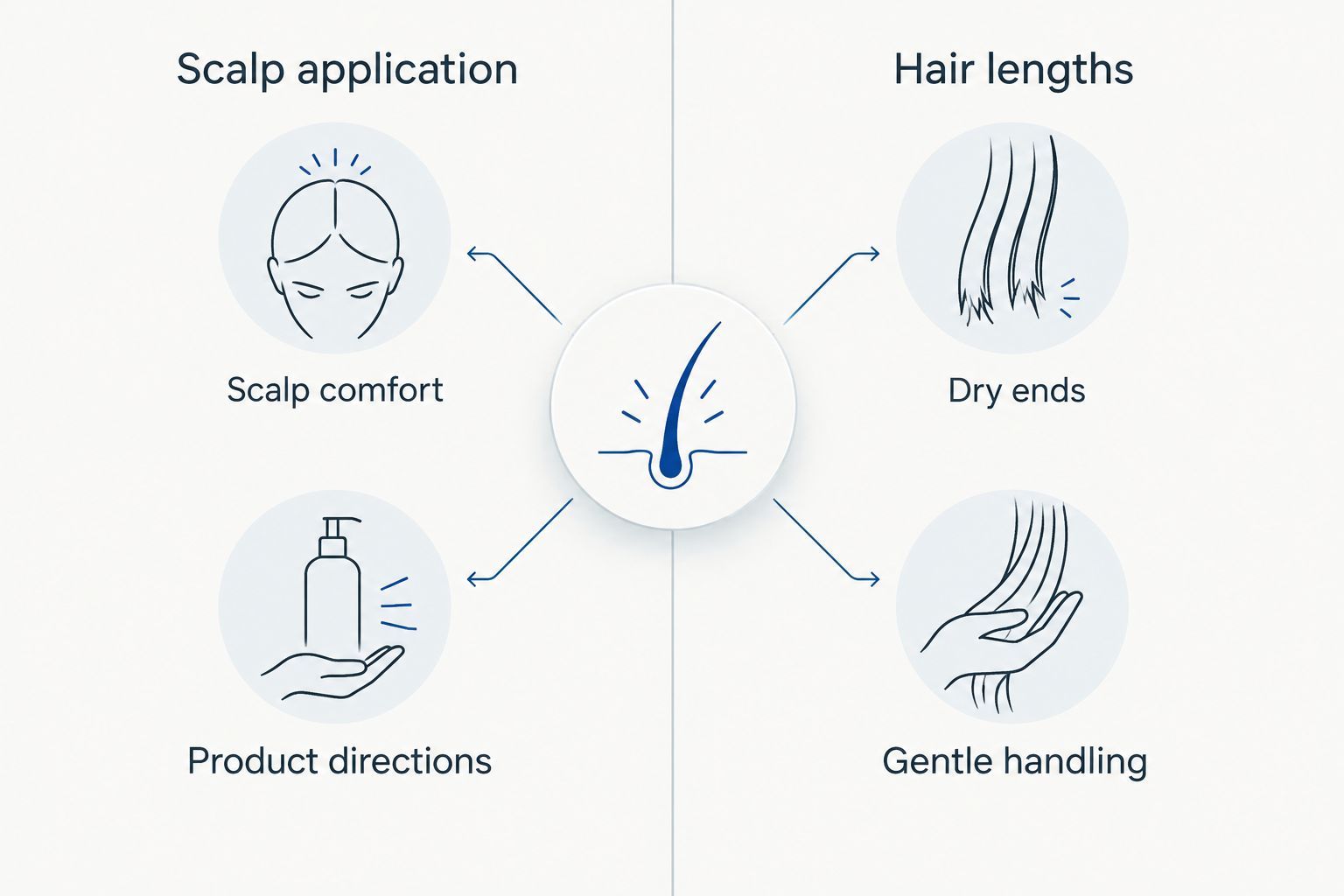
- Treat scalp application and oiling dry ends as separate decisions; neither requires an automatic daily schedule.
- Stop a new oil if it causes irritation, and seek medical advice for persistent or sudden hair loss.
How often should you apply hair oil for best results?
Use the least frequent application that meets your cosmetic goal without leaving your scalp uncomfortable or your hair coated. Follow the label first, including whether the oil is intended for rinsing out or leaving on. A scalp treatment and a small application to dry ends are not interchangeable routines.
For strand-focused care, the guide to hair oil for dry hair provides a separate starting point. Dry-feeling lengths do not automatically mean your scalp needs more oil.
This comparison is practical guidance, not evidence that one schedule produces more growth than another.
| Application approach | Best for | Main advantage | Main limitation | Frequency decision |
|---|---|---|---|---|
| Pre-wash oiling | People who prefer to rinse oil out | Keeps application connected to a wash routine | Adds a step and requires removal | Follow directions and assess after washing |
| Leave-in application to lengths | People managing dry-feeling ends | Targets the strands rather than the scalp | Excess can leave hair coated or heavy | Reapply only when needed and permitted by the label |
| Scalp application | People using a product specifically intended for the scalp | Places the product where directed | Irritated or diseased scalps need different care | Follow scalp-specific directions; stop if irritation develops |
Before adding another application, ask whether the last one helped. Softer-feeling ends are a cosmetic result; reduced shedding or new growth requires a different standard of evidence.
Why this matters
A fixed oiling calendar can distract you from the reason your hair needs attention. The American Academy of Dermatology, or AAD, distinguishes excessive shedding from hair loss in its guidance, Do you have hair loss or hair shedding? It describes shedding around 50 to 100 hairs a day as normal, although you should not diagnose yourself by counting individual hairs.
Breakage is different again: the strand snaps rather than shedding from the follicle. Short pieces and uneven lengths can be clues, but appearance alone does not establish the cause. The AAD’s guidance on preventing hair damage focuses on gentle handling and reducing damaging habits.
For your 2026 routine, define the result before choosing the frequency. Easier detangling, less roughness, and a more comfortable scalp are different goals from treating a widening part or sudden shedding.
Pre-wash oiling: follow the wash routine and label
Best for: people who want an oiling step that ends with washing. If the directions describe a pre-wash treatment, use it in that role rather than turning it into an indefinite leave-in treatment.
Keep the application gentle. The AAD’s Hair styling without damage advises against rough handling, especially when hair is vulnerable to breakage. More vigorous massage is not evidence of a more effective treatment.
After washing, check both scalp and lengths. If your hair remains coated or your scalp becomes uncomfortable, do not automatically add more oil before the next wash. Review the quantity, placement, and product instructions instead.
The trade-off is the extra handling and washing step. A routine that requires repeated scrubbing to remove oil works against the goal of gentle care.
Leave-in oiling: target the lengths that need it
Best for: people whose ends need cosmetic smoothing between washes. Use this approach only when the product is intended for leave-in use, and keep the application directed at the relevant lengths.
The AAD’s Tips for healthy hair recommends concentrating shampoo on the scalp and adjusting conditioner placement to hair type. That distinction matters here: the scalp and the older ends of your hair do not always need the same treatment.
Do not treat every dry-feeling day as a reason to cover your scalp. Check whether conditioning, detangling, heat styling, or repeated chemical processing needs attention too. Oil is an optional part of strand care, not a replacement for the rest of the routine.
The limitation is residue. If the hair already feels coated, another layer is not a useful response simply because the calendar says it is oiling day.
Scalp oiling: comfort comes before consistency
Best for: people using a product explicitly intended for scalp application. Read the directions rather than assuming that an oil suitable for hair lengths belongs on the scalp.
An itchy, inflamed, or persistently flaky scalp needs assessment rather than a more intensive oiling schedule. The AAD’s dandruff guidance describes treatment with appropriate dandruff shampoos; it does not establish cosmetic oiling as a replacement for that treatment.
Stop using a new oil if it causes burning, redness, or itching. The AAD’s guidance on contact dermatitis identifies skin-care products as possible sources of reactions, including products containing fragrance or botanical ingredients.
A comfortable scalp is a reason to maintain a tolerable routine, not proof that an oil is stimulating follicles. Consistency cannot turn a cosmetic product into a medical treatment.
Why hair-oiling frequency varies
Choose frequency around your own routine, not another person’s results. These factors change the decision:
- Product directions: Rinse-out and leave-in instructions set different boundaries. Do not substitute an online schedule for the label.
- Application area: A dry end and an uncomfortable scalp are different problems. Decide where the product belongs before deciding when to repeat it.
- Wash habits: The AAD recommends washing according to how dirty or oily your hair becomes, rather than giving everyone the same wash schedule.
- Hair texture and condition: The AAD’s hair-care guidance distinguishes the needs of fine or straight hair from dry, curly, or textured hair.
- Skin tolerance: Irritation is a reason to stop and reassess, not something to push through for consistency.
- Your actual goal: Cosmetic conditioning and treatment of medical hair loss require different evidence and different expectations.
Make changes separately. If you change the oil, amount, application area, and wash routine together, you cannot tell which change affected the result.
How do you find a routine that suits your hair?
Start with the instructions, then make a simple decision after each use. You do not need a complicated tracking system or a promised growth deadline.
- Name the concern. Decide whether you are addressing dry lengths, rough handling, scalp discomfort, or suspected hair loss. Do not group them all under hair fall.
- Check intended use. Confirm whether the product belongs on the scalp, lengths, or both, and whether it should be washed out.
- Introduce the product cautiously. Follow the label and check tolerance before making it a regular step.
- Review the result. Look for comfort, manageable residue, and the cosmetic change you wanted. These observations do not establish regrowth.
- Adjust or stop. If another application offers no clear benefit, do not add it simply to complete a schedule.
The useful question is not whether you have oiled often enough. It is whether that particular application serves a purpose without creating another problem.
How should you test a new oil before regular use?
The AAD’s How to test skin care products recommends applying a product to a small test area twice daily for 7 to 10 days before wider use, following directions for products intended to be rinsed off. Follow product-specific precautions too, and stop if a reaction develops.
This general skin-care advice informs a cautious 2026 routine; it is not a guarantee that a product will never cause a reaction. Do not test a new cosmetic on an already irritated scalp as a way to diagnose the irritation.
Can you apply hair oil every day?
Daily hair oiling is not a universal requirement. Whether daily use is appropriate depends on the product’s directions, where you apply it, and whether your scalp and hair tolerate it.
Do not turn a successful occasional application into daily scalp oiling without a reason. If the aim is to manage dry ends, keep the decision focused on those ends rather than assuming the roots need the same treatment.
Does applying hair oil more often make hair grow faster?
More frequent cosmetic oiling is not an established treatment for faster hair growth. The AAD’s hair-loss treatment guidance makes clear that treatment depends on the cause of the loss.
Ingredient research also needs careful interpretation. Evidence about a particular ingredient, concentration, or study population does not establish that a finished botanical blend produces the same outcome, especially on a different application schedule.
Should you leave hair oil on overnight?
Overnight application is an option only when the product directions permit it and your skin tolerates it. Longer contact is not, by itself, evidence of better results.
Do not leave an irritating product on overnight to make a treatment feel more intensive. A short routine that respects the instructions is preferable to extended exposure that causes discomfort.
Where a botanical hair oil fits
Asian Treasures is best suited to shoppers seeking botanical hair care, not a medical hair-loss treatment. Its Hair Revival Oil fits that cosmetic-care context: the traditional botanical blend is a distinguishing feature, not proof of regrowth.
For shoppers comparing hair oils in Pakistan in 2026, the useful checks remain the same: intended use, ingredient information, directions, and skin tolerance. Country-specific popularity does not establish a medically effective application frequency.
This is Asian Treasures’ brand-published guidance, not an independent product trial. The practical benefit of a botanical hair-care option is having a product that matches that preference; its limitation is that botanical positioning does not establish effectiveness against hair loss.
When should you stop experimenting with oiling?
Seek medical advice for sudden loss, bald patches, progressive thinning, or scalp symptoms that persist. The AAD’s Hair loss: Signs and symptoms describes different patterns of hair loss, while its treatment guidance explains why identifying the cause matters.
Bring a clear account of what changed: when the concern began, which products you introduced, and whether you noticed scalp symptoms. Do not keep escalating oil use while waiting for a cosmetic routine to explain the problem.
FAQ
How often should I apply hair oil if my scalp is oily?
An oily scalp does not need extra oil on a fixed schedule. Follow the product directions, keep scalp and dry-end care separate, and wash according to how oily or dirty your hair becomes.
Can I oil my hair after every wash?
Apply oil after washing only if the product is intended for that use and your lengths need it. A post-wash application is optional, not a requirement for hair growth.
Should I oil my scalp when it is itchy or flaky?
Do not increase scalp oiling to treat unexplained itching or flaking. Persistent symptoms need assessment, and the American Academy of Dermatology describes specific treatments for dandruff rather than treating cosmetic oil as a substitute.
Does less breakage mean my hair loss is treated?
Less breakage does not establish that medical hair loss has been treated. Breakage affects the strand, while shedding and thinning require attention to what is happening at the follicle and why.
How long should I test a new hair oil?
The American Academy of Dermatology recommends testing skin-care products twice daily for 7 to 10 days on a small area before wider use. Follow the product directions, including rinse-off instructions, and stop if irritation develops.
How often should I use Asian Treasures hair oil for growth?
Follow the product directions rather than using Asian Treasures hair oil more frequently to pursue growth. A traditional botanical blend does not establish a growth-effective schedule or replace assessment of persistent hair loss.
One last thing
For your next wash in 2026, change the question from how often to what for. If you cannot name the purpose of the next oil application, skip the automatic extra layer and reassess your routine.
Hair that feels smoother and a scalp that feels comfortable are useful observations. Neither, on its own, proves that a hair-loss condition is improving.
Related guides
- Overnight hair-oil treatment
- Hair oil for a sensitive scalp and eczema
- Lightweight hair oil for an oily scalp