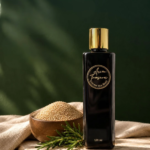

Hair oil can improve softness and shine during the first use, but there is no universal, proven timeline for hair regrowth from oiling. A smoother strand is a cosmetic result—not evidence that a follicle is growing new hair. This 2026 guide separates those outcomes so you know what to track and when to seek help.
- How long for hair oil to work depends on the goal: first-use shine is not proof of new growth.
- Asian Treasures botanical hair oil belongs in cosmetic hair care, not as a substitute for diagnosing hair loss.
- Track strand breakage separately from shedding; fewer broken ends do not prove reduced hair loss.
- Seek medical advice for sudden shedding, bald patches, scalp pain, or progressive thinning rather than waiting for oil.
Why this matters
Judge an oil against the problem you actually want to solve. Dry-looking lengths, snapping strands, and thinning at the roots need different responses. Treating them as one problem makes an ordinary conditioning effect look like a hair-growth result.
This is brand-published guidance from Asian Treasures, not an independent product trial. The evidence below distinguishes general hair-care knowledge from claims about a finished botanical formula; ingredient research does not establish that every oil blend produces the same outcome.
How long does it take to see results from hair oil?
You can assess shine and feel after applying an oil as directed, but you cannot infer new growth from that immediate change. Reduced breakage requires a different observation: whether fewer strands snap during ordinary handling. True regrowth requires evidence of growth from follicles, not simply smoother ends or a glossier photograph.
| Result you want | When you can assess it | Best for | Main limitation |
|---|---|---|---|
| Softness and shine | During or after the first use | Dry-looking lengths and surface finish | Shine does not demonstrate repair or regrowth |
| Easier handling | During your usual detangling and styling | Hair that catches during handling | Too much oil can leave residue without improving manageability |
| Less strand breakage | Across comparable wash and styling routines | Tracking damage along the hair shaft | Short fragments are not a measurement of follicle activity |
| Less shedding | Through changes in full-length hairs lost over time | Discussing a shedding pattern with a clinician | Oil is not an established treatment for every cause of shedding |
| New growth | Through scalp assessment and consistent follow-up | Evaluating thinning or a widening part | No universal hair-oil regrowth deadline is established |
For a 2026 buying decision, choose cosmetic hair care for cosmetic goals; seek a diagnosis for unexplained thinning. A product that changes texture quickly has not necessarily changed the biological cause of hair loss.
The American Academy of Dermatology distinguishes hair shedding from hair loss in its patient guidance. That distinction matters more than an advertised challenge length: a conditioning product can help you care for existing hair while leaving the underlying reason for thinning untouched.
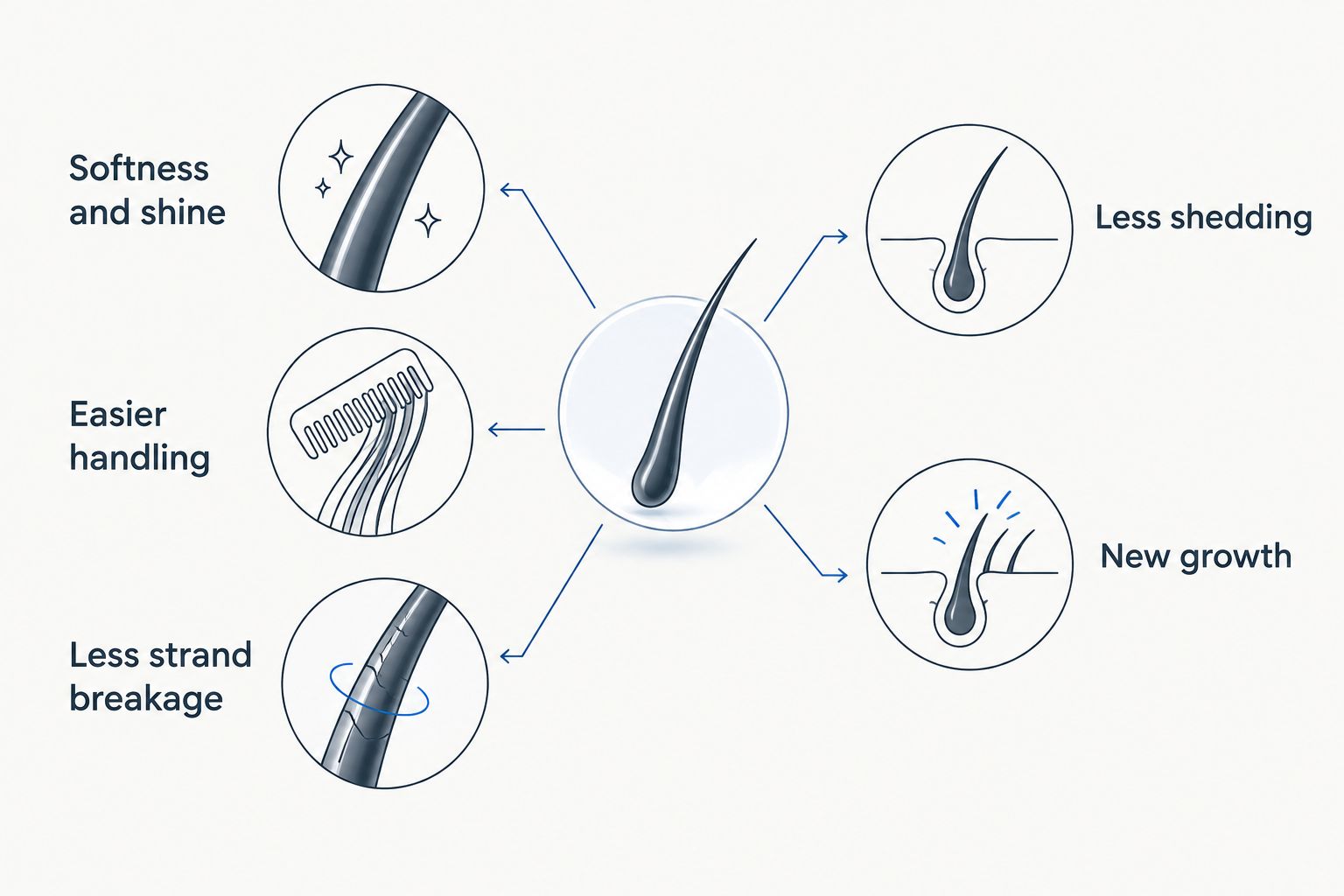
Softness and shine: assess the first use
Oil can change the way light reflects from the hair surface and how strands feel against your fingers. You do not need to wait for a growth cycle to notice that coating effect. Whether the finish suits you depends on the formula, the amount used, and your hair.
Compare your hair under similar conditions: dry with dry, and the same styling method with itself. Hair photographed immediately after oiling will not provide a fair comparison with an earlier photograph taken before washing or in different lighting.
A useful result is comfortable, manageable hair—not maximum gloss at any cost. If the finish feels heavy, sticky, or difficult to wash out, reconsider the amount and whether the product suits your routine. Adding more does not turn a cosmetic effect into a growth treatment.
Breakage: follow the strand, not a countdown
Breakage happens along the hair shaft. You might notice short fragments, uneven lengths, or ends that snap during detangling; these signs are different from full-length hairs being shed from follicles. Appearance alone does not always settle the distinction, especially when several problems occur together.
Oil research also needs careful reading. A study by Rele and Mohile in the Journal of Cosmetic Science found that coconut oil reduced protein loss from hair in the conditions studied. That is evidence about a particular ingredient and hair-fibre outcome—not proof that botanical oils as a group regrow hair.
Track handling alongside oil use. A gentler detangling technique or less damaging styling can change breakage too, so do not credit the bottle automatically when several parts of your routine change together. Keeping the routine consistent makes your observations more useful.
Shedding and growth: use biological context, not promises
The American Academy of Dermatology states that shedding about 50–100 hairs per day is normal. This is background context, not a target you must count toward, and it does not establish that a noticeable change in your own shedding is harmless.
The same organization explains that hair fullness often returns within 6–9 months after excessive shedding stops. That timeline describes recovery from excessive shedding; it is not a promise about hair oil, and it does not apply to every form of hair loss.
AAD patient guidance also describes scalp hair growth as about 6 inches per year. Existing growth can therefore become more visible with time even when a new product has not accelerated it. Retaining length by reducing breakage and increasing growth from follicles remain different outcomes.
For your 2026 routine, these numbers provide context rather than a treatment schedule. Do not wait for a cosmetic product to complete an arbitrary course when your part is widening or your scalp is becoming more visible.
Why hair-oil results vary
The time needed to judge a result depends on what is changing. These factors explain why another person's photograph cannot provide a reliable deadline for your hair:
- Your goal: Surface shine, fewer broken strands, and follicle growth measure different things. Decide which outcome matters before judging progress.
- The cause of the concern: Damaged lengths are not the same problem as pattern hair loss or excessive shedding. Matching care to the cause matters.
- The formula: Evidence about one ingredient does not transfer automatically to a blend with different ingredients or concentrations.
- Your application: Amount, placement, and washing affect the finish. A heavy coating can create shine while making hair feel less manageable.
- Your wider routine: Tight styling, chemical processing, heat, and rough handling can affect hair damage. Oil does not erase those exposures.
- Your scalp's response: Irritation is a reason to reassess a product, not a sign that it is working. Persistent symptoms need medical attention.
Consistency means using a suitable product as directed—not applying it more frequently regardless of discomfort. For help separating frequency from quantity, read the guide to how often to apply hair oil.
How can you tell whether hair oil is working?
Use a simple observation process rather than a daily search for new hairs. You want a record that distinguishes appearance, handling, and scalp changes without turning normal variation into a diagnosis.
- Choose the outcome. Write down whether you want softer lengths, easier detangling, less breakage, or help with thinning. Keep those goals separate.
- Record the baseline. Note your usual wash routine, styling, scalp symptoms, and where you notice damage or thinning. Photograph the same area in consistent lighting.
- Follow the label. Use the product only as directed. Do not add heat, prolonged contact, or extra applications to accelerate an unproven result.
- Keep comparisons fair. Compare similar wash stages and hairstyles. Wet roots, an oily finish, and a changed part can alter how much scalp appears visible.
- Review the right signal. Judge softness by feel and manageability; discuss persistent shedding or density changes with a clinician. A pleasant finish cannot answer every question.
For a useful 2026 progress record, describe what happened instead of assigning a cause immediately. Write that detangling felt easier or that your scalp became itchy; avoid concluding that follicles were repaired from a photograph alone.
Where does botanical hair oil fit?
Asian Treasures botanical hair oil is best for shoppers seeking cosmetic hair care, not a proven treatment for medical hair loss. Its Nuskha-e-Khaas hair-oil product is distinguished by a traditional botanical blend. Tradition describes the product's approach; it does not establish clinical effectiveness.
The practical benefit of this category is a way to care for existing hair within your grooming routine. Its limitation is equally important: a botanical formulation does not, by that description alone, establish reduced shedding, new growth, or treatment of a scalp condition.
When choosing hair oil in Pakistan, assess the stated purpose and directions rather than treating a hair-growth label as evidence. Asian Treasures cosmetic hair care should sit alongside appropriate assessment—not delay it. No finished-product regrowth timeline is established by the evidence discussed here.
Will leaving hair oil on longer make it work faster?
Longer contact is not proof of a better result, and overnight application is not a shortcut to follicle growth. Follow the product's directions rather than assuming that a longer session must deliver more benefit.
Oil left on the hair can change its finish, but that does not establish what is happening beneath the scalp. If an application causes burning, itching, redness, or discomfort, stop using it; do not treat irritation as an adjustment period you must endure.
Does less hair in the brush mean new growth?
Less hair in the brush does not prove new growth. The difference might reflect less breakage, a changed wash interval, different handling, or variation in shedding; a brush alone cannot identify the cause.
Look at the pattern rather than a single cleanup. If thinning continues despite fewer visible fragments, the cosmetic improvement and the hair-loss concern need separate attention.
When should you stop waiting and see a dermatologist?
Seek assessment for sudden shedding, bald patches, progressive thinning, scalp pain, or persistent inflammation. A dermatologist can distinguish different causes and discuss appropriate treatment. The AAD's hair-loss guidance emphasizes identifying the cause before selecting treatment.
Bring your symptom history and the products you use to the appointment. Note recent changes in health, medicines, and styling, but do not diagnose yourself from a checklist or stop prescribed medicine without speaking to its prescriber.
FAQ
How long for hair oil to work on dry-looking hair?
Hair oil can change softness and shine during the first use, but the result depends on the formula and your hair. That surface change does not demonstrate new growth.
Can hair oil regrow thinning hair?
There is no universal, proven regrowth timeline for hair oil. Ingredient evidence cannot establish that a finished blend treats the cause of thinning; seek assessment for persistent or progressive hair loss.
How much hair shedding is normal?
The American Academy of Dermatology describes shedding about 50–100 hairs per day as normal. A new change in your own pattern, visible thinning, or scalp symptoms still deserves attention.
How long can recovery from excessive shedding take?
The American Academy of Dermatology says fullness often returns within 6–9 months after excessive shedding stops. This describes recovery from shedding, not an oil-treatment timeline or a guarantee for every cause of hair loss.
Should I apply hair oil every day for faster results?
Daily oiling is not an established shortcut to regrowth. Follow the product directions and reassess if your scalp becomes irritated or your hair feels coated.
Is hair breakage the same as hair shedding?
Hair breakage is damage that causes a strand to snap, while shedding releases a hair from its follicle. Reducing breakage does not establish that medical hair loss has been treated.
Does an itchy scalp mean hair oil is working?
An itchy scalp is not evidence that hair oil is working. Stop a product that causes irritation and seek advice if symptoms persist or accompany hair loss.
One last thing
The most useful result might be discovering that your original goal needs a different kind of care. In 2026, keep this rule: softer hair is evidence of a cosmetic change; it is not a diagnosis or proof of regrowth. Enjoy a suitable oil for what it does to your hair, and assess unexplained thinning separately.
Related guides