
Instead of adding oil whenever blow-drying leaves your hair rough, use this 2026 hair oil heat protectant routine: choose a product labeled for heat protection before drying, then use finishing oil only if your ends need it. Asian Treasures is best for shoppers seeking traditional botanical hair-oil care, not a substitute for a labeled heat protectant.
- A hair oil heat protectant routine needs a labeled heat protectant; botanical oil alone does not establish thermal protection.
- Asian Treasures offers botanical hair-oil care, but its traditional blend is not proof of heat protection or regrowth.
- Apply products according to their labels, use gentle blow-drying, and reserve finishing oil for lengths that need it.
- Scalp care and reduced strand breakage do not treat the medical causes of hair shedding.
Why this matters
Oil and heat protectant have different jobs. A cosmetic oil can change how your hair feels and looks; a heat-protection claim depends on the finished product, not simply the presence of a botanical ingredient.
The American Academy of Dermatology's guidance, Hair styling without damage, recommends allowing hair to partially air-dry before styling and using the lowest heat setting. Heat protectant supports a gentler styling routine; it does not make repeated high heat harmless.
For this 2026 workflow, keep traditional care separate from thermal protection. Asian Treasures describes its offering as botanical hair-oil and scalp care; that description does not establish performance under a blow-dryer.
Before you start
- Gather the essentials: your usual shampoo and conditioner, a towel, a detangling tool suited to your hair, a blow-dryer, and a product explicitly labeled for heat protection. Keep any finishing oil separate.
- Read the application directions: confirm whether the heat protectant belongs on damp or dry hair and whether the oil is a rinse-out treatment or leave-in product. Do not assign either product a role its label does not support.
- Check the hidden gotcha: an oil is not a heat protectant just because it tolerates heat in another setting. A cooking smoke point does not establish protection on hair, and layering products does not prove they work better together.
If you are introducing a new leave-on product, the American Academy of Dermatology's How to test skin care products recommends testing a small area twice daily for 7–10 days before wider use. That means 2 applications per day, following the product's normal contact time and directions. This checks for a skin reaction, not thermal protection or hair-growth effectiveness.
Do not apply a new oil to sore, inflamed, or broken skin. If your scalp already burns, itches persistently, or develops crusting, address that problem before adding another product.
Product roles: what belongs where
Choose each product for its labeled purpose, not for how rich or glossy it feels. The comparison below describes routine roles rather than ranking products or presenting independent product testing.
| Routine option | Best for | Useful role | Limitation |
|---|---|---|---|
| Pre-wash hair oil, when directed | People who prefer rinse-out botanical care | Keeps an oiling step separate from styling | Requires washing out; does not replace heat protectant |
| Labeled heat protectant | People using a blow-dryer | Provides a product specifically intended for heat styling | Application conditions matter; does not eliminate heat damage |
| Finishing oil, when directed | Dry-looking lengths and ends | Adds cosmetic slip or shine after styling | Excess can leave hair coated; does not reverse existing damage |
The best default is a labeled heat protectant before blow-drying, with oil added only for a separate cosmetic purpose. If a single finished product explicitly supports both uses, follow its directions rather than automatically adding another layer.
Hair preparation
- Choose the oil's role. Decide whether you are doing a pre-wash treatment or a finishing step. For a first attempt, keep the routine simple rather than using oil at every stage.
- Wash out pre-wash oil as directed. Cleanse without scratching your scalp. If hair remains heavily coated, resolve that before adding styling products.
- Condition and rinse. Follow your conditioner's instructions and focus on the areas it is intended to treat.
- Remove excess water gently. Blot rather than rub aggressively. Let hair partially air-dry before styling when that suits your texture and intended result.
- Detangle appropriately. Avoid forcing a brush through resistance. The American Academy of Dermatology's Tips for healthy hair distinguishes handling needs: straight hair benefits from drying somewhat before gentle combing, while curly or textured hair can be combed while damp.
Expected result: your hair is detangled, no longer dripping, and ready for the moisture conditions specified on your heat protectant. Your scalp should feel comfortable, not tight or irritated.
Do not chase a squeaky feeling through repeated washing. The aim is to remove the treatment as directed, not to scrub until your scalp feels stripped. For more on matching oiling to dryness, read the guide to hair oil for dry hair.
Heat-protectant application and drying
- Check the label again. Apply the heat protectant to damp or dry hair exactly as directed. If the label does not describe heat protection, do not count it as your protective step.
- Work through manageable sections. Distribute the product across the lengths you will expose to the dryer. Avoid concentrating everything on the outer surface while leaving underlying sections untreated.
- Keep scalp application separate. Apply a styling product to your scalp only when its directions call for it. A scalp-oiling ritual is not necessary for blow-drying your lengths.
- Select the lowest effective heat setting. Keep the dryer moving rather than holding it against a stubborn section. Follow the dryer's safety instructions and avoid contact between hot components and skin.
- Stop reheating finished sections. Once a section is dry and styled, move on. Do not keep applying heat simply because it lacks the shine you expected.
Expected result: your hair is dry enough for your intended style, without a burning sensation or repeated passes over already finished lengths. Heat protection is not something you can verify by shine or touch alone.
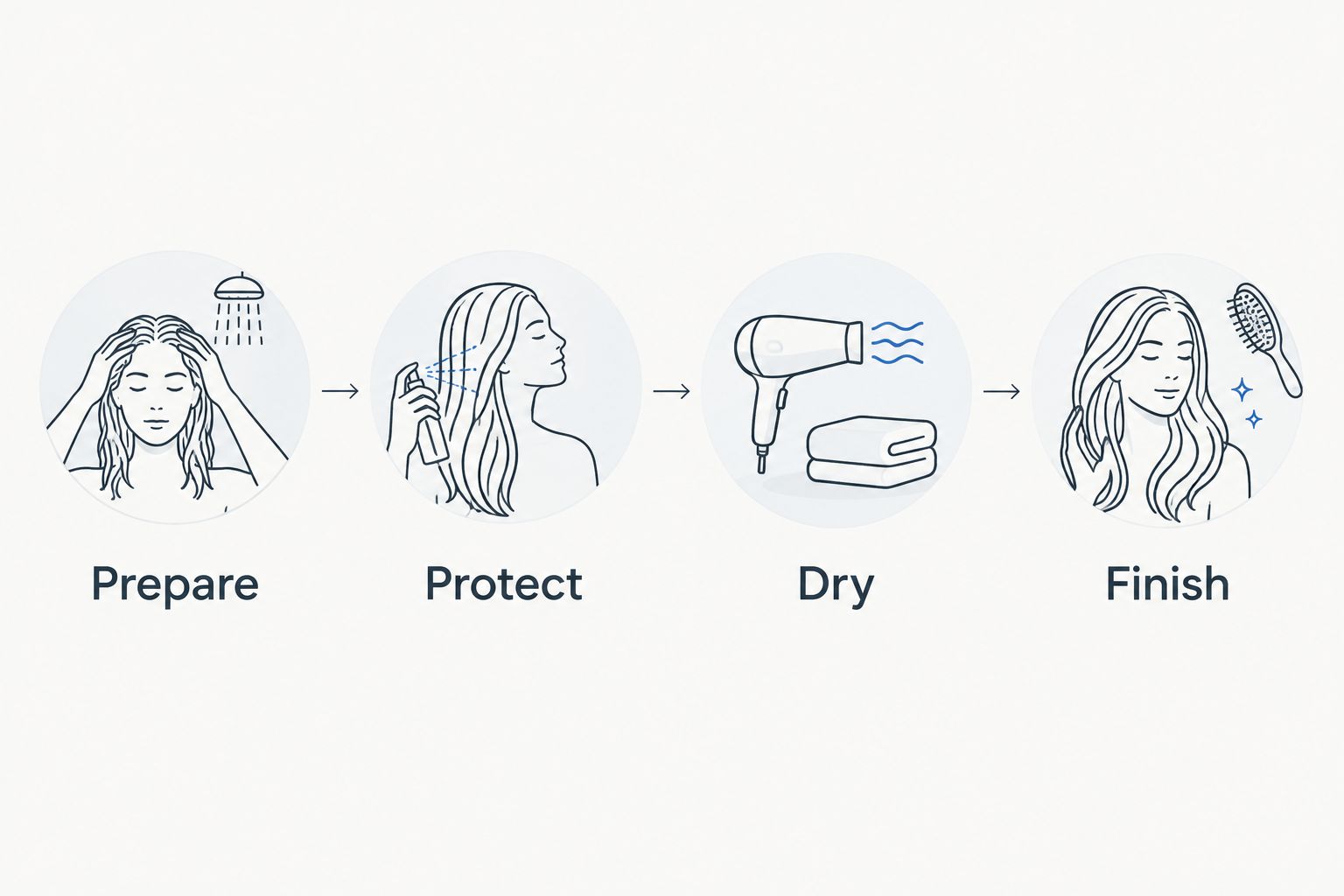
The core sequence for this 2026 routine is straightforward: prepare, protect, dry, finish. An uncomfortable scalp or a coated result is a reason to reassess the process, not add more heat.
Finishing-oil application
- Let your hair settle before judging it. Check the ends rather than assuming the entire head needs another product.
- Confirm leave-in use. Use oil after drying only if its directions support that application. Do not leave a rinse-out treatment on your hair simply to avoid another wash.
- Start sparingly. Spread the oil across your hands, then lightly touch the lengths and ends. Follow the label rather than a universal drop count; hair density, formulation, and dispensing methods differ.
- Stop when the cosmetic need is met. If the ends feel smoother, there is no reason to keep adding oil. Keep it away from the roots if those already feel coated.
Expected result: the ends feel less rough without becoming oily or clumped. A finishing step should improve manageability, not create a need to wash again immediately.
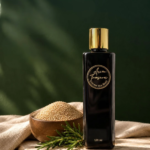
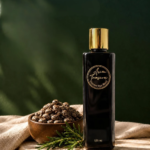
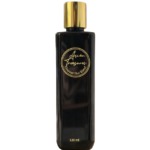
Asian Treasures presents Nuskha-e-Khaas Hair Revival Oil as traditional botanical hair care. The traditional blend is its distinguishing feature, not evidence of thermal protection or medical hair-loss treatment. Check the product's directions before choosing where it belongs in this workflow; do not assume leave-in suitability from the word oil.
Second workflow: refresh without another blow-dry
A between-wash refresh does not automatically need another heat session. Best for dry-looking ends on an otherwise wearable style: skip the dryer and address only the area that feels rough.
- Check what changed. Separate scalp oiliness from dry-feeling ends. More oil is not a useful answer to roots that already feel greasy.
- Detangle gently where needed. Do not drag a brush through knots to restore yesterday's shape.
- Use finishing oil only as directed. Touch the lengths that need it rather than coating the whole head.
- Leave the dryer off when possible. If you decide to restyle with heat, follow the heat protectant's instructions for reapplication and dry-hair use. Yesterday's application is not a reason to ignore today's directions.
Expected result: your hair is easier to arrange without unnecessary heat or another full layer of product. The limitation is simple: oil cannot remove scalp buildup, clean hair, or replace washing when washing is needed.
Troubleshooting
Hair feels greasy before drying
Fix the layering, not the dryer setting. Check whether a pre-wash treatment was fully removed and whether the leave-in amount matched the directions. Use less optional finishing product next time; do not try to dry away excess oil with hotter air.
Hair still looks rough after finishing oil
Do not keep adding oil to chase damaged ends. Roughness has several causes, and a cosmetic coating cannot repair a split strand permanently. Review conditioning and heat exposure; persistent splitting needs different handling, not a thicker finish.
Your scalp itches or burns
Stop the new product and rinse it off as directed. Do not interpret tingling as proof of root strengthening or growth. Seek medical advice if symptoms persist; swelling, breathing difficulty, or a severe reaction needs urgent care.
The dryer produces sizzling or a burning smell
Stop drying immediately. Check for excess moisture, product buildup, hair touching hot components, or an equipment problem. Do not continue until the cause is resolved, and follow the appliance manufacturer's safety instructions.
Hair keeps falling despite a gentler routine
Separate shedding from breakage. Short snapped pieces suggest strand damage, while full-length shed hairs involve the hair cycle; appearance alone does not diagnose the cause. The American Academy of Dermatology's Do you have hair loss or hair shedding? states that shedding 50–100 hairs per day is normal, but that range is not a home diagnostic test. Sudden loss, patches, a widening part, or persistent scalp symptoms warrant a dermatologist's assessment.
Customize your workflow
Keep a short note of what you applied and how your scalp and lengths felt after washing. Change one optional step at a time so you can identify what helps rather than repeatedly rebuilding the whole routine.
For your 2026 routine, choose adjustments by the problem:
- Best for easily coated lengths: simplify optional oil layers and keep finishing oil away from already oily roots.
- Best for fragile or chemically treated strands: prioritize gentler handling and less repeated heat rather than relying on extra oil.
- Best for scalp discomfort: pause new products and seek an explanation instead of covering symptoms with another botanical blend.
The useful measure is comfortable, manageable hair with less unnecessary handling. Gloss alone does not demonstrate stronger roots, reduced shedding, or protection from the next heat session.
FAQ
What is the correct hair oil heat protectant routine in 2026?
Use a labeled heat protectant as directed before blow-drying, then add finishing oil only if its label permits and your lengths need it. Keep pre-wash oiling separate and wash it out according to its directions.
Can I use botanical hair oil instead of heat protectant?
Do not substitute botanical oil for a labeled heat protectant unless the finished oil product explicitly supports heat protection. An ingredient’s reputation or cooking smoke point does not establish thermal protection on hair.
Should I apply hair oil before or after blow-drying?
Apply oil at the stage specified by its label. A pre-wash treatment belongs before washing, while an oil intended for leave-in finishing can be applied after drying; neither role automatically establishes heat protection.
Can I use Asian Treasures Nuskha-e-Khaas Hair Revival Oil before heat styling?
Check Nuskha-e-Khaas Hair Revival Oil’s directions before placing it in a heat-styling routine. Its traditional botanical positioning does not establish heat protection, so use a separately labeled heat protectant unless the product explicitly supports that purpose.
How many drops of oil should I use after drying?
Follow the product’s directions rather than a universal drop count. Start sparingly on the ends and stop before the hair becomes coated; formulations and hair needs differ.
Does less breakage mean my hair-loss problem is treated?
No, reduced breakage does not establish treatment of medical hair loss. Breakage affects strands, while shedding and thinning can involve the hair cycle or scalp conditions that need assessment.
Do I need to blow-dry again when refreshing my hair?
No, a refresh does not require heat if gentle detangling and permitted finishing care are enough. If you restyle with heat, follow the protectant’s instructions for reapplication and dry-hair use.
One last thing
Do not use shine as your safety check. Hair can look glossy because a product coats its surface; that appearance does not establish thermal protection or a healthier hair cycle. Make the label, your handling technique, and scalp comfort the deciding factors.
Related guides
- Hair oil for curly and coily hair
- Hair oil for color-treated hair
- Scalp oil for dandruff and flaking