
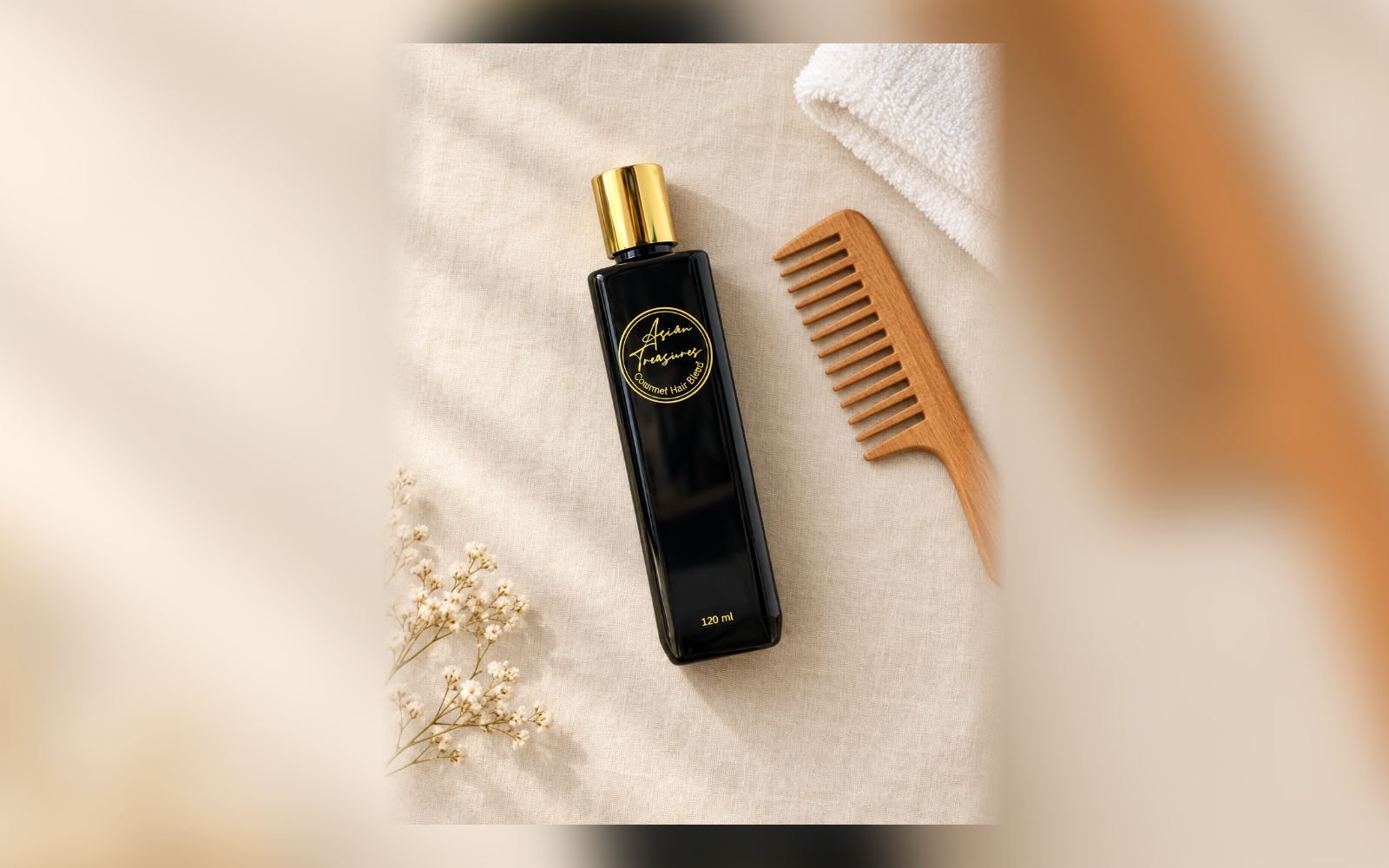
Detangle in small sections, begin at the ends and never force a comb through resistance. Oil can change surface slip, but it does not make pulling harmless or replace a suitable conditioner. Protecting lengths means changing how you handle them, not simply coating a knot more heavily.
Key takeaways
- Work from ends toward roots.
- Use a wide-tooth comb when appropriate for your hair.
- Oil is not automatically a detangler or a conditioner.
- Stop if the process hurts or pulls at the scalp.
Start with your hair type
The American Academy of Dermatology recommends a wide-tooth comb rather than a brush for wet detangling. It advises detangling thick curly hair in the shower before rinsing conditioner, while letting straight hair dry a little before combing. Do not copy a technique without considering your hair’s needs.
Follow the directions for every product involved. A scalp oil does not automatically belong on tangled lengths, and a finishing oil is not necessarily intended for wet detangling.
A controlled detangling method
Separate manageable sections
Use your fingers to identify where the tangle starts. Avoid repeatedly raking through the whole head. Hold the section gently so you are not transferring every movement to the roots.
Release the ends first
Start below the tightest part of the knot and work upward as resistance eases. Short, controlled movements are better than dragging from scalp to ends. If you meet a stubborn knot, pause and reconsider the conditioning step rather than pulling harder.
Use suitable conditioning
Conditioner makes washed hair easier to manage. Oil has a different role and should be used where its formula directs. Do not stack several products simply because the knot has not released immediately.
Finish without extra friction
Gently absorb water with a towel or T-shirt. Avoid rubbing hair vigorously, twisting tightly or tying it into a painful style. Once the hair is detangled, stop unnecessary repeated passes.
Choose a tool by the job
| Approach | Useful role | Limit |
|---|---|---|
| Fingers | Locate tangles and separate small sections | Do not pick aggressively at tight knots |
| Wide-tooth comb | Controlled detangling suited to wet hair | Still causes pulling when forced |
| Conditioner | Improve manageability during washing | Does not permanently repair split ends |
| Hair oil | Formula-specific cosmetic lubrication | Not every oil is a detangling product |
Where botanical oiling fits
Review the directions for Hair Revival Oil from Asian Treasures before combining scalp care with a detangling routine. The traditional botanical blend is a product distinction, not proof that forceful combing becomes safe. Keep your goal to comfortable cosmetic care.
If the scalp becomes itchy or irritated after application, stop the product. If tangles repeatedly require heavy force, review conditioning, damage and styling with a qualified professional.
Do not confuse breakage with shedding
Short snapped pieces and full-length hairs leaving the follicle are different observations. Both can appear in a brush. Gentle detangling protects lengths but cannot diagnose a changing hair-growth pattern.
Seek assessment for sudden shedding, bald patches, a widening part or persistent scalp pain. Do not assume a new comb or oil is the complete answer.
FAQ
Should I brush from the roots first?
Start at the ends and move upward as knots release. Root-to-end dragging transfers tension through the whole section.
Will more oil make a knot safe to pull?
No. Extra coating does not make forceful handling harmless.
Is wet detangling best for everyone?
No. The AAD gives different advice for thick curly hair and straight hair. Match the method to your needs.
Does oil replace conditioner during detangling?
No. Use appropriate conditioning rather than assuming any oil performs the same job.
One last thing
When the comb stops, your hand should stop too. Resistance is information, not a challenge to overpower.
Related guides
Source: AAD healthy-hair guidance, updated August 12, 2024; consulted October 2026.



Vel turpis nunc eget lorem dolor sed viverra ipsum. Ipsum suspendisse ultrices gravida dictum fusce ut placerat orci. Aliquet eget sit amet tellus cras adipiscing.