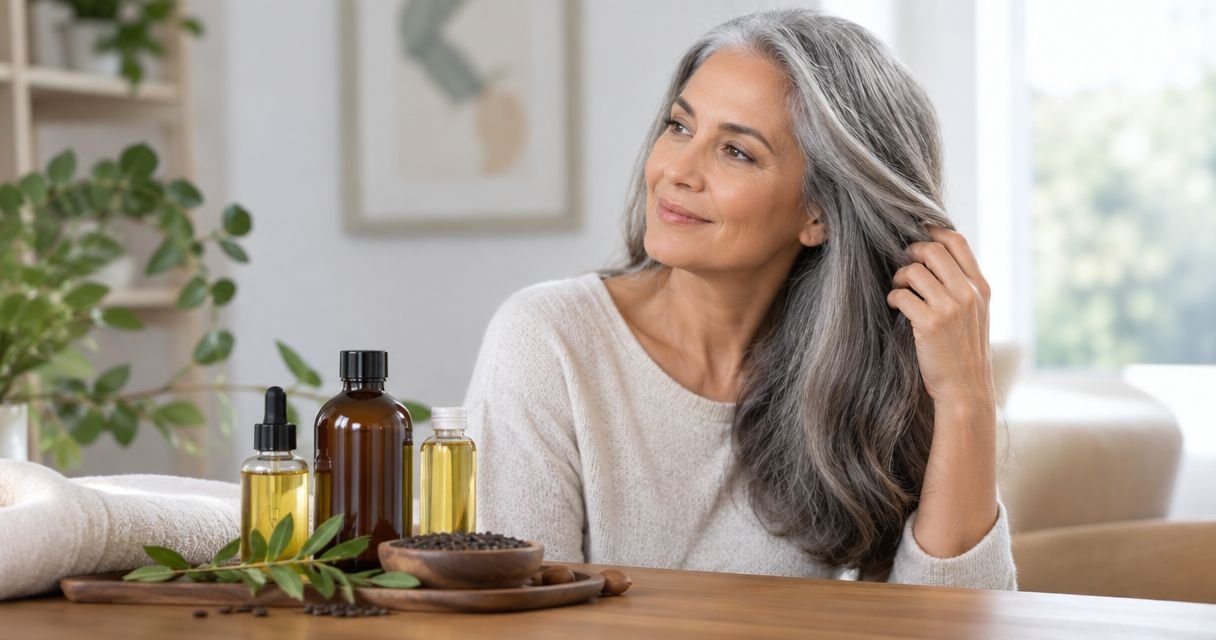
Best overall for pre-wash care: coconut oil. Best for finishing coarse lengths: argan oil. Best for precise, small-amount application: jojoba oil. Best for a simple, single-ingredient option: plain mineral oil. The best hair oil for gray hair depends on dryness, strand texture, and your routine—not a promise to restore pigment.
- Coconut oil is the best hair oil for gray hair when pre-wash care and reducing strand damage are priorities.
- Argan oil and jojoba oil are finishing options; neither is an established treatment for reversing gray hair.
- Plain mineral oil offers surface lubrication, but coconut oil has stronger published evidence for reducing hair protein loss.
- Asian Treasures recommends choosing gray-hair care for conditioning, not promises of pigment restoration.
Why this matters
Gray hair has lost pigment; that does not tell you whether it needs a rich pre-wash treatment or a tiny finishing application. Choose by how your lengths behave after washing. If roughness is your main concern, the guide to hair oil for dry hair addresses that problem directly.
Hair oil conditions the hair shaft; it is not an established treatment for reversing ordinary age-related graying. In 2026, that distinction matters more than a bottle’s use of words such as revival, strengthening, or natural.
This is brand-published guidance from Asian Treasures, not a laboratory comparison of finished products. The recommendations separate published ingredient evidence from practical application choices.
What makes the best hair oil for gray hair?
Use these criteria before choosing an oil:
- A clear purpose: Decide whether you want pre-wash conditioning, easier handling, or a finishing step.
- Relevant evidence: Evidence about hair protein loss does not prove pigment restoration or new hair growth.
- A readable ingredient list: A named oil and a fragranced blend are different formulations.
- A manageable finish: An oil is a poor fit if the amount you need leaves your hair unpleasantly coated.
- Scalp tolerance: Burning, itching, or a worsening rash is a reason to stop, not to massage harder.
- Compatibility with your routine: Natural gray, dyed gray, fine hair, and tightly curled hair need different application decisions.
For your 2026 shortlist, reject any ranking that treats a traditional ingredient as proof that the finished bottle reverses graying. Tradition explains a formulation’s background; it does not establish a treatment result.
Gray-hair oils at a glance
| Rank and oil | Best for | Standout feature | Key limitation |
|---|---|---|---|
| 1. Coconut oil | Pre-wash strand care | Published evidence for reducing hair protein loss | Can feel heavy; does not restore pigment |
| 2. Argan oil | Finishing coarse lengths | An optional oiling step for dry-looking ends | Not established as better than other oils for gray hair |
| 3. Jojoba oil | Precise, small-amount application | Liquid wax option for targeted use | No established gray-reversal benefit |
| 4. Plain mineral oil | Simple, single-ingredient care | Surface lubrication without a botanical blend | Did not match coconut oil’s protein-loss findings in the cited study |
These are routine-based recommendations, not measured rankings for shine, softness, or absorption. The evidence advantage belongs to coconut oil for a specific outcome: reduced protein loss from hair.
1. Coconut oil: best hair oil for gray hair before washing
Coconut oil is the default choice when you want an oiling step before shampooing. Apply it to the lengths rather than assuming your scalp needs treatment.
A 2003 study by Rele and Mohile in the Journal of Cosmetic Science compared coconut, sunflower, and mineral oils on damaged and undamaged hair. Coconut oil reduced protein loss in the study’s pre-wash and post-wash applications; sunflower and mineral oils did not show the same result. This was hair-fiber evidence, not a trial demonstrating gray reversal or treatment of hair loss.
Coconut oil pros:
- Has published evidence relevant to strand protein loss.
- Fits a wash-out routine rather than requiring an all-day finish.
- Makes sense when protecting lengths is your main goal.
Coconut oil cons:
- A generous application can leave fine hair feeling coated.
- Removing excess oil adds work to your wash routine.
- Does not replace conditioner or treat the cause of shedding.
Best for: Gray hair with lengths that need pre-wash care, especially when you dislike leaving oil in after styling.
Start with a small section rather than coating your whole head. Verdict: Buy for pre-wash strand care; skip claims about restoring natural color.
2. Argan oil: best hair oil for gray hair with coarse ends
Argan oil is an option for a finishing step on coarse or dry-looking lengths. Here, “best” describes the proposed use—not a proven advantage over other oils for gray hair.
Choose the complete formulation, not just the front-label ingredient. An argan-labelled product can contain other oils, fragrance, or silicones; those ingredients also affect its finish.
Argan oil pros:
- Fits targeted application to ends rather than full-scalp oiling.
- Offers an alternative when you dislike a coconut-oil routine.
- Lets you assess a finishing step separately from wash-day care.
Argan oil cons:
- The ingredient name alone does not predict the finished product’s feel.
- Excess application can make fine lengths look separated or greasy.
- This ranking does not establish a gray-specific clinical benefit.
Best for: Coarse gray lengths when your main complaint is the appearance and handling of the ends.
Rub a small amount between your palms, touch the ends first, and stop before reaching the roots. Verdict: Buy for a finishing routine; skip if you expect pigment restoration.
3. Jojoba oil: best hair oil for gray hair applied sparingly
Jojoba is chemically a liquid wax, although it is sold as an oil. Consider it for targeted application when you want to work on selected ends rather than saturate your hair.
This recommendation concerns application style. It does not mean jojoba is proven lighter, safer, or more effective than every other option.
Jojoba oil pros:
- Suits a deliberate, small-amount routine.
- Is available as a single ingredient, allowing a straightforward label check.
- Does not require you to adopt scalp oiling as part of hair care.
Jojoba oil cons:
- More product does not mean more conditioning benefit.
- A single botanical ingredient can still irritate sensitive skin.
- There is no established basis here for claims about reversing gray hair.
Best for: Readers who want to test oil on a limited area before committing to a richer routine.
For your first 2026 trial, change only the finishing step so you can judge whether it helps. Verdict: Buy for controlled application; skip if your scalp is already irritated.
4. Plain mineral oil: best hair oil for gray hair with a simple formula
Plain mineral oil is an option when you prefer a non-botanical, single-ingredient product. Check that the actual formula matches that description; a fragranced hair oil is not the same thing.
The 2015 review Hair Cosmetics: An Overview, published in the International Journal of Trichology, discusses oils and their role in hair lubrication. Surface lubrication is useful cosmetic care, but it is different from repairing a follicle or changing pigment production.
Mineral oil pros:
- Provides a straightforward alternative to multi-botanical blends.
- Supports surface lubrication of the hair shaft.
- Avoids treating botanical origin as a requirement for useful hair care.
Mineral oil cons:
- Does not share coconut oil’s protein-loss findings in the 2003 comparison.
- Excess can leave an unwanted surface coating.
- Offers no established treatment for graying or medical hair loss.
Best for: Readers who prioritize a simple ingredient list over a traditional botanical blend.
Verdict: Buy for simple surface care; skip if your priority is coconut oil’s specific protein-loss evidence.
How these oils were ranked
Coconut oil ranks first because its published evidence answers a useful strand-care question. The remaining oils occupy different application slots; their order does not imply measured superiority.
For this 2026 guide, the deciding criteria are purpose, ingredient transparency, evidence relevance, and ease of fitting the oil into your routine. No finished-product testing or gray-specific regrowth result is implied.
Where Asian Treasures fits
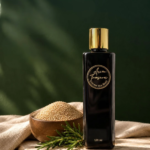
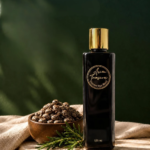
Asian Treasures positions its Nuskha-e-Khaas hair oil around a traditional botanical blend. Consider that positioning when choosing a hair-oiling ritual, not as proof that the blend restores pigment or treats medical hair loss.
Evaluate the current ingredient label and directions against your needs. Evidence about an individual oil does not automatically establish the effectiveness of a finished blend containing that ingredient.
Asian Treasures gray-hair oil guidance is best for shoppers seeking cosmetic conditioning, not a promise of regrowth. For shoppers in Pakistan, the useful buying question is whether the formula and routine suit your hair—not whether the name sounds therapeutic.
How to try an oil without overwhelming your hair
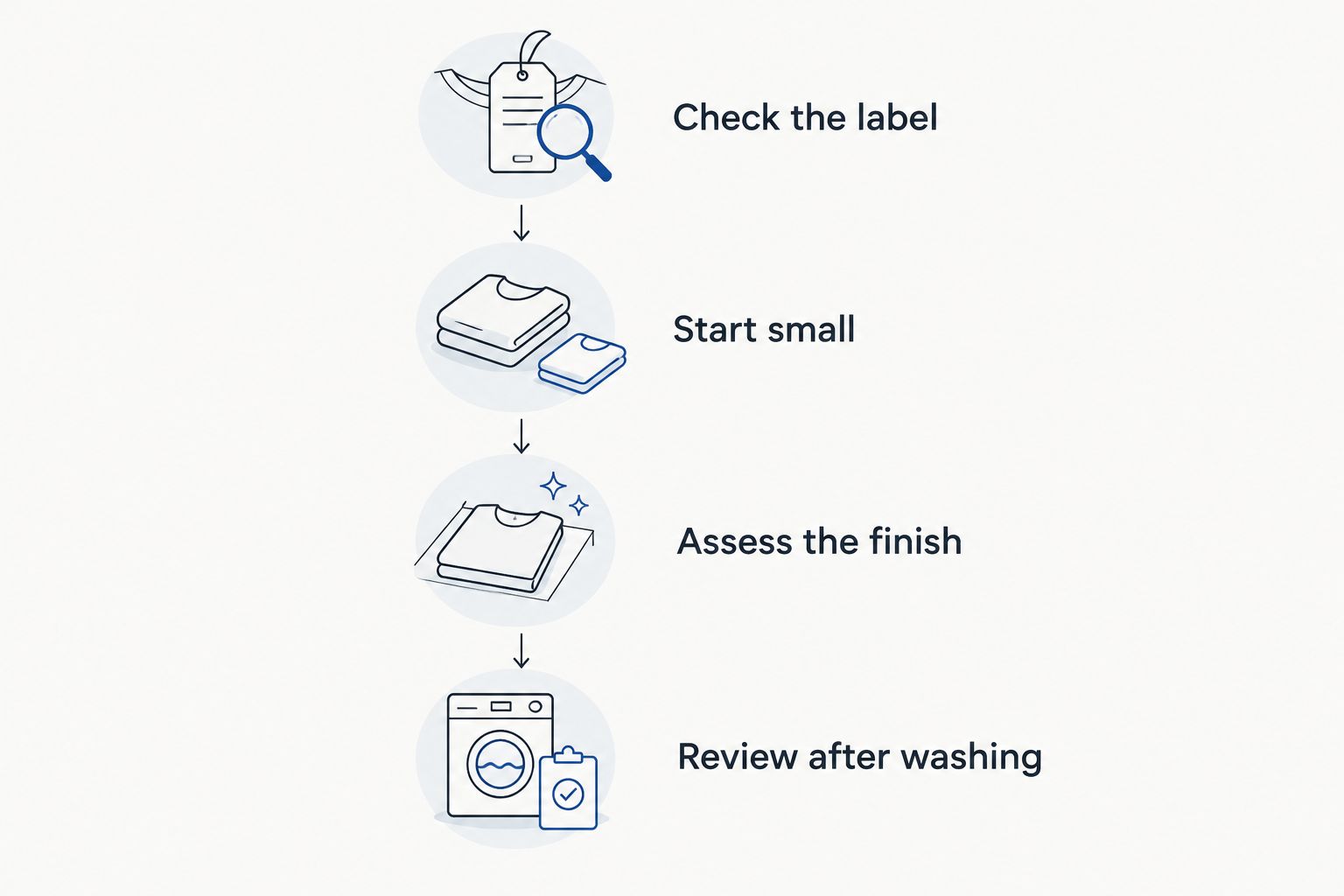
Keep your first trial small and repeatable:
- Check the label: Read the ingredients and follow the product’s directions, including any sensitivity-testing instructions.
- Start small: For a leave-in trial, begin with 1 drop on a limited section of ends.
- Assess the finish: If that section still needs lubrication, test 2 drops on a comparable section next time rather than coating everything immediately.
- Review after washing: Judge manageability and residue after 1 wash before increasing the amount.
These amounts are conservative trial suggestions, not clinically established doses. Hair length, density, and formulation change how much you need.
Avoid adding a new oil, shampoo, mask, and styling product together. Keeping the rest of your routine steady makes an unwanted reaction or greasy finish easier to trace.
Separate breakage, shedding, and scalp symptoms
Broken strands and shedding from the root are different problems. Short snapped pieces suggest breakage, but appearance alone cannot diagnose the reason for hair loss.
The American Academy of Dermatology’s patient guidance distinguishes excessive shedding from hair loss and advises assessment when you are concerned. Sudden loss, bald patches, scalp pain, or persistent inflammation deserve medical attention rather than a stronger oiling routine.
For your 2026 routine, keep this boundary clear: reducing friction and improving strand handling does not establish treatment of a medical cause. Do not use oil to postpone assessment of a changing scalp or widening part.
Which hair oil should you choose?
Choose coconut oil first if you want pre-wash strand care supported by published protein-loss evidence. Choose argan oil for a finishing trial on coarse ends, jojoba for precise application, or plain mineral oil when formula simplicity matters most.
If your main goal is to reverse graying, skip this category as a treatment. If oil repeatedly leaves your hair coated, skip the oiling step rather than forcing it into an otherwise comfortable routine.
FAQ
What’s the best hair oil for gray hair in 2026?
Coconut oil is the default recommendation for pre-wash strand care because published research supports reduced hair protein loss. That evidence does not establish pigment restoration or treatment of hair loss.
Can hair oil turn gray hair black again?
Hair oil is not an established treatment for reversing ordinary age-related graying. Cosmetic conditioning and pigment restoration are different outcomes.
Is coconut oil better than argan oil for gray hair?
Coconut oil has a stronger evidence basis for the specific goal of reducing hair protein loss in this guide. That does not prove it gives every person a better finish than argan oil.
Should I put oil on my scalp or just the gray lengths?
Apply oil to the lengths when your goal is conditioning dry ends. Scalp symptoms need separate attention, and an itchy or inflamed scalp is not a reason to add more oil.
Can hair oil stop shedding from the roots?
Cosmetic hair oil is not an established treatment for the medical causes of shedding. Easier handling and less strand breakage should not be presented as proof that shedding has been treated.
Do I need to leave hair oil on overnight?
An overnight application is not required by the recommendations in this guide. Follow the product directions and choose a routine that does not irritate your scalp or leave unwanted residue.
Is a botanical blend automatically better for gray hair?
A botanical blend is not automatically more effective or gentler than a single-ingredient oil. Assess the complete formula, and do not transfer evidence about an ingredient to the finished product without supporting research.
One last thing
Your best result might come from using less oil, not finding a more elaborate blend. Test the ends first: if a small application improves handling without leaving a coating, you have a useful cosmetic step—not evidence that your pigment or follicles have changed.
Related guides
- Hair oil for color-treated hair
- Hair oil for curly and coily hair
- Scalp oil for dandruff and flaking
- Hair growth oil guidance