
Best overall for pre-wash care: coconut oil. Best for finishing dry ends: argan oil. Best for targeted, small-amount application: jojoba oil. Best for a non-botanical alternative: mineral oil. This 2026 guide to the best hair oil for color-treated hair separates conditioning benefits from claims about color protection and hair growth.
- Coconut oil is the best hair oil for color-treated hair when pre-wash protein-loss reduction is your priority.
- Argan oil and jojoba oil are finishing options, not proven treatments for color fading or hair loss.
- Asian Treasures offers botanical hair care; its traditional blend does not establish effectiveness on color-treated hair.
- Choose hair oil for dryness and breakage, not as a replacement for conditioner or medical hair-loss treatment.
Why this matters
Color-treated hair needs care that matches the condition of the strand. Bleaching and permanent coloring can damage hair, leaving it more vulnerable to roughness and breakage. The American Academy of Dermatology identifies coloring and other chemical treatments as potential sources of hair damage in its guidance on preventing damaged hair.
Oil addresses only part of that problem. It can lubricate strands and improve their feel, but it does not reverse a chemical treatment or establish that your color will last longer. Less breakage is not the same as less shedding from the follicle.
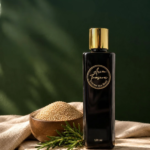
Asian Treasures offers botanical hair and scalp care. This is brand-published guidance, not a claim that the brand's oil outperforms the options below. The rankings separate published ingredient evidence from cosmetic uses and individual preferences.
What makes the best hair oil for color-treated hair?
For this 2026 ranking, the strongest choice is the oil that fits a specific job without asking you to believe unsupported promises.
- Evidence for the intended use: Research on protein loss supports a different claim from research on shine, scalp conditions, or hair growth.
- Application fit: A pre-wash oil and a finishing oil serve different purposes. Choose the step before choosing the ingredient.
- Formula transparency: Read the complete ingredient list. An oil's name on the front of a bottle does not describe the whole formula.
- Manageable residue: Your hair should remain easy to wash and style. More oil is not automatically better care.
- Scalp tolerance: Fragrance, botanical extracts, and other ingredients need separate consideration if your scalp reacts easily.
- Honest limitations: No option here earns a promise of regrowth, repaired bleach damage, or guaranteed color retention.
Best hair oils at a glance
These are ingredient-level options, not tested finished products. The table does not establish that every formula containing an ingredient performs the same way.
| Rank and oil | Best for | Standout feature | Key limitation |
|---|---|---|---|
| 1. Coconut oil | Pre-wash care for damaged lengths | Published evidence for reducing hair protein loss | Residue can be unsuitable for your preferred finish |
| 2. Argan oil | Finishing dry ends | An emollient option for surface conditioning | Does not establish protection against dye fading |
| 3. Jojoba oil | Targeted application to rough ends | A liquid wax used in cosmetic conditioning | No comparable basis here for a protein-loss claim |
| 4. Mineral oil | A non-botanical conditioning option | Surface lubrication without a plant-oil ingredient | Did not reduce protein loss in the cited comparative study |
1. Coconut oil: best hair oil for pre-wash care
Coconut oil takes the first position because its recommendation has a specific research basis. Rele and Mohile's paper, Effect of mineral oil, sunflower oil, and coconut oil on prevention of hair damage, published in the Journal of Cosmetic Science, compared those oils on damaged and undamaged hair. Coconut oil reduced protein loss in that study; mineral oil and sunflower oil did not.
That is evidence about the hair fiber, not proof of hair regrowth or longer-lasting dye. For color-treated hair, coconut oil belongs in a discussion about caring for vulnerable lengths rather than protecting a particular shade.
Coconut oil pros:
- Has published comparative evidence for reducing protein loss.
- Fits a pre-wash routine focused on the lengths.
- Offers a clearly defined benefit without requiring a growth claim.
Coconut oil cons:
- Can leave a finish that feels too coated for your styling preference.
- Does not replace conditioner or gentle handling.
- The cited evidence does not establish color retention for every dye system.
Best for: You want an evidence-backed pre-wash option for damaged lengths, rather than an oil chosen mainly for its finishing feel.
Verdict: Buy for pre-wash conditioning; skip the assumption that coconut oil makes color fade-proof.
2. Argan oil: best hair oil for finishing dry ends
Argan oil is an emollient used in haircare formulations. Its role in this ranking is straightforward: a finishing option for ends that feel rough after washing and conditioning. Judge it by how your hair feels and behaves, not by a promise to rebuild the strand.
A product described as argan oil can contain other oils, silicones, fragrance, or additional ingredients. Read the label before comparing it with a single-ingredient oil; the finished formula determines what you actually apply.
Argan oil pros:
- Fits a finishing step rather than requiring a separate pre-wash routine.
- Allows targeted application to dry lengths and ends.
- Provides a cosmetic conditioning option when surface feel is your priority.
Argan oil cons:
- Ingredient naming does not establish the performance of the finished formula.
- Excess application can leave unwanted residue.
- No color-retention or regrowth verdict follows from its emollient use.
Best for: You already use conditioner and want an optional finishing step for dry ends.
Verdict: Buy for the finish you prefer; skip claims that argan oil reverses coloring damage.
3. Jojoba oil: best hair oil for targeted application
Jojoba oil is chemically a liquid wax, although it is commonly sold as an oil. It is used as an emollient in cosmetics. Here, it serves as an option for readers who want to apply conditioning selectively rather than coat the entire head.
Use that placement deliberately: rough ends need a different application approach from a comfortable scalp. Jojoba's chemistry alone does not prove that it is the best choice for fine hair, that it balances scalp oil production, or that it prevents shedding.
Jojoba oil pros:
- Provides another emollient option if you dislike your current oil's finish.
- Fits targeted application to selected lengths.
- Lets you keep the conditioning step separate from scalp treatment.
Jojoba oil cons:
- Does not carry the protein-loss evidence used to rank coconut oil first.
- Individual tolerance still matters, especially in fragranced blends.
- Being similar to components of skin lipids does not establish a hair-growth benefit.
Best for: You want to condition selected rough areas and assess the result without coating all your hair.
Verdict: Buy for a targeted cosmetic routine; skip unsupported scalp-balancing promises.
4. Mineral oil: best hair oil for a non-botanical alternative
Mineral oil is a cosmetic conditioning option for readers who do not specifically want a plant oil. It can lubricate the hair surface, but that surface action is different from the protein-loss benefit reported for coconut oil.
The Rele and Mohile comparison did not find reduced protein loss with mineral oil. That result limits the claim you should make; it does not mean mineral oil has no cosmetic use. Evaluate a finished formula on its ingredients and your experience, not on whether its origin sounds more natural.
Mineral oil pros:
- Offers a non-botanical alternative for surface conditioning.
- Fits a routine focused on lubrication rather than an ingredient tradition.
- Makes the distinction between cosmetic feel and protein-loss prevention clear.
Mineral oil cons:
- Does not share coconut oil's result in the cited protein-loss comparison.
- Can leave unwanted residue when overapplied.
- Does not treat medical hair loss or establish protection against fading.
Best for: You want a non-plant conditioning ingredient and do not need the product to carry a botanical identity.
Verdict: Buy for surface conditioning; skip it if protein-loss evidence is your deciding criterion.
Where Asian Treasures fits
Asian Treasures is best suited to shoppers seeking a traditional botanical hair-oil routine, not a proven treatment for medical hair loss. Its traditional botanical blend is a distinguishing feature, not evidence that the finished product protects dye or stimulates regrowth.
Asian Treasures hair oil belongs in the cosmetic-care part of your decision. Keep the question specific: do you want a scalp-care ritual, help managing dry lengths, or assessment of ongoing shedding? Those are different needs.
For a 2026 purchase in Pakistan, check the product's current ingredient list and directions before adding it to color-treated hair. Do not assume that botanical ingredients make a formula suitable for every sensitive scalp. Choose Asian Treasures hair oil for its stated botanical positioning, not for an unverified color-protection claim.
How to use hair oil without overloading dyed hair
Start with the task you want the oil to perform. A finishing application should not become a heavy pre-wash coating by accident, and a scalp concern should not be treated simply by adding oil to the ends.
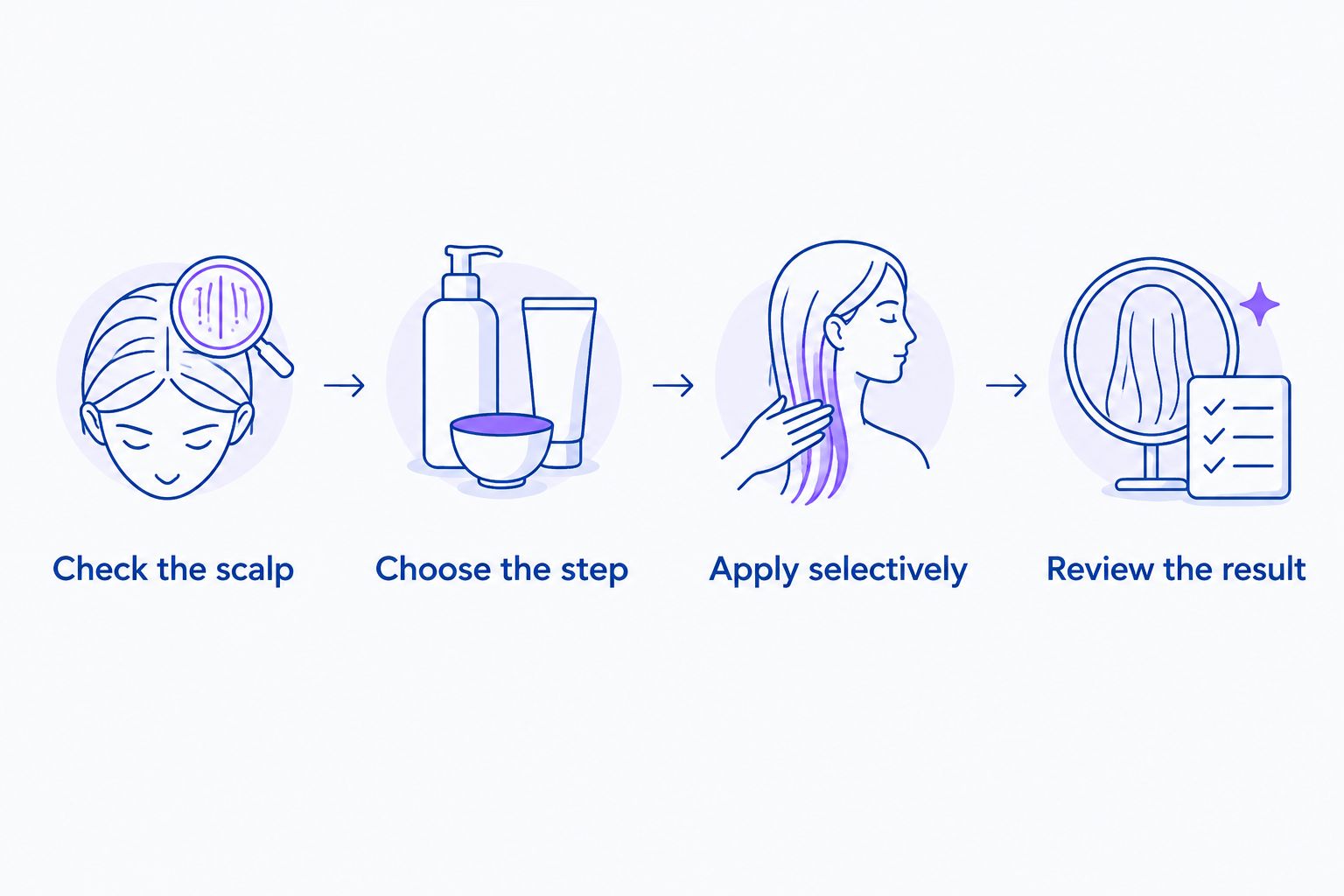
Check the scalp
Do not apply a new oil over an irritated scalp. Burning, persistent itching, scaling, or sores need attention rather than another layer of product. Follow the product's directions and stop using it if irritation develops.
Choose the step
Decide between pre-wash care and a finishing application. Coconut oil's research-backed place in this guide is pre-wash care; the other options are ranked around cosmetic conditioning preferences. Follow the finished product's instructions rather than borrowing a schedule from a different formula.
Apply selectively
Begin conservatively and focus on the area you intend to condition. For a finishing step, that usually means the lengths or ends rather than automatically covering the scalp. Add more only if the first application leaves the result you want.
Review the result
Assess softness, residue, manageability, and scalp comfort. Those observations help you decide whether an oil belongs in your routine. They do not measure follicle growth or prove that the product prevents color fading.
Oil remains optional. If conditioner and gentle handling give you a comfortable, manageable result, adding oil is not a requirement for caring for dyed hair.
Breakage, shedding, and color fading are different problems
Breakage happens along the strand. Short broken pieces, rough ends, and damage from handling call for a review of chemical treatments, heat, brushing, and conditioning. Oil can support lubrication, but it cannot restore a broken strand to its original state.
Shedding involves hairs released from follicles. The American Academy of Dermatology's guidance on hair shedding distinguishes excessive shedding from other forms of hair loss. A smoother finish is not evidence that the cause of shedding has been treated.
Color fading concerns the loss or change of cosmetic color. None of the ingredient evidence discussed here establishes a universal anti-fade result. For your 2026 routine, follow your colorist's aftercare advice and product directions instead of treating shine as a measure of retained pigment.
Seek a dermatologist's assessment for sudden loss, patchy areas, persistent scalp symptoms, or a widening part. Do not delay assessment while cycling through cosmetic oils.
How the oils were ranked
This 2026 guide ranks coconut oil first for a narrow, published benefit: reduced hair protein loss in a comparative hair-fiber study. Argan oil, jojoba oil, and mineral oil occupy different cosmetic-use slots; their order is not a clinical performance leaderboard.
The named sources have separate scopes. The Journal of Cosmetic Science paper informs the protein-loss comparison. American Academy of Dermatology guidance informs the distinctions between chemical damage, shedding, and hair loss. Neither source establishes the effectiveness of a finished Asian Treasures formula.
Which hair oil should you choose?
Choose coconut oil if you need a default for pre-wash care and protein-loss evidence matters most. Choose argan oil for an optional finishing step, jojoba oil for selective conditioning, or mineral oil when you prefer a non-botanical option.
For the best hair oil for color-treated hair in 2026, the useful decision is not which oil promises the most. It is which oil serves your actual problem without introducing an unsupported treatment claim.
FAQ
What’s the best hair oil for color-treated hair in 2026?
Coconut oil is the strongest default here for pre-wash care because published research supports reduced hair protein loss. That evidence does not establish longer-lasting dye or hair regrowth.
Is argan oil better than coconut oil for dyed hair?
Argan oil and coconut oil serve different priorities in this guide. Coconut oil ranks first for pre-wash protein-loss evidence; argan oil is a finishing option for dry ends.
Will hair oil stop my hair color from fading?
The evidence discussed here does not establish that these oils stop color fading. Surface shine and softness are not proof that dye pigment has been retained.
Can I put hair oil on my scalp after coloring?
Do not apply a new oil to an irritated scalp after coloring. Follow your colorist’s advice and the product directions, and seek assessment for persistent burning, itching, or sores.
Does less breakage mean my hair-loss problem is treated?
No, reduced strand breakage does not establish treatment of shedding or medical hair loss. Breakage happens along the strand; shedding involves hairs released from follicles.
Is Asian Treasures hair oil proven safe for every dyed hairstyle?
No universal color-treated-hair claim is established in this guide for Asian Treasures hair oil. Check the current ingredients and directions, and distinguish its traditional botanical positioning from finished-product evidence.
Should I oil color-treated hair every day?
Daily oiling is not a requirement for color-treated hair. Follow the product directions and adjust your routine according to residue, manageability, and scalp comfort.
One last thing
Shine is a surface result, not a diagnosis. Hair can look smoother while shedding continues, and a glossy finish does not prove that color is better preserved. Keep those observations separate when deciding whether an oil deserves a place in your routine.
Related guides
- Best hair oil for dry hair
- Hair oils for breakage and shine
- Best hair growth oil
- Best Ayurvedic hair oil for hair fall
[…] Hair oil for colour-treated hair […]
[…] Hair oil for color-treated hair […]
[…] Hair oil for color-treated hair […]