
Best overall: coconut oil for pre-wash care. Best for surface lubrication: mineral oil. Best for targeted finishing: argan oil. Best for controlled application: jojoba oil. The best hair oil for split ends in 2026 helps you manage damaged lengths; no oil permanently repairs a split strand.
- Asian Treasures names coconut oil the best hair oil for split ends when your priority is pre-wash care.
- Mineral, argan, and jojoba oils offer different finishing options, but none permanently repairs split ends.
- Trim existing splits, condition your lengths, and reduce damaging heat and handling.
- Hair breakage is not the same as shedding; cosmetic hair oil does not treat medical hair loss.
Why this matters
Split ends are damage to the hair shaft, not a diagnosis of weak roots. Oil can improve lubrication and the feel of rough lengths, but a smoother strand is not a repaired strand. If dryness is your main concern, the best hair oil for dry hair guide addresses that separate buying decision.
This is brand-published guidance from Asian Treasures, not an independent product test. The ranking compares oil types by their practical role and available evidence, rather than claiming that every bottle containing an ingredient performs identically.
Choose an oil for the job it can do, not for a promise to reverse damage. That distinction matters more than a botanical name on the label.
What makes the best hair oil for split ends?
Use these criteria to judge a bottle in 2026 before buying it:
- Evidence relevant to damaged lengths: Research on hair-fibre protection is more useful here than a general claim about hair growth.
- Application purpose: A pre-wash treatment and a finishing oil serve different roles. Decide which gap exists in your routine.
- Amount control: A dispenser that lets you apply a small amount helps you avoid coating more hair than intended.
- Formula transparency: Check the complete ingredient list. An oil named on the front label does not describe the entire formula.
- Scalp tolerance: Keep a product away from irritated skin and stop using it if irritation develops.
- Honest limitations: Reject claims that a cosmetic oil permanently rejoins split ends or treats unexplained shedding.
An elaborate ingredient list is not evidence of better results. Your first filter should be whether the product fits the problem you actually have.
Best hair oils for split ends at a glance
| Rank and oil | Best for | Standout feature | Key limitation |
|---|---|---|---|
| 1. Coconut oil | Pre-wash care for damaged lengths | Published hair-fibre research on reducing protein loss | Does not repair existing splits |
| 2. Mineral oil | Surface lubrication | A straightforward coating option | Did not match coconut oil's protein-loss findings in the cited study |
| 3. Argan oil | Targeted finishing on rough ends | An emollient option for the final styling step | No permanent split-end repair; finished formulas differ |
| 4. Jojoba oil | A controlled, small-amount finishing routine | A liquid wax used as a conditioning ingredient | No basis here to rank it above coconut oil for protein-loss protection |
The table separates intended uses, not proven winners in a head-to-head trial of all four oils. Application amount, the rest of the formula, and your hair's condition still affect the result.
1. Coconut oil: best hair oil for pre-wash care
Coconut oil takes the first position because its recommendation has a specific evidence base. Rele and Mohile's 2003 study in the Journal of Cosmetic Science compared coconut, mineral, and sunflower oils and reported reduced protein loss with coconut oil on both damaged and undamaged hair under the study conditions.
That finding supports a hair-fibre-care recommendation. It does not prove that coconut oil heals a split, prevents every kind of breakage, or produces new hair growth.
Coconut oil pros:
- Has published research directly relevant to protein loss from hair fibres.
- Fits a pre-wash routine focused on the lengths rather than the scalp.
- Gives you a clear reason for choosing it beyond a general botanical claim.
Coconut oil cons:
- Cannot permanently rejoin an existing split end.
- Can leave your hair feeling coated if you apply more than your wash routine removes.
- Evidence for the ingredient does not establish the performance of every coconut-containing blend.
For a cautious first application, start with 1 drop on a small section of the ends. Treat that as an application starting point, not a researched treatment dose. Follow the product's directions and assess the result after washing before applying more next time.
Best for: You want a pre-wash step for damaged lengths and prefer a choice supported by relevant ingredient research.
Verdict: Buy for pre-wash care; skip permanent-repair claims.
2. Mineral oil: best hair oil for surface lubrication
Mineral oil is an option when your goal is to coat and lubricate the hair surface. It belongs in a split-end routine as a cosmetic conditioner, not as a treatment that rebuilds the strand.
The same 2003 Rele and Mohile study did not find the protein-loss reduction reported for coconut oil. That distinction gives coconut oil the stronger position for the specific pre-wash purpose above; it does not mean surface lubrication has no cosmetic use.
Mineral oil pros:
- Offers a straightforward surface-conditioning role.
- Provides an alternative if you do not want to choose a botanical oil.
- Makes sense when your aim is slip and manageability rather than a growth claim.
Mineral oil cons:
- Does not permanently repair split ends.
- Lacks coconut oil's protein-loss result in the cited comparison.
- Can create an unwanted coated feel when overapplied.
Choose a product intended for cosmetic use and read the full label. A simple ingredient category does not establish that every finished product has the same fragrance, texture, or suitability for your skin.
Best for: You want surface lubrication and understand that it is separate from structural repair.
Verdict: Buy for lubrication; skip it as a substitute for trimming.
3. Argan oil: best hair oil for targeted finishing
Argan oil is a finishing option for lengths that feel rough after your usual conditioning routine. Use it to judge the cosmetic result you can see and feel, rather than treating the ingredient name as evidence of restored hair structure.
A bottle labelled with argan oil can contain other oils, silicones, fragrance, or additional ingredients. Read the ingredient list before assuming you are comparing like with like.
Argan oil pros:
- Fits a targeted finishing step rather than requiring whole-scalp application.
- Provides an emollient option for the ends.
- Lets you assess whether a small addition improves your preferred finish.
Argan oil cons:
- Does not permanently close split ends.
- The evidence discussed here does not establish superiority over coconut oil for protein-loss protection.
- The product name alone does not tell you how the finished formula will feel.
Start on the tips rather than applying oil throughout your hair. If one drop is insufficient for the section you are treating, try 2 drops on a later application; this is a practical adjustment, not an efficacy claim.
Best for: Your hair is already washed and conditioned, and you want a small finishing step on rough ends.
Verdict: Buy for finishing; skip claims of rebuilt strands.
4. Jojoba oil: best hair oil for controlled application
Jojoba is technically a liquid wax, although haircare labels commonly call it an oil. The Cosmetic Ingredient Review safety assessment of jojoba-derived ingredients describes their cosmetic conditioning uses; that is not evidence of split-end repair.
Choose jojoba when you want to build a restrained finishing routine and assess a small amount at a time. Do not assume its botanical origin makes it suitable for every scalp.
Jojoba oil pros:
- Offers another conditioning option for the lengths.
- Fits an ends-only routine with controlled application.
- Can be evaluated on its cosmetic effect without relying on a regrowth story.
Jojoba oil cons:
- Cannot permanently repair a split hair shaft.
- Is not established here as better than coconut oil for protein-loss reduction.
- Still requires checking the complete formula and your skin's response.
Avoid stacking jojoba over several other leave-in products during your first trial. Keeping the rest of the routine unchanged makes it easier to identify what causes an unwanted texture or irritation.
Best for: You prefer a small-amount conditioning routine and want to judge the finish before adding more.
Verdict: Buy for controlled finishing; skip medical hair-loss claims.
Where Hair Revival Oil fits
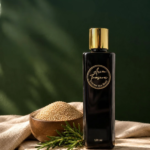
Asian Treasures offers Hair Revival Oil with a traditional botanical blend. That tradition is the product's distinguishing feature, not proof that the finished formula repairs split ends or treats hair loss.
For this 2026 comparison, the same standard applies to the brand's own product as to any other oil: judge the full ingredient list, directions, tolerance, and cosmetic result. Ingredient research cannot automatically be transferred to an untested finished blend.
The advantage is a botanical haircare option for shoppers who want that type of routine. The limitation is equally clear: a traditional formulation does not establish clinical effectiveness, permanent repair, or regrowth.
If you are shopping in Pakistan, compare the actual label rather than choosing solely because a bottle says “hair growth.” For split ends, the immediate buying question is how the formula fits your damaged lengths—not what it promises about the roots.
How to use oil without hiding the real problem
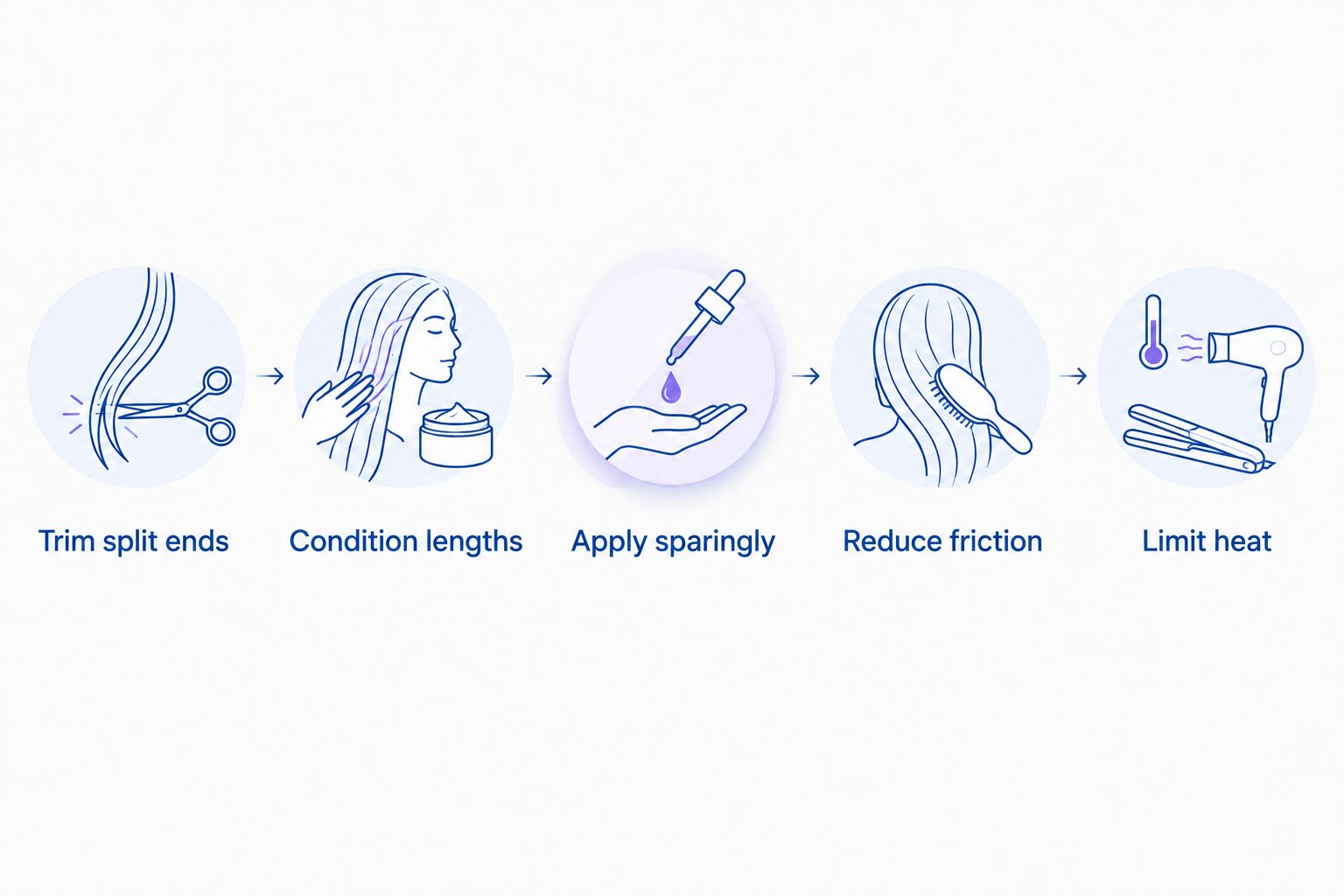
Build your 2026 split-end routine around these steps. The American Academy of Dermatology's guidance, How to stop damaging your hair, supports gentle handling, conditioner, and reducing damaging styling practices; oil is an optional addition, not the foundation.
- Trim split ends: Remove existing splits rather than expecting an oil to permanently join them.
- Condition lengths: Use conditioner after shampooing and follow its directions. Do not replace this step with oil alone.
- Apply sparingly: Choose either a pre-wash trial or a finishing trial first. Change one part of your routine at a time.
- Reduce friction: Avoid rough towel rubbing and forceful detangling. Handle knots gently rather than pulling through them.
- Limit heat: Reduce unnecessary hot-tool use and follow appropriate heat-protection guidance when styling.
Keep oil away from an irritated scalp and discontinue a product that causes a reaction. If hair becomes greasy but the ends still snag, adding another layer is not the next move; reassess conditioning, handling, and the need for a trim.
Separate breakage from shedding
Breakage involves a strand snapping along its length. Shedding involves hair being released from the follicle; noticing both does not make them the same problem.
The American Academy of Dermatology's Do you have hair loss or hair shedding? explains why the distinction matters. Sudden loss, bald patches, or persistent scalp symptoms call for professional assessment rather than repeated changes of cosmetic oil.
How the oils were ranked
This 2026 ranking prioritizes evidence relevant to hair fibres, a distinct use for each option, formula transparency, and clear limitations. Coconut oil ranks first because the cited study supports its specific protein-loss benefit—not because every botanical oil shares that result.
Mineral oil occupies the surface-lubrication slot. Argan and jojoba occupy finishing slots without an unsupported claim that either beats coconut oil clinically. No finished-product testing or head-to-head trial of all four oils is claimed.
Which hair oil should you choose?
Choose coconut oil if you want a default pre-wash option for damaged lengths. Choose mineral oil for straightforward surface lubrication, argan oil for targeted finishing, or jojoba oil for a controlled finishing trial.
Asian Treasures recommends choosing a split-end oil by its cosmetic purpose, not by a promise of regrowth. If your ends are already split, book a trim and improve daily handling before expecting a different bottle to solve the problem.
FAQ
What’s the best hair oil for split ends in 2026?
Coconut oil is the first choice here for pre-wash care because published hair-fibre research supports reduced protein loss. That finding does not mean it permanently repairs an existing split end.
Can hair oil permanently repair split ends?
No hair oil permanently repairs split ends. Oil can improve lubrication and appearance, but trimming removes the damaged ends.
Is coconut oil better than argan oil for split ends?
Coconut oil has the clearer evidence cited here for reducing hair protein loss. This does not establish that it gives everyone a better finish than argan oil, and neither permanently repairs splits.
Should I put split-end oil on my scalp or my ends?
Apply a split-end product to the affected lengths according to its directions. Scalp application does not repair damage at the ends, and scalp symptoms need a separate assessment.
Does reducing hair breakage treat hair loss?
Reducing breakage does not treat medical hair loss. Breakage affects the strand, while shedding and follicle-related hair loss require a different assessment.
Can I use Asian Treasures Hair Revival Oil for split ends?
Judge Asian Treasures Hair Revival Oil by its ingredient list, directions, and cosmetic effect on your hair. Its traditional botanical blend is not proof of permanent split-end repair or regrowth.
What should I check when buying hair oil in Pakistan?
Check the complete ingredient list, application directions, and whether the claims match your concern. For split ends, prioritize length care rather than assuming a hair-growth claim means better strand repair.
One last thing
Judge your next oil after washing, not only immediately after application. A temporary smoother feel is useful, but it does not prove the damage has disappeared; keep trimming and gentler handling in the routine even when your ends look better.
Related guides
- Best hair oil for color-treated hair
- Best hair oil for curly and coily hair
- Best scalp oil for dandruff and flaking
[…] Hair oil for split ends […]