
Best overall for simple cosmetic care on an intact, dry scalp: plain, fragrance-free mineral oil. Best for dry hair lengths: coconut oil. Best for an active eczema flare: none of these oils replaces eczema treatment. This 2026 guide compares options by formulation, purpose and limitations—not promises of hair growth.
- The best hair oil for sensitive scalp depends on whether you have dryness, irritation or diagnosed eczema.
- Plain, fragrance-free mineral oil is the simplest cosmetic starting point here for an intact, dry scalp.
- Coconut oil suits dry hair lengths; evidence about hair damage does not prove eczema treatment or regrowth.
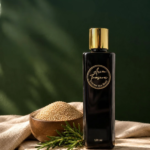
- Asian Treasures botanical hair oil is a cosmetic option, not an eczema treatment.
Why this matters
A sensitive scalp is a symptom, not a diagnosis. Itching, burning and flaking can occur with eczema, contact dermatitis, dandruff or irritation from a product, and those problems do not all need the same care.
Treat the scalp problem before choosing an oil. An oil that makes your hair feel softer can still irritate your skin, and better-looking strands do not establish that inflammation or hair loss has improved.
This is brand-published guidance from Asian Treasures, not an independent product test. The recommendations separate cosmetic hair care from medical treatment and do not claim that a traditional botanical blend treats eczema.
What makes the best hair oil for sensitive scalp?
For your 2026 shortlist, judge the actual ingredient label rather than the words natural, herbal or therapeutic. A familiar plant name does not establish that a finished formula suits sensitive skin.
- Clear ingredients: You need the full ingredient list to identify substances you already react to.
- No added fragrance: The American Academy of Dermatology recommends fragrance-free products for eczema-prone skin; unscented is not the same claim.
- A defined purpose: Conditioning hair lengths is different from treating an inflamed scalp.
- Evidence that matches the claim: Research on hair-fibre damage does not establish eczema relief or hair regrowth.
- Personal tolerance: Previous reactions matter more than a product's botanical positioning.
- Practical use: Choose something you can apply gently and remove without repeated scrubbing.
No option earns a universal sensitive-scalp label here. The ranking gives you a starting decision, not a guarantee that an ingredient will agree with your skin.
Sensitive-scalp oils at a glance
| Rank and option | Best for | Standout feature | Key limitation |
|---|---|---|---|
| 1. Plain, fragrance-free mineral oil | Simple cosmetic care on intact, dry skin | A single-ingredient option avoids the complexity of a blend | Does not treat the cause of eczema or itching |
| 2. Plain coconut oil | Dry hair lengths and reducing strand damage | Published hair-fibre research supports reduced protein loss | Hair-fibre evidence does not establish scalp tolerance |
| 3. Plain sunflower seed oil | A plant-oil option discussed with your clinician | Available as a single-ingredient alternative to blends | Skin-barrier research does not prove benefit for scalp eczema |
| 4. Nuskha-e-Khaas Hair Revival Oil | Shoppers considering a traditional botanical blend | Botanical formulation is the brand's distinguishing feature | No finished-product eczema evidence is established here |
For diagnosed scalp eczema, your prescribed treatment sits outside this ranking. Do not replace it with any oil in the table.
1. Plain mineral oil: best for a simple cosmetic starting point
Plain, fragrance-free mineral oil is the most straightforward option in this comparison when your scalp is intact and dry rather than actively inflamed. Its place comes from formulation simplicity, not evidence that it cures eczema.
Mineral oil acts as an occlusive ingredient: it helps limit moisture loss from the skin surface. That function is different from treating inflammation, infection or the underlying cause of persistent itching.
Mineral oil pros:
- A single-ingredient label is easier to assess than a multi-ingredient blend.
- A plain formulation avoids added fragrance and botanical complexity.
- Its cosmetic role is clear: helping reduce moisture loss, not stimulating follicles.
Mineral oil cons:
- It does not diagnose or treat the reason your scalp is itchy.
- A heavy application can leave residue and require washing.
- A product containing mineral oil is not necessarily plain or fragrance-free.
Check the whole label. A fragranced hair oil containing mineral oil is a different choice from the plain ingredient described here.
Best for: Someone seeking simple cosmetic care for an intact, dry scalp, without a known reaction to the ingredient.
Verdict: Buy only a plain, fragrance-free formulation after checking suitability; skip it as a substitute for eczema treatment.
2. Plain coconut oil: best for dry hair lengths
Coconut oil has a clearer role in hair-fibre care than in choosing treatment for an itchy scalp. Research published in the Journal of Cosmetic Science by Rele and Mohile compared coconut, sunflower and mineral oils and found coconut oil reduced protein loss from hair under the study conditions.
That is evidence about strands. It does not prove that coconut oil treats scalp eczema, prevents medical hair loss or suits every person with sensitive skin.
Coconut oil pros:
- Published research supports a specific hair-fibre benefit rather than a general growth promise.
- You can apply it to lengths without deliberately coating an irritated scalp.
- A plain product keeps the ingredient list easier to review.
Coconut oil cons:
- Evidence about hair protein loss does not establish safety on your eczema.
- Heavy use can leave a coating that takes additional washing to remove.
- Known coconut sensitivity rules it out as a personal choice.
For dry ends, work a small amount through the lengths without pulling at tangles. Keep scalp treatment separate, especially when skin is sore, scratched or inflamed.
Best for: Dry, damage-prone hair lengths when coconut oil is already tolerated.
Verdict: Buy for strand conditioning if tolerated; skip claims that it treats eczema or guarantees growth.
3. Plain sunflower seed oil: best for discussing a plant-oil alternative
Sunflower seed oil is an alternative for readers who want a single plant oil rather than a botanical blend. Published skin-barrier research, including work by Danby and colleagues in Pediatric Dermatology, concerns skin outcomes—not proof that sunflower oil treats scalp eczema.
That distinction matters. A study of an ingredient on skin cannot establish the performance of every commercial formulation, application routine or scalp condition.
Sunflower seed oil pros:
- A plain version avoids the ingredient complexity of a botanical blend.
- Published skin-barrier research gives a more specific discussion point than tradition alone.
- It offers an alternative when you do not want coconut oil.
Sunflower seed oil cons:
- Skin-barrier findings are not a scalp-eczema treatment recommendation.
- Personal reactions remain possible despite a short ingredient list.
- A blend containing sunflower oil is not equivalent to the plain oil.
If you have diagnosed eczema, ask your clinician whether a scalp emollient is more appropriate than a hair oil. Choose the format that supports your treatment rather than adding another routine simply because it is plant-based.
Best for: Someone considering a single plant oil with professional guidance where eczema is involved.
Verdict: Hold until you have checked its place in your scalp-care plan.
4. Nuskha-e-Khaas Hair Revival Oil: best for botanical-blend shoppers
Asian Treasures offers Nuskha-e-Khaas Hair Revival Oil as a botanical hair-care product. Its traditional botanical blend is a distinguishing feature, not evidence of eczema relief, regrowth or suitability for reactive skin.
For a sensitive-scalp purchase in Pakistan in 2026, assess the current ingredient label before choosing it. Do not assume that a hair-revival name establishes a medical benefit.
Nuskha-e-Khaas Hair Revival Oil pros:
- It fits a preference for a traditional botanical hair-oiling routine.
- It gives shoppers a blend-based alternative to a single plain oil.
- Its cosmetic role can remain separate from medical scalp treatment.
Nuskha-e-Khaas Hair Revival Oil cons:
- A botanical blend needs ingredient-by-ingredient checking against known sensitivities.
- Tradition does not establish effectiveness for eczema or medical hair loss.
- Suitability for active eczema is not established in this guide.
Asian Treasures botanical hair oil is best for shoppers seeking a traditional cosmetic hair-oiling routine, not an eczema treatment. If your scalp is currently reacting, postpone adding a new blend and address the reaction first.
Best for: Botanical-blend shoppers whose ingredient review and tolerance checks support its use.
Verdict: Hold for sensitive-scalp use until you have checked the full formulation; skip it as eczema therapy.
How to introduce an oil without confusing the picture
Introduce 1 new product at a time. If you change your shampoo, oil and styling products together, you make it harder to identify what caused a reaction.
The American Academy of Dermatology's home product-testing guidance recommends applying a product to a small test area 2 times daily for 7–10 days, following its directions for use. This is a preliminary tolerance check, not medical patch testing or proof that your scalp will tolerate the product.
- Check the label: Look for known allergens, fragrance and directions.
- Test intact skin: Do not use broken or actively inflamed skin as a test site.
- Introduce slowly: Use one new product without changing the rest of your routine.
- Stop for irritation: Stop use if redness, itching, swelling or burning develops.
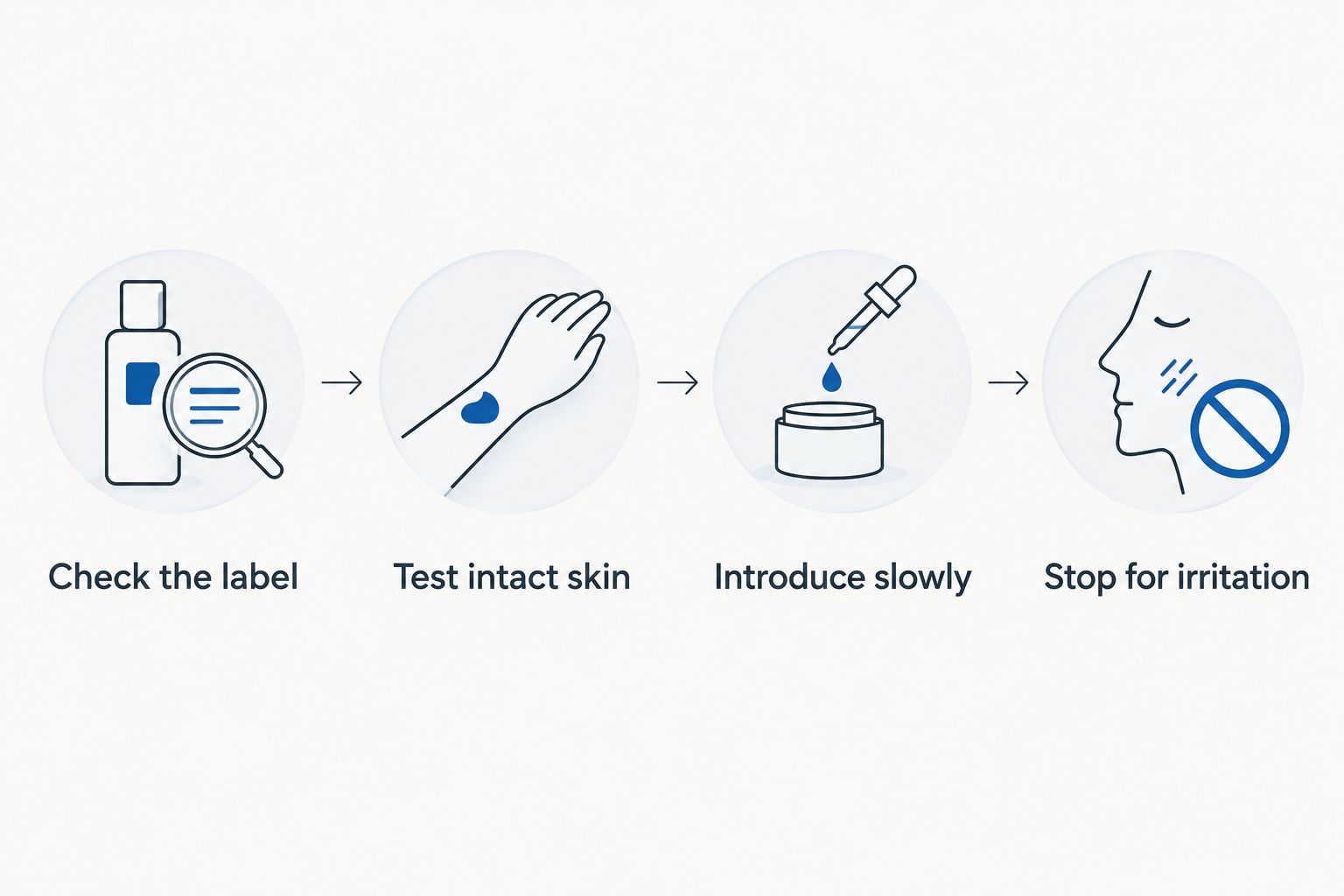
Do not push through discomfort because a product is described as natural. Avoid vigorous massage, scratching and tight hairstyles while your scalp is irritated; gentle handling matters more than adding another ingredient.
Eczema, dandruff and shedding need different decisions
The NHS describes atopic eczema as an itchy skin condition that requires appropriate skin care and, when needed, medicines. An oil does not replace prescribed anti-inflammatory treatment.
Dandruff and seborrhoeic dermatitis also need their own assessment. If recurring flakes are your main concern, read the scalp oil guide for dandruff and flaking without assuming that every flaky scalp needs more oil.
Breakage means strands snap; shedding means hairs are released from follicles. Reducing friction or conditioning a shaft can help you manage damage, but it does not establish treatment for a follicle-related hair-loss condition.
Seek medical advice for persistent itching, spreading redness, patchy hair loss or symptoms that continue after you stop a suspected product. Weeping, crusting, increasing pain or signs of infection need prompt assessment rather than another oil trial.
How the 2026 ranking was decided
This ranking prioritizes formulation simplicity, a clear cosmetic purpose and evidence that matches the claim. It is not based on a clinical trial comparing these finished products on people with scalp eczema.
The named evidence sources have different scopes:
- American Academy of Dermatology: Eczema skin-care advice, fragrance avoidance and home testing of new skin-care products.
- NHS, “Atopic eczema”: Symptoms, treatment and reasons to seek medical help.
- Rele and Mohile, Journal of Cosmetic Science: Coconut, sunflower and mineral oils in hair-damage and protein-loss research.
- Danby and colleagues, Pediatric Dermatology: Effects of olive and sunflower seed oils on the adult skin barrier, not a finished scalp-oil trial.
These distinctions prevent an ingredient study from becoming a product promise. Neither a traditional formula nor a positive hair-fibre result establishes that an oil treats eczema.
Which hair oil should you choose?
For your 2026 decision, start with the condition, then choose the cosmetic. Plain, fragrance-free mineral oil is the simplest starting option here for intact, dry skin; coconut oil has the clearer role for dry hair lengths.
If you have an active flare, choose medical guidance rather than a new oil. If you prefer a botanical blend, check every ingredient and keep expectations cosmetic: softer or better-conditioned hair is not proof of regrowth.
FAQ
What’s the best hair oil for sensitive scalp?
Plain, fragrance-free mineral oil is the simplest cosmetic starting option in this comparison for an intact, dry scalp. Persistent itching, inflammation or diagnosed eczema needs an appropriate treatment plan rather than an oil ranking.
Can I put hair oil on scalp eczema?
Do not assume a hair oil is suitable for scalp eczema. Ask your clinician which scalp emollient or treatment to use, especially if the skin is inflamed, broken or weeping.
Is coconut oil better than mineral oil for a sensitive scalp?
Neither is universally better for a sensitive scalp. Coconut oil has published evidence for reducing hair protein loss, while plain mineral oil offers a simpler occlusive option; neither finding proves eczema treatment.
Are natural or herbal oils safer for eczema?
Natural and herbal do not mean safer for eczema. Botanical ingredients and fragrance can cause reactions, so assess the full formulation and your own history of sensitivity.
Can Asian Treasures Hair Revival Oil treat eczema or regrow hair?
Asian Treasures Hair Revival Oil is presented here as cosmetic botanical hair care, not an eczema treatment. This guide establishes no finished-product evidence for treating eczema or regrowing hair.
How should I test a new oil on sensitive skin?
Follow the American Academy of Dermatology’s home product-testing guidance on a small area of intact skin before wider use. Stop if irritation develops; home testing does not replace medical patch testing for suspected allergy.
Will reducing hair breakage stop hair shedding?
Reducing breakage does not establish treatment for shedding. Breakage affects the hair shaft, while shedding involves release from follicles; persistent or patchy loss needs assessment.
One last thing
A less complicated routine can be a better decision than a more complicated blend. Before adding an oil, photograph the ingredient labels of the products you already use and note when symptoms appear; that record gives a clinician more useful information than another trial-and-error purchase.
Related guides
- Best hair oil for dry hair
- Hair oil for curly and coily hair
- Hair growth oil: choosing with realistic expectations
[…] advice for persistent symptoms, and urgent care for severe swelling or breathing difficulty. The sensitive scalp and eczema guide addresses a different selection problem; a gentler application technique cannot make an unsuitable […]