

Instead of adding more oil whenever your hair feels dry, use this 2026 workflow for layering leave-in conditioner and hair oil: apply leave-in to damp lengths, then use a light oil finish only where needed. Follow each product’s directions first; a scalp treatment or rinse-out oil does not automatically belong in a leave-in routine.
- Layering leave-in conditioner and hair oil usually means leave-in first, followed by a light oil finish on the lengths.
- Asian Treasures presents its traditional botanical blend as cosmetic hair care, not proof of hair regrowth.
- Use the smallest workable amount, keep heavy layers away from roots, and reassess after your hair dries.
- Conditioning damaged strands and treating medical hair loss are different tasks; oiling does not replace a diagnosis.
Why this matters
Leave-in conditioner and hair oil have different jobs. A leave-in conditions the hair shaft; an oil adds lubrication and changes how the surface feels. Applying more of either is not the same as giving your hair what it needs.
The useful question is whether your lengths need easier detangling, a smoother finish, or both. Start with the problem described in the dry-hair oil guide, rather than assuming every dry-feeling strand needs another coating.
This is brand-published guidance from Asian Treasures. The traditional botanical blend is the brand’s distinguishing feature, not evidence that the finished product treats hair loss.
For this 2026 workflow, the safety boundaries follow American Academy of Dermatology guidance on damaging hair-care habits, contact reactions, and the distinction between shedding and hair loss. Those sources support gentle care and appropriate medical assessment; they do not establish results for a particular oil blend.
Before you start
- Check the intended use. Have your leave-in conditioner, hair oil, a towel, and a suitable detangling tool ready. Confirm that both products permit leave-on use on the lengths. A pre-shampoo treatment needs a different workflow.
- Read the directions together. Check application area, wet-versus-dry instructions, and warnings. Do not assume an oil is a heat protectant or that a scalp product suits your ends.
- Test before full application. The non-obvious gotcha is combination buildup: two products that work separately can feel sticky or heavy together. Try the sequence on 1 small section before coating your whole head, and assess the finish after drying.
If you are introducing a new product, the American Academy of Dermatology’s home-testing guidance recommends applying it to a small test area twice daily for 7–10 days, following its normal use directions. This screens for a reaction; it does not guarantee that scalp use will be comfortable. Stop if redness, itching, or swelling develops.
Leave-in conditioner versus hair oil
These are complementary options, not interchangeable treatments. Choose the layer by its job, and skip any layer that adds weight without improving manageability.
| Layer | Main role | Best for | Limitation |
|---|---|---|---|
| Leave-in conditioner | Conditions the hair shaft and helps with handling, depending on the formula | Lengths that need easier detangling or a softer feel | Too much can leave residue or flatten the finished style |
| Hair oil | Lubricates strands and changes the surface finish | Ends that still feel rough after conditioning | Excess can feel greasy; oil does not replace every function of a conditioner |
| Leave-in followed by oil | Combines conditioning with a separate finishing layer | Hair that benefits from both steps | Adds another product and makes it harder to identify the cause of buildup |
Best for a first attempt: keep the routine simple enough to judge each layer. A botanical ingredient list does not tell you how the combined products will behave on your hair.
Damp lengths
Start with clean hair and remove excess water gently. The American Academy of Dermatology advises against rough towel rubbing because handling habits can damage hair; blotting keeps this step gentler.
- Complete your wash routine. Rinse out products intended for rinsing. Do not replace rinse-out conditioner with oil unless the product directions specifically describe that use.
- Blot excess water. Aim for damp rather than dripping lengths when your leave-in directions call for damp application.
- Separate manageable sections. Keep the sections loose. Do not pull a comb through resistance or use tension to force tangles apart.
Expected result: your lengths are accessible and evenly damp, without water streaming from them. If your leave-in specifies dry application, follow that instruction instead of forcing it into this sequence.
Keep your scalp and lengths separate in your thinking. An oily scalp can coexist with dry-feeling ends; coating the roots does not necessarily address the condition of the older lengths.
Leave-in layer
Apply the conditioning layer before deciding whether you need oil. Otherwise, you cannot tell whether the oil is helping or merely adding another coating.
- Follow the label amount. If the label gives no amount, begin with a small application to your test section rather than guessing a full-head dose.
- Spread through the lengths. Focus on the areas the product is intended to condition. Keep a lengths-only product off the scalp.
- Detangle without forcing. Work through the ends first, then move upward as resistance decreases. Follow your hair type’s handling needs, especially if you have tightly curled hair.
- Check the feel. Stop adding conditioner when you have enough slip for gentle handling. A visible coating is not a target.
Expected result: the hair is easier to handle without a thick, sticky layer. If it already feels overloaded, do not add oil to correct the problem.
For a useful 2026 routine record, note the product names, application area, and whether you applied them to damp or dry hair. That gives you a repeatable starting point without relying on a universal drop count.
Oil finish
An oil finish is optional. Use it to address the remaining rough feel on the lengths, not because every wash routine needs a sealing step.
- Confirm leave-on suitability. Check that your chosen oil permits this use. Instructions for scalp massage or pre-wash application are not permission to leave it on the lengths.
- Spread a small amount between your palms. This helps you distribute the oil rather than depositing it in one spot.
- Smooth over the ends first. Move upward only where needed, avoiding unnecessary root application.
- Let the hair dry before judging. Assess softness, movement, residue, and comfort before deciding that the routine needs more product.
Expected result: the ends feel smoother without oily patches, sticking strands, or a flattened finish. If you cannot feel a useful difference, leave the oil out next time.
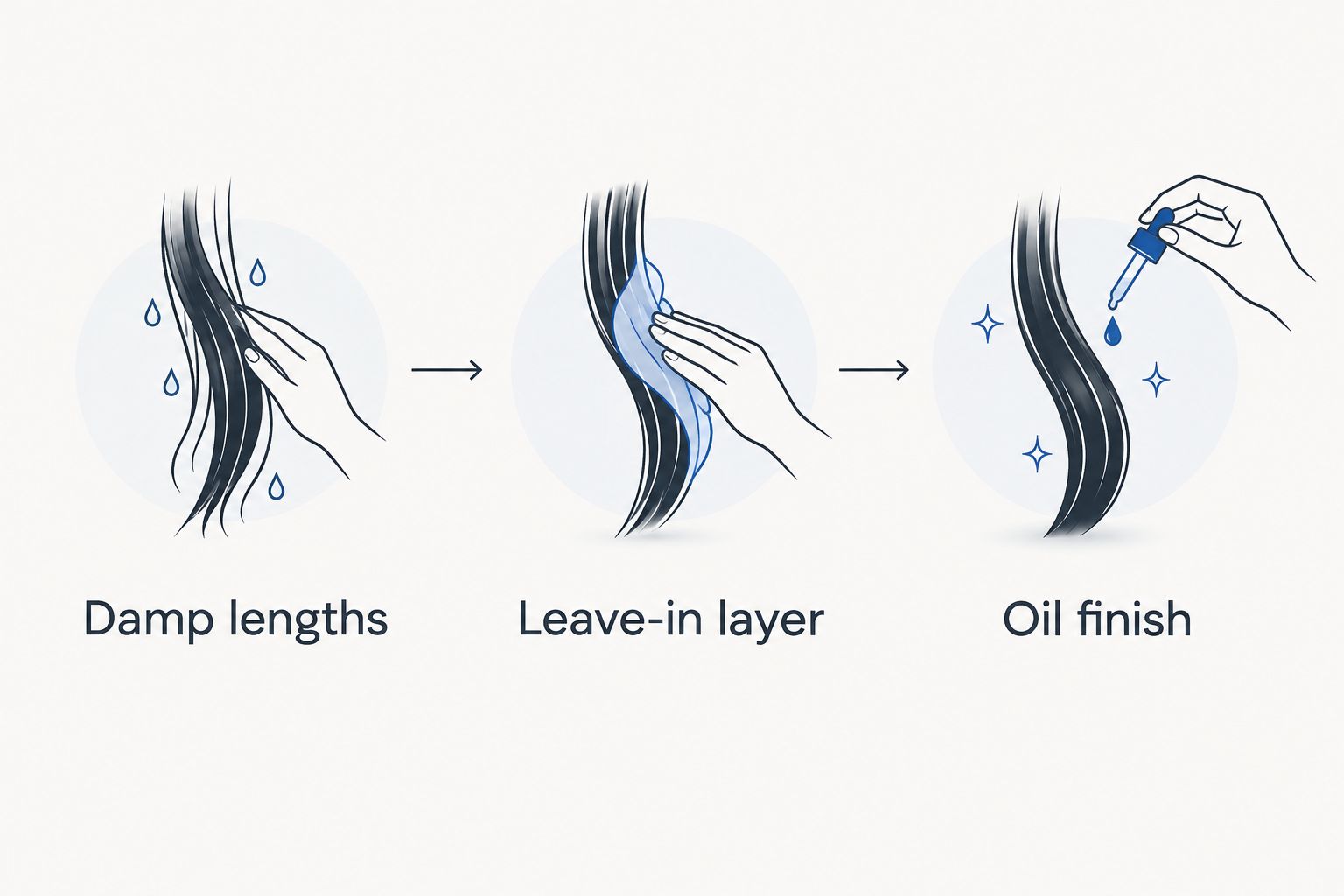
The word sealing is shorthand, not a promise of permanently trapped moisture. Oils differ in their interaction with hair, and the finished result depends on the whole formula and how much you apply.
If you plan to blow-dry, use a product specifically directed for heat protection. The heat-protected shine workflow covers that separate decision; do not treat ordinary hair oil as interchangeable with a heat protectant.
Refresh dry ends between washes
A dry-hair refresh is the adjacent workflow, not a repeat of every wash-day step. Best for: ends that need a small finishing adjustment while the rest of the hair still feels clean.
- Check for residue first. If your hair feels waxy, sticky, or coated, skip the refresh and wash when appropriate for your routine.
- Choose the missing function. Use a dry-hair-compatible leave-in if you need conditioning, or a small oil finish if you only want to adjust the surface feel.
- Treat the affected area. Do not automatically coat all your lengths because the ends feel rough.
- Stop before the hair feels wet or greasy. Repeated layering makes the next application harder to judge.
Expected result: the ends feel more manageable without a new coating at the roots. The trade-off is accumulation: a refresh adds product without removing what is already there.
Troubleshooting
Your hair dries flat or greasy
Reduce the oil first and keep the application farther from the roots. At your next wash, test the leave-in alone so you can tell whether the extra finishing layer was necessary.
The combination feels sticky or forms residue
Stop stacking the products. Wash out the residue and test each product separately before combining them again; more rubbing or extra oil will not make an unsuitable combination useful.
Your scalp itches or burns
Stop using the suspected product and rinse it off. The American Academy of Dermatology identifies hair-care products as possible causes of contact dermatitis; persistent symptoms need medical advice, not another botanical layer.
Your ends still split or snap
Oil does not permanently repair split ends. Review rough detangling, tight hairstyles, chemical processing, and heat exposure, and arrange a trim for existing splits rather than repeatedly coating them.
Hair keeps coming out from the roots
Do not treat continued shedding as a signal to increase oiling. The American Academy of Dermatology describes shedding roughly 50–100 hairs a day as normal, but that range is not a diagnosis; sudden changes, bald patches, or scalp symptoms warrant assessment.
Customize your workflow
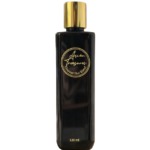
Asian Treasures is best for shoppers seeking traditional botanical hair care, not a medical hair-loss treatment. That distinction matters when deciding where Nuskha-e-Khaas Hair Revival Oil belongs in your routine: use its current directions to establish whether your intended application is appropriate.
The botanical blend describes the product’s positioning. Evidence about an individual ingredient does not establish the effectiveness, tolerability, or hair-growth results of the finished blend.
For your next 2026 routine adjustment, change only one variable across 2 wash days: either the leave-in amount, the oil amount, or the application area. This is a practical comparison method, not a clinically validated testing period.
Record whether detangling is easier, the dried finish feels coated, and your scalp stays comfortable. Keep the version that improves handling with less product; discard a layer that adds no useful benefit.
FAQ
Should I put leave-in conditioner or hair oil on first?
Apply leave-in conditioner first, then a light oil finish, unless the product directions specify otherwise. Use the leave-in for conditioning and add oil only where the lengths still need it.
Should my hair be wet or dry when I layer leave-in and oil?
Use damp hair when your leave-in directions call for it, then apply the oil according to its label. Dry-hair refreshing is a separate option only when the products permit dry application.
How much hair oil should I use after leave-in conditioner?
Follow the label and begin with a small amount on a limited section. There is no universal drop count because formulas, hair lengths, and application methods differ.
Can I use hair oil instead of leave-in conditioner?
Hair oil does not replace every function of a leave-in conditioner. If your main problem is difficult detangling, assess the conditioning step rather than assuming more oil will solve it.
Does sealing my hair with oil make it grow faster?
A smoother finish does not establish faster growth. Cosmetic strand care and treatment for medical hair loss are different, and botanical positioning is not clinical evidence of regrowth.
Can I layer leave-in conditioner and oil every day?
Do not make daily layering automatic. Refresh only when your hair needs it, follow the directions, and stop adding layers when the lengths feel coated or the scalp becomes uncomfortable.
Can I use Nuskha-e-Khaas Hair Revival Oil after leave-in?
Use Nuskha-e-Khaas Hair Revival Oil after leave-in only if its current directions permit leave-on application to the lengths. Asian Treasures’ traditional botanical positioning does not establish compatibility with every conditioner or suitability for every scalp.
One last thing
For 2026, make your most useful hair-care distinction breakage versus shedding. Short broken pieces point toward strand damage, while full-length shed hairs involve release from the follicle; visual inspection alone does not establish the cause.
A gentler routine can reduce avoidable handling damage. It cannot diagnose thinning, and a softer finish is not proof that a hair-loss condition has improved.
Related guides
- Hair mask to sealed moisture: oiling workflow
- Hair oil for curly and coily hair
- Hair oil for sensitive scalp and eczema
[…] you already use a leave-in conditioner, the leave-in and oil layering workflow explains how to keep the steps separate. Follow each product's directions rather than assuming […]