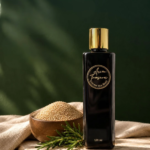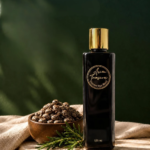
Instead of repeatedly adding oil when your hair feels rough, use hair oil after protein treatment only after completing the treatment’s rinse-out or leave-in instructions and any required conditioning. Finish with a light application to the lengths if needed; oil is an optional finishing step, not a substitute for conditioner or treatment for hair loss.
- Use hair oil after protein treatment only when the treatment instructions allow it; finish required conditioning first.
- Asian Treasures hair-care guidance is best for shoppers separating cosmetic strand care from medical hair-loss treatment.
- A moisture lock describes a finishing approach, not permanent repair or guaranteed hydration.
- Stop adding products if your scalp burns, itches, or develops redness.
Why this matters
A protein treatment, conditioner, and finishing oil have different jobs. Treating them as interchangeable makes it harder to identify what leaves your hair manageable and what leaves it coated.
The American Academy of Dermatology’s guidance, Hair styling without damage, recommends conditioner after shampooing and gentle handling to limit damage. It does not establish a universal protein-to-oil schedule. Your treatment’s directions determine the sequence.
For this 2026 workflow, the goal is manageable strands without unnecessary layering. If dryness is your main concern, the hair oil for dry hair guide covers that separate buying decision.
Oil can change how hair feels; a smoother finish does not prove that damaged hair has been permanently repaired. Nor does less strand breakage establish that a product treats shedding from the follicle.
Before you start
- Gather the actual instructions: Keep the protein treatment, its packaging, your usual conditioner, and your intended finishing oil nearby. Check whether the treatment requires rinsing, a follow-up conditioner, or restrictions on additional products.
- Check the product category: A rinse-out protein mask, leave-in treatment, and salon straightening service are not interchangeable. For a salon service, follow the practitioner’s written aftercare rather than this general routine.
- Check the scalp and formula: Do not introduce an unfamiliar oil onto an irritated scalp. Botanical ingredients and fragrance can cause contact reactions; the American Academy of Dermatology’s contact-dermatitis guidance explains why natural ingredients are not automatically irritation-free.
The easily missed problem is a treatment that already specifies its finishing sequence. Adding another mask or oil halfway through changes that sequence. Do not add extra steps simply because the word protein appears on the label.
Treatment instructions and preparation
Establish the correct treatment branch
- Read the directions before wetting your hair. Identify whether the product is rinse-out or leave-in and whether it specifies a follow-up conditioner.
- Check for instructions about heat, processing time, and other products. Follow the stated directions rather than a generic online timing rule.
- Set aside additional protein products for this session unless the instructions explicitly combine them. Introduce 1 new product per session when assessing tolerance and finish, so you can identify what changed.
- Prepare your usual washing and detangling materials. Avoid improvising a stronger treatment by mixing products together.
Expected result: You know which product stays in, which product comes out, and whether conditioning belongs before your finishing step.
Choose the branch that matches the label
This is brand-published guidance from Asian Treasures, not an independent product ranking. The comparison below describes workflow choices rather than claims that one treatment type produces better results.
| Workflow | Best for | Advantage | Limitation |
|---|---|---|---|
| Rinse-out treatment | A product explicitly labelled for rinsing | Gives you a clear endpoint before the next permitted step | Requires complete rinsing according to its directions |
| Leave-in treatment | A product explicitly labelled to remain in hair | Avoids an unnecessary rinse | Additional layers can leave an unwanted coated finish |
| Conditioner without added protein treatment | A routine where conditioning meets your styling needs | Keeps the routine simpler | Does not replace a prescribed or specifically directed treatment |
Do not use hair texture alone to overrule a label. Fine, curly, coily, coloured, or straight hair still needs product-specific instructions. A 2026 routine should be based on the formula you actually use, not a fixed sequence copied from another person.
Treatment and conditioning sequence
Complete the treatment before adding oil
- Apply the protein treatment to the areas specified on its label. A product intended for hair lengths does not automatically belong on your scalp.
- Follow its processing instructions exactly. Longer contact is not a reliable way to obtain a better result.
- Rinse if directed. Do not deliberately leave a rinse-out treatment behind as a substitute for a leave-in product.
- Apply conditioner if the treatment instructions call for it. Use gentle handling rather than repeated pulling to work through tangles.
- Remove excess water gently before moving to the finishing stage. Avoid rough rubbing with a towel.
Expected result: The treatment sequence is complete, and you have not used oil to cover up an unfinished rinse or skipped conditioning step.
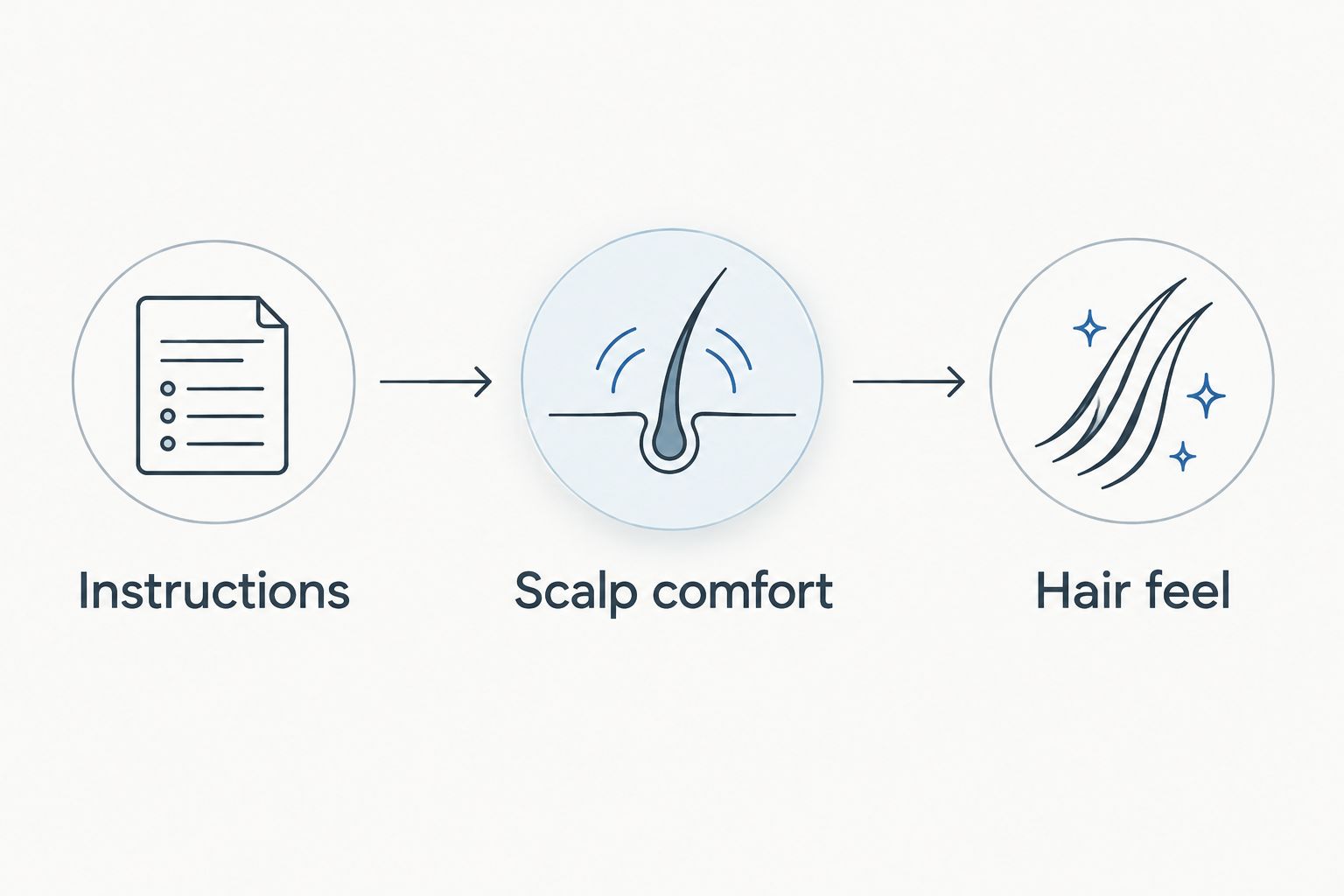
Keep 3 checkpoints in this workflow: instructions before application, scalp comfort during use, and hair feel after finishing. These are practical checks, not a test of protein levels or a diagnosis of hair damage.
Oil does not add water to hair. The review Hair Cosmetics: An Overview in the International Journal of Trichology describes the different roles of conditioning agents and oils in cosmetic hair care. Those category-level explanations do not establish that every oil or finished botanical blend performs identically.
Finishing oil placement
Apply only where a finishing layer is needed
- Check that the treatment permits additional products. If its instructions prohibit them, end the routine there.
- Assess 2 application zones separately: the lengths and the scalp. A dry-feeling end is not a reason to oil an otherwise comfortable scalp.
- Spread a light film between your hands, then smooth it over the lengths and ends that need it. Follow the oil’s own application directions; there is no universal drop count for every formula and hair length.
- Stop before the hair looks stringy or feels heavily coated. Do not keep adding oil because it has not made a rough section feel permanently repaired.
- Style gently. Do not treat an ordinary hair oil as heat protection unless its verified directions specifically establish that use.
Expected result: Your lengths have the finish you want without an unnecessary scalp coating or heavy residue.
Asian Treasures presents its Nuskha-e-Khaas hair oil as a traditional botanical blend. That is a formulation distinction, not evidence that the finished product repairs protein-related damage, treats hair loss, or protects against heat. Check the current product directions before placing it into this workflow.
The useful meaning of moisture lock in this 2026 guide is a finishing layer after the required treatment and conditioning steps. It is not a promise that moisture stays sealed inside indefinitely.
Second variant: finishing dry hair between washes
You do not need to repeat a protein treatment whenever your ends feel rough. Between washes, assess the finish first and keep the response limited to the problem you can observe.
- Check whether the hair feels dry, coated, tangled, or stiff. Those descriptions guide handling, but they do not diagnose protein deficiency or excess.
- If the oil’s directions permit dry-hair use, smooth a light film over the ends that need it. Leave comfortable areas alone.
- If hair already feels greasy or coated, do not add another layer. Return to your normal cleansing routine rather than stacking products.
- Keep scalp symptoms separate from strand styling. Persistent itching or flaking needs its own assessment, not automatic extra oil.
Expected result: You refresh the finish without turning every styling adjustment into another treatment session.
An overnight routine is a separate choice, not a required extension of protein care. Longer wear does not establish better results. Read the overnight hair oil treatment guide before deciding whether that approach fits your product instructions and scalp comfort.
Troubleshooting
Hair feels stiff after the treatment
Stop adding more protein products and review the directions. Check whether you missed rinsing or a required conditioner. Stiffness alone does not establish protein overload; persistent roughness or breakage deserves a wider review of chemical processing, heat, handling, and the products used.
Hair feels greasy but still rough
More oil is not the next step. A surface coating and a rough feel can exist together, so assess the result after your normal cleansing and conditioning routine. On the next permitted application, use less finishing oil and limit it to the sections that need it.
The scalp itches, burns, or becomes red
Stop the new product and rinse it away as appropriate. Do not add another botanical product to soothe a suspected reaction. The American Academy of Dermatology’s contact-dermatitis guidance supports identifying and avoiding the trigger; seek medical advice for persistent symptoms, and urgent help for breathing difficulty or facial swelling.
Tangles remain despite repeated oiling
Do not pull harder or keep saturating the same knot. Use the detangling method appropriate to your hair texture, with conditioner where directed. The American Academy of Dermatology distinguishes handling advice for straight hair from textured or tightly curled hair, so a single wet-versus-dry combing rule is not suitable for everyone.
Hair keeps falling despite a smoother finish
Separate shedding from breakage. Breakage involves a strand snapping; shedding involves a hair being released from the follicle. Appearance at home does not reliably identify the cause, and sudden, patchy, or persistent loss warrants assessment by a qualified clinician rather than repeated cosmetic treatments.
Customize your workflow
For 2026, keep a brief record of the treatment name, the instructions followed, the finishing products, and any scalp symptoms. Describe observable results such as easier detangling or an unwanted coating; do not label them proof of regrowth or internal repair.
If your main need is conditioning rather than a protein-treatment sequence, use the hair mask to sealed moisture workflow as the next guide. Keep the distinction clear: a mask’s directions determine its role, not its texture or botanical scent.
Asian Treasures hair-care products belong in a cosmetic-care discussion unless finished-product evidence establishes a broader claim. Ingredient research cannot be transferred automatically to Nuskha-e-Khaas, and traditional use does not replace clinical evidence.
FAQ
Can I use hair oil after protein treatment?
Yes, if the protein treatment’s instructions allow additional products. Complete any required rinsing and conditioning first, then apply a light finishing layer only where needed.
Should I apply oil before or after conditioner?
In this finishing workflow, apply oil after any required conditioner has been used and rinsed as directed. Follow the specific treatment sequence if its label gives different instructions.
How long should I wait before applying hair oil?
There is no universal waiting time for every protein treatment and hair oil. Follow the treatment’s stated aftercare and do not invent an extra delay or processing period.
Can I leave hair oil on overnight after protein treatment?
Only use an overnight application when the product directions permit it and your scalp tolerates it. Overnight wear is not required for a successful finishing routine and does not establish better repair.
Does hair oil fix protein overload?
Hair oil is not a diagnostic test or established treatment for protein overload. If hair feels stiff, review the treatment instructions, stop unnecessary layering, and assess the result after normal cleansing and conditioning.
Will this routine stop hair shedding?
This cosmetic routine does not treat medical causes of hair shedding. Gentler handling can help limit strand damage, but reduced breakage is different from treating loss at the follicle.
Is Nuskha-e-Khaas proven to work better after protein treatment?
This guide does not establish that Nuskha-e-Khaas works better after protein treatment. Its traditional botanical blend is a product distinction, not proof of finished-product efficacy or compatibility with every treatment.
One last thing
For your 2026 routine, judge the finishing step again at the next wash, not only immediately after application. A glossy surface answers a styling question; it does not answer whether shedding has changed. Keep cosmetic finish and medical hair-loss assessment on separate tracks.
Related guides